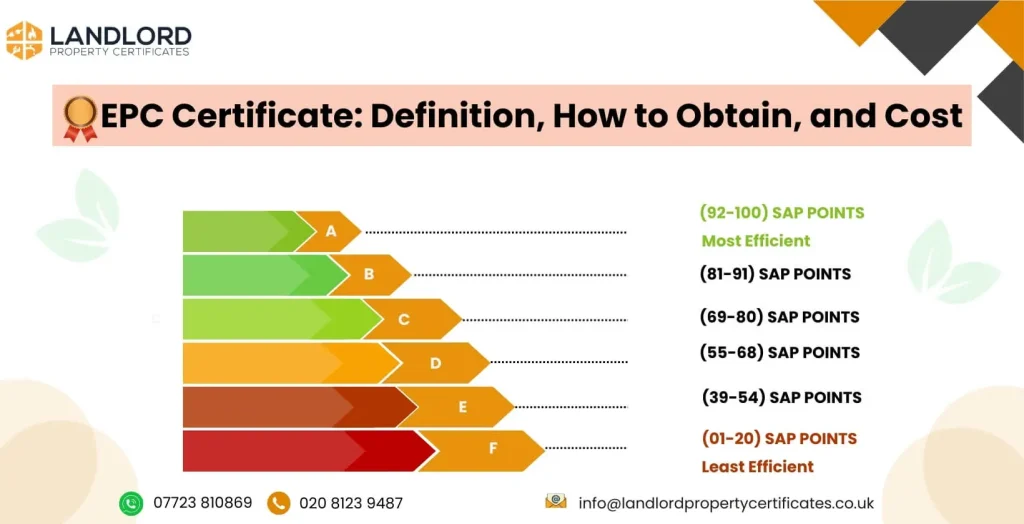
An Energy Performance Certificate (EPC) is a legally obligatory report in the UK to assess the energy performance (energy expenses, carbon emissions and practical modifications) of a structure using an energy rating of A (most efficient) to G (least efficient).
The landlord engages energy assessors with level 3 DEA (Domestic Energy Assessment) and NDEA (Non-Domestic Energy Assessment) education to visit the property. The energy assessor assesses wall and loft insulation, type of heating system, windows, ventilation and lighting. The energy assessor captures the data and registers the EPC on the government database. A digital copy of ECP is sent to the owner and remains valid for 10 years.
The cost of EPC in the UK ranges between £60 and £120. The cost of an EPC is not standardised by the UK government, and it depends on property size, type, location, and assessor. The EPC energy rating is represented by a numerical score from A-G. The A-rated properties are very efficient in terms of energy. B and C-rated properties have good energy efficiency, and D-rated properties have below-average energy efficiency. The E, F and G-rated properties have poor energy efficiency.
What is an EPC certificate?
EPC (Energy Performance Certificate) is a legally recognised document in the UK to measures energy efficiency of a building, such as construction, insulation, heating, ventilation, and lighting. EPC has an energy rating scale ranging between A (most efficient) and G (least efficient). EPC indicate how well a building consumes energy in relation to modern standards.
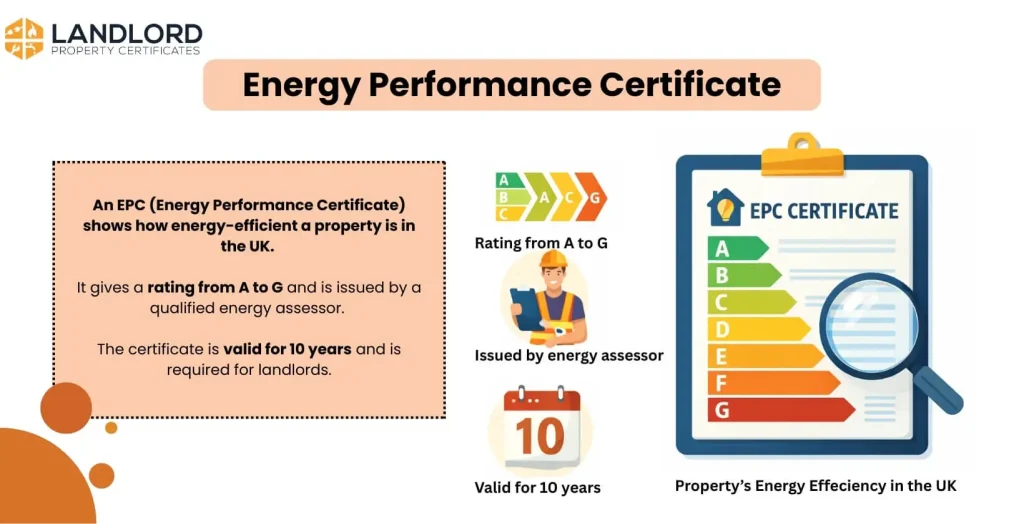
An EPC is prepared by an energy assessor who is qualified in DEAs (Domestic Energy Assessment) and accredited to conduct a physical inspection of the property and register it on the government database. The EPC Certificate is valid for 10 years. The EPC certificate for landlords in London is compulsory to assess the energy expenditure of a property, carbon emissions, and to encourage conservation of energy.
What are the types of Energy performance certificate?
The 4 types of Energy performance certificate in the UK are listed below.
- Residential EPC (Domestic EPC): A Domestic EPC is issued for projects where people live, such as houses, flats, bungalows, maisonettes and residential park homes in the UK. Residential EPC determines the energy efficiency of houses in accordance with insulation, heating, windows and general energy consumption. This is necessary when a house or a flat is constructed, sold, or rented.
- Commercial EPC: The Commercial EPC is issued to a building that is used for business, public, or industrial purposes in the UK. Commercial EPC measures the energy performance of a building in terms of heating, lighting, ventilation, and the size of the building. Commercial EPC is needed when a commercial building is being built, sold or leased. Commercial EPC covers offices, shops, restaurants, hotels, schools, hospitals, warehouses, and factories.
- New-Build Properties EPC (Domestic or Commercial): A New-Build Properties EPC is issued to a new building in advance, before it is occupied. A domestic EPC is required for a new building, whether it is a house or a flat. A Commercial EPC is required for commercial buildings such as offices, shops, or schools.
- Display Energy Certificate (DEC) (Commercial): A Display Energy Certificate is not a normal EPC but rates the building’s energy performance. DEC is mandated in large public buildings that are frequented by people, such as government offices, schools, hospitals, and libraries.
What does an EPC certificate look like?
An Energy Performance Certificate (EPC) in the UK includes the address of the property, the certificate reference number, the date when the certificate was created, and the name of the energy assessor at the top. EPC also has the details about the property type, floor area, and construction details, whether it is a domestic or commercial property. The EPC has a colour-coded chart of energy ratings (A to G, with dark green indicating the most efficient and red the least efficient).
The EPC shows the current energy efficiency rating as well as suggested improvements by numerical values. EPCs contain estimated annual energy costs, carbon emissions, and a comparison to a similar property. EPC has a recommendations section of practical energy saving means like better insulation, more efficient heating, or double glazing with the estimated cost and potential savings. The EPC has legal disclaimers, guidance notes and has a validity of 10 years. The ECP can be found as a downloadable PDF to access it easily and as an official tool.
How to obtain an energy performance certificate?
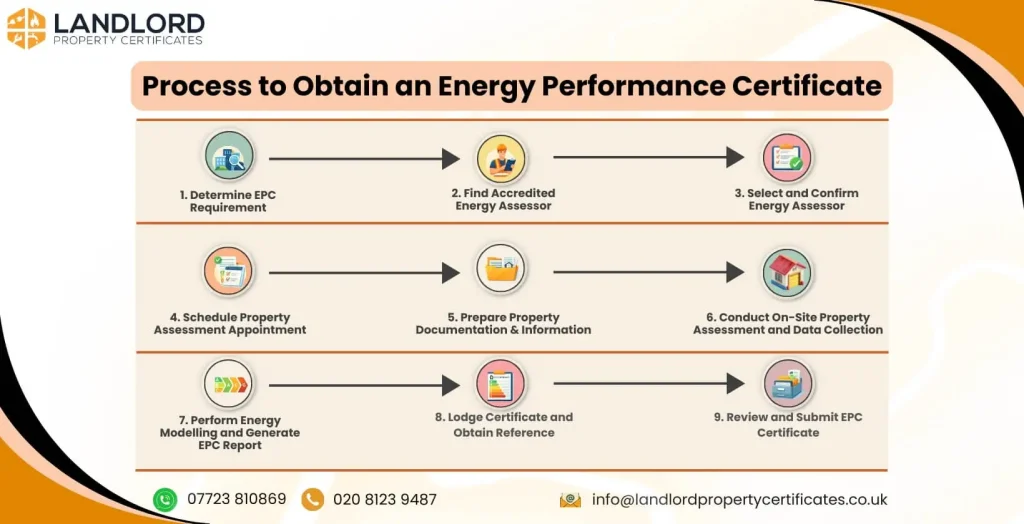
The process to obtain an Energy Performance Certificate in the UK is described below.
- Determine EPC Requirement
- Find Accredited Energy Assessor
- Select and Confirm Energy Assessor
- Schedule Property Assessment Appointment
- Prepare Property Documentation and Information
- Conduct On-Site Property Assessment and Data Collection
- Perform Energy Modelling and Generate EPC Report
- Lodge Certificate and Obtain Reference
- Review and Submit EPC Certificate
- Store EPC Certificate for Future Use
1. Determine EPC Requirement
Determine the EPC requirements (new, domestic, commercial buildings) of your property through a complete property inspection. EPCs are necessary for newly constructed, sold and rented properties. The existing premises that are either on lease or sold, and the large buildings used by the community, also need an EPC. Check the EPC requirements of your property on the government EPC register to ensure that a valid certificate for your property already exists or not before assessing a property.
2. Find Accredited Energy Assessor
Find the accredited energy assessor in the UK with an education at level 3 DEA (Domestic Energy Assessment) and NDEA (Non-Domestic Energy Assessment). A DEA is required for residential properties, and a Non-Domestic Energy Assessor is required for commercial buildings. The Uk Government-approved schemes (Elmhurst Energy and Quidos) provide online facilities to hire accredited energy assessors. Some estate agents in the UK also provide arrangements of EPCs. Hire a UK Government-registered energy assessor because registered assessors have the right to generate a valid EPC. Check that the credentials of the energy assessor are valid, the registration number is accurate and reliable, to fulfil the legal requirements.
3. Select and Confirm Energy Assessor
Select and confirm an energy Assessor by keeping in mind their experience, availability, and cost. Clear the type of property, size, and location with the energy assessor to ensure that they are aware of what they are assessing. Energy Assessor confirmation and legal appointment are important to ensure reliable and timely assessment in accordance with the legal requirements.
4. Schedule Property Assessment Appointment
Schedule the property assessment Appointment with the assessor on a convenient date and time. All the rooms and areas that are inspected should be accessible with keys, entry codes, or permission for all rooms and areas. Clear the time required for energy assessment, data collection of energy and generation of EPC rating. Pre-confirmation of energy access arrangements prevents wastage of time or half-baked evaluation.
5. Prepare Property Documentation and Information
Prepare property documentation and information, such as floor plans, heating and boiler details, insulation requirements and energy bills, before the visit of the energy assessor. The energy assessor examines the walls, roofs, floors, windows, doors, lighting, ventilation, and renewable energy systems during assessment. Documentation of property in advance ensures correct energy modelling and scoring. The Propert documentation also saves time required to conduct the inspection and attain an accurate EPC rating.
6. Conduct On-Site Property Assessment and Data Collection
Conduct on-site property assessment and data collection regarding insulation, heating systems, windows, doors, lighting, ventilation and any renewable energy installation. This physical assessment is necessary to have the correct and verifiable data for EPC. On-Site property Assessment guarantees accessibility and gives accurate information to the energy assessor for the EPC certificate that represents the actual performance of the property in energy.
7. Perform Energy Modelling and Generate EPC Report
Perform Energy Modelling and generate an EPC Report. The EPC report includes annual energy expenditures, carbon emissions, and the rating that is attained after the achievement of the suggested improvements. Register all the measurements and observations into the UK government database and generate an EPC.
8. Lodge Certificate and Obtain Reference
Lodge Certificate and obtain a reference after the production of the EPC report. Registered the EPC at the UK government EPC register. An EPC reference number is created by the UK government to ensure that the certificate is on a legal basis and makes it available for upcoming purchasers, tenants or the relevant authorities. EPC registration guarantees that the EPC is legitimately registered and accepted.
9. Review and Submit EPC Certificate
Review and submit the EPC certificate after the lodging. The EPC is reviewed to make sure that all the details are correct. Any mistake or omission is rectified and submitted again. Checking the certificate is the guarantee of the legal correctness. Make a copy of the notes made by the assessor to verify if any question rise on the authenticity of the EPC.
10. Store EPC Certificate for Future Use
Store the EPC Certificate for future use, as it’s valid for ten years. Sales, rentals or inspections of property should be kept EPC certificate in both electronic and print copies. The storage of the EPC certificate guarantees easy and timely access when it is needed. A record of the certificate reference number enables verification of the certificate through the official EPC register at any time.
How much does it cost to get an EPC Certificate?
The cost to get an EPC Certificate ranges from £60 to £550 in the UK. In domestic properties, the larger houses with four bedrooms cost £120-£180 for an EPC certificate in the UK. The medium houses with three bedrooms cost £80-£150 for an EPC certificate in the UK. The smaller houses with one bedroom cost £60-£120 for an EPC certificate in the UK.
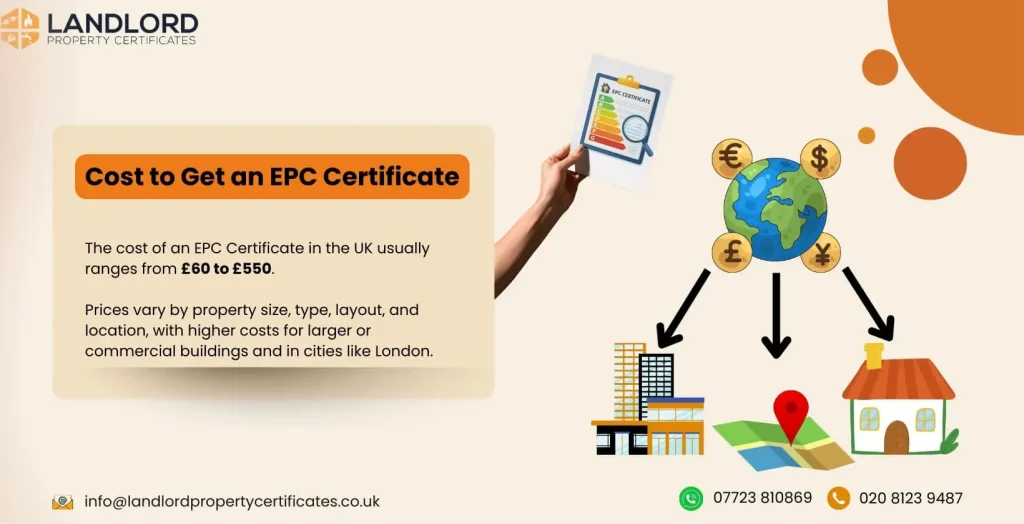
Commercial properties cost £150-£500 for an EPC certificate in the UK, depending on the complexity and size of propert. Large commercial units cost £550 and small commercial units cost £120- £250 for an EPC in the UK. EPC certificate prices also differ with location; in London, the EPC Certificate cost is £150-£550. In Manchester and Birmingham, the EPC certificate cost is £120 to £160. The cost of the EPC depends on the number of bedrooms, the area of the building, and the complexity of the layout.
Is an Energy Performance Certificate free to get?
No, an Energy Performance Certificate (EPC) is not free to get in Uk. The UK Government does not provided free and online EPC providing facility. The accredited energy assessor also costs to survey the property, gather information and produce the EPC certificate.
How long does it take to get an EPC certificate?
It takes 2-10 working days to get an Energy Performance Certificate (EPC) in the UK. The actual inspection of the site is no longer than 30 to 60 minutes for a medium residential property. The energy assessor finalises the report and registers it with the government within 3-5 days. The appointment of an energy assessor may require several days due to their busy schedule and demand.
Who Needs an EPC certificate?
The persons and buildings that need an EPC certificate in the UK are listed below.
- Homeowners: Homeowners require an EPC for their buyers and renters while selling and renting their properties to demonstrate the energy efficiency of the property. Submission of an EPC is a legal obligation in the UK when selling and renting a property, according to the law of October 2008. The certificate assists the buyer and renters in determining the amount they are paying on energy bills and what they can save on the payment. EPC also inform the buyer and renter about the insulation upgrade or heating systems.
- Newly Built Properties: EPC for newly built residential or commercial premises is issued before they are occupied. EPC ensure that the building is in line with the existing energy efficiency policies and building codes. The EPC certificate checks the quality of construction and heating, insulation and design of the property to ensure the best energy performance. The EPC on new constructions enables the buyers or tenants to know the expected running costs in the future, and it also ensures that developers comply with the legal provisions of sustainable building.
- Commercial Proprietors: Commercial properties such as offices, retail spaces, warehouses, hotels and industrial buildings require EPC to measure their energy efficiency. The EPC certificate offers potential tenants or purchasers a clear understanding of how well energy is used, how much it costs and how it affects the environment. EPC enables companies to compare properties, make energy budgets and generate improvements that reduce consumption and costs of energy. The EPC regulations of commercial buildings are obligatory Iin UK according to the LAW of 1 August 2007.
- Public Buildings: Public buildings such as schools, hospitals, government buildings, or libraries require EPC to compare actual energy consumption with estimated performance. EPC promote energy efficient behaviours in government buildings, reduces the operating costs and supports the national goals of minimising carbon emissions.
- Renovated Properties: Renovated properties need an EPC Certificate after renovations, such as the new heating systems, the insulation of the loft, or the addition of extensions. After renovation, the energy cost may change, so it’s necessary to assess the energy efficiency for better energy management in future.
- Estate Agents and Property Developers: Estate Agents and property developers are obliged to ensure the installation of EPCs in the UK before listing real estate either for sale or rent. EPCs increase the transparency of the properties, assisting buyers or tenants to make choices regarding the energy use and how much they can save in costs.
- Foreign Buyers: Foreign buyers require an EPC to know the energy performance, cost of energy and suggestions to improve it. EPC is necessary for foreign buyers in the UK because of the UK EPC requirement Law.
Do you need an EPC to sell a house?
Yes, you need an EPC to sell a house in the UK because of the UK EPC Law (October 2008). All sold properties are legally obliged to provide an Energy Performance Certificate of the energy efficiency, approximate running costs and carbon emissions of the building. The sale cannot be signed legally in the UK unless a valid EPC is provided.
A landlord cannot rent a property without an EPC. The property owners are legally required to supply an EPC to new occupants to know about the energy performance and the operating expenses of the building. The requirement of EPC for both selling and renting a property in the UK contributes to energy efficiency, environmental impacts, and transparency to buyers and tenants.
When is an EPC not required?
EPC is not required in the following conditions in the UK.
- Non-Sold or Non-Rented Properties: Non-Sold or Non-Rented Properties do not require EPC because the interested party is not the buyer or the tenant, who needs the energy information. EPCs are beneficial for landlords to estimate the energy efficiency, running costs, and environmental impact of a building.
- Religious Buildings: Religious Buildings, like Churches, mosques, temples, and all other worship places, do not require EPC. Religious buildings are not in commercial or residential use, and it is not feasible to determine their energy performance. These buildings are haphazardly heated or inhabited, so energy measurements prove insignificant, and their key activity is collective or religious, but not residential or business.
- Temporary Buildings: Temporary buildings, such as construction site offices, temporary classrooms, or pop-up units, do not need an EPC because of their short life. Temporary buildings are designed to be used temporarily, so it is not necessary to evaluate their energy efficiency and offer minimal practical usefulness.
- Standalone Buildings with Low Energy Use: Standalone buildings with low energy use (sheds or non-habitable outbuildings) do not require EPC. Standalone buildings have minimal interesting information to be assessed and do not impact the overall energy efficiency assessments of the property.
How to get a copy of my EPC certificate?
To get a copy of your EPC certificate in the UK, visit the official UK government EPC register site and enter the address of the property or the certificate number. Download the certificate in PDF after getting your property EPC data and save it or use it for official purposes.
Call the energy assessor who did the initial assessment to send you a copy of the EPC if you lack the reference number. In recently sold or rented properties, the estate agents or landlords also have an EPC copy.
Can you check for epc certficate online?
Yes, you can check the EPC certificate online in the UK. The EPCs are registered in the official government EPC register, where the relevant person of the property can access them by using the EPC reference number.
Online EPC website (gov.uk Find an energy certificate) facilitates the downloading and authentication of the EPC with no need to contact the assessor who did the initial Energy Assessment.
What are Energy performace certificate Ratings?
The Energy Performance Certificate (EPC) Ratings are the energy efficiency of a property on a scale of A (most efficient) to G (least efficient). The Energy Performance Certificate (EPC) Ratings show the energy use, the cost of running the property, and the amount of carbon emissions in the building.
Energy Performance Certificate Ratings are listed below.
- EPC Rating A: EPC Rating A is the most efficient energy rating with minimal energy expenses, high insulation, modern heating equipments and renewable energy sources such as solar panels. A-rated buildings are uncommon is extremely hard and expensive to upgrade them to this level.
- EPC Rating B: EPC Rating B is an efficient energy rating but less then A Rating, with lower energy expenses, and effective heating systems. B-rated buildings have good maintenance and renovations, and need more enhancements to reach Performance Certificate (EPC) EPC Rating A.
- EPC Rating C: EPC Rating C shows Good energy performance and moderate running costs of a building. The homes with insulation and modern heating are considered in Rating C. EPC Rating C to B, or A upgrade is done through insulation, double glazing or heating enhancement.
- EPC Rating D: EPC Rating D presents average energy efficiency with no significant renovations in a building. EPC Rating D enhanced to C and D by installing insulation, replacing old boilers and installing energy-efficient windows.
- EPC Rating E: EPC Rating E shows less than average energy efficiency of a building with no better heating system. The houses with Rating D are old and less insulated. EPC Rating E is upgraded to C and D by improved insulation and heating system.
- EPC Rating F: EPC Rating F describes poor energy efficiency and high running costs of old or unrenovated buildings. EPC Rating F is upgraded to D or C BY the insulation of walls and roof, as well as modern heating systems.
- EPC Rating G: EPC Rating G shows the least energy efficiency of a building with little insulation and an old heating system. EPC Rating G is upgraded to F and G by improving energy efficiency, maintenance of insulation and heating system.
How to improve an EPC rating?
To improve an EPC rating, enhance the insulation of walls, loft and floors, install an efficient heating system, replace single or triple-glazed windows and use solar panels as a renewable energy source.
How long does an energy performance certificate last?
The Energy Performance Certificate (EPC) is valid for 10 years in the UK for domestic and commercial properties. After that, the EPC has to be renewed for both domestic and commercial properties.
How to renew an energy performance certificate?
To renew an Energy Performance Certificate in the UK, contact an Energy Assessor who is registered with a government-approved scheme (Elmhurst Energy and Quidos. The Energy assessor visits the property to examine insulation, heating systems, windows, and energy efficiency of the building. An Energy Assessor makes measurements of the building and gathers data. After a successful inspection, the Energy Assessor creates a new EPC according to the assessment and registers it on the UK official national EPC register. After that, you get a new certificate that lasts for ten years.
When did EPC certificates become law?
The EPC (Energy Performance Certificate) became law in the UK on 1 August 2007. The need for EPCs on properties for sale and rent become legall on October 2008.
Is an expired EPC valid during an ongoing tenancy?
Yes, an expired EPC is valid during an ongoing tenancy in the UK until the tenancy is terminated or the property is re-let.
Can you get advice about EPC without getting a certificate?
Yes, you can get advice about EPC without getting a certificate in the UK. You can get EPC advice from energy assessors, estate agents or energy advisors to know about the energy efficiency of your building.
Can you use the existing EPC certificate when selling a house?
Yes, you can use the existing EPC certificate when selling a house in the UK if it has not expired and is the latest certificate for the property.
Do flats need to have an EPC certificate?
Yes, flats need to have an EPC certificate in the UK for sale or rented out. Each self-contained flat in the UK requires its own EPC.
Do I require an EPC certificate for empty premises?
No, you do not require an EPC Certificate for empty premises in the UK. An EPC Certificate is required for the property that is on the market, whether for sale or rent.