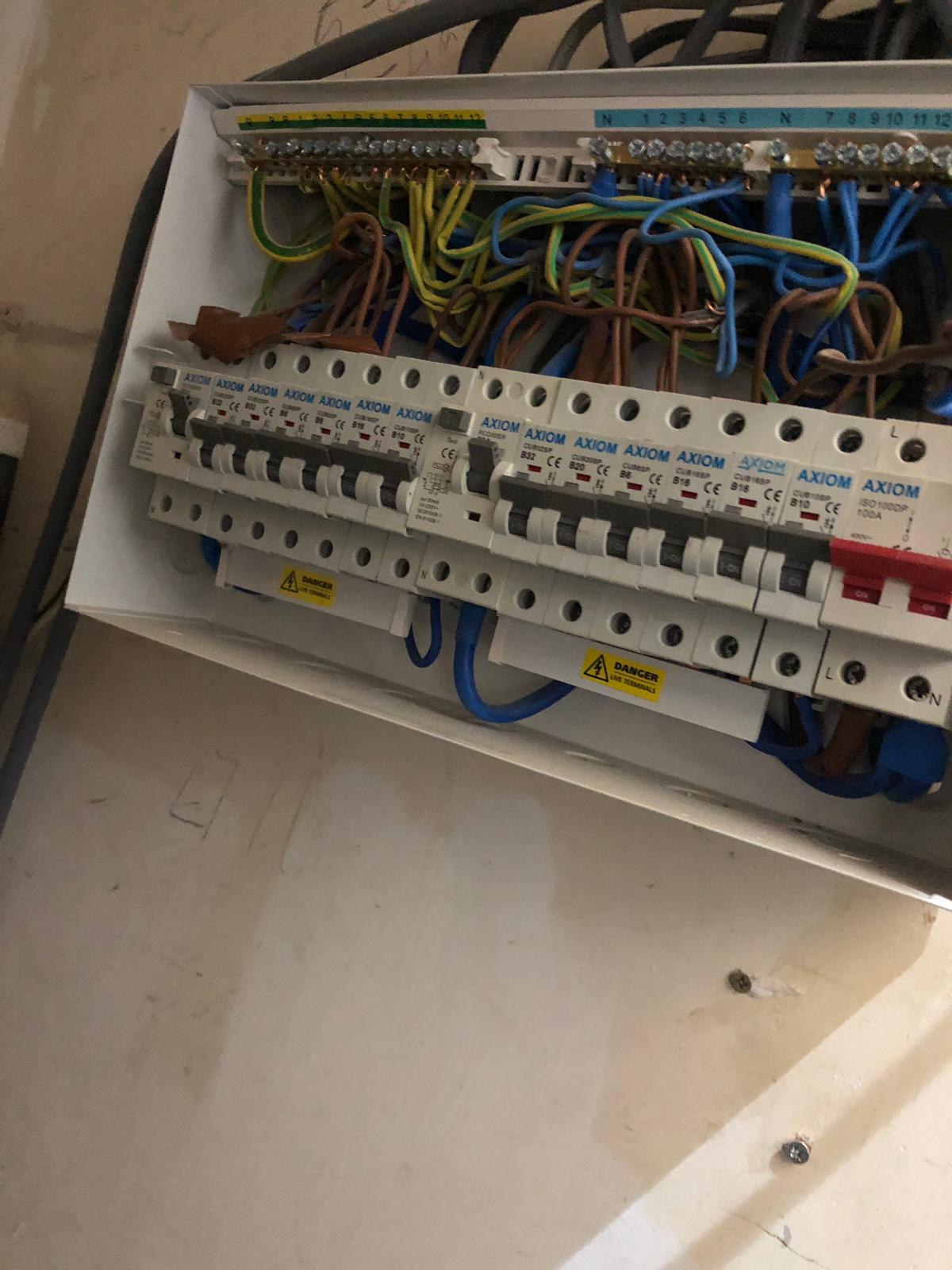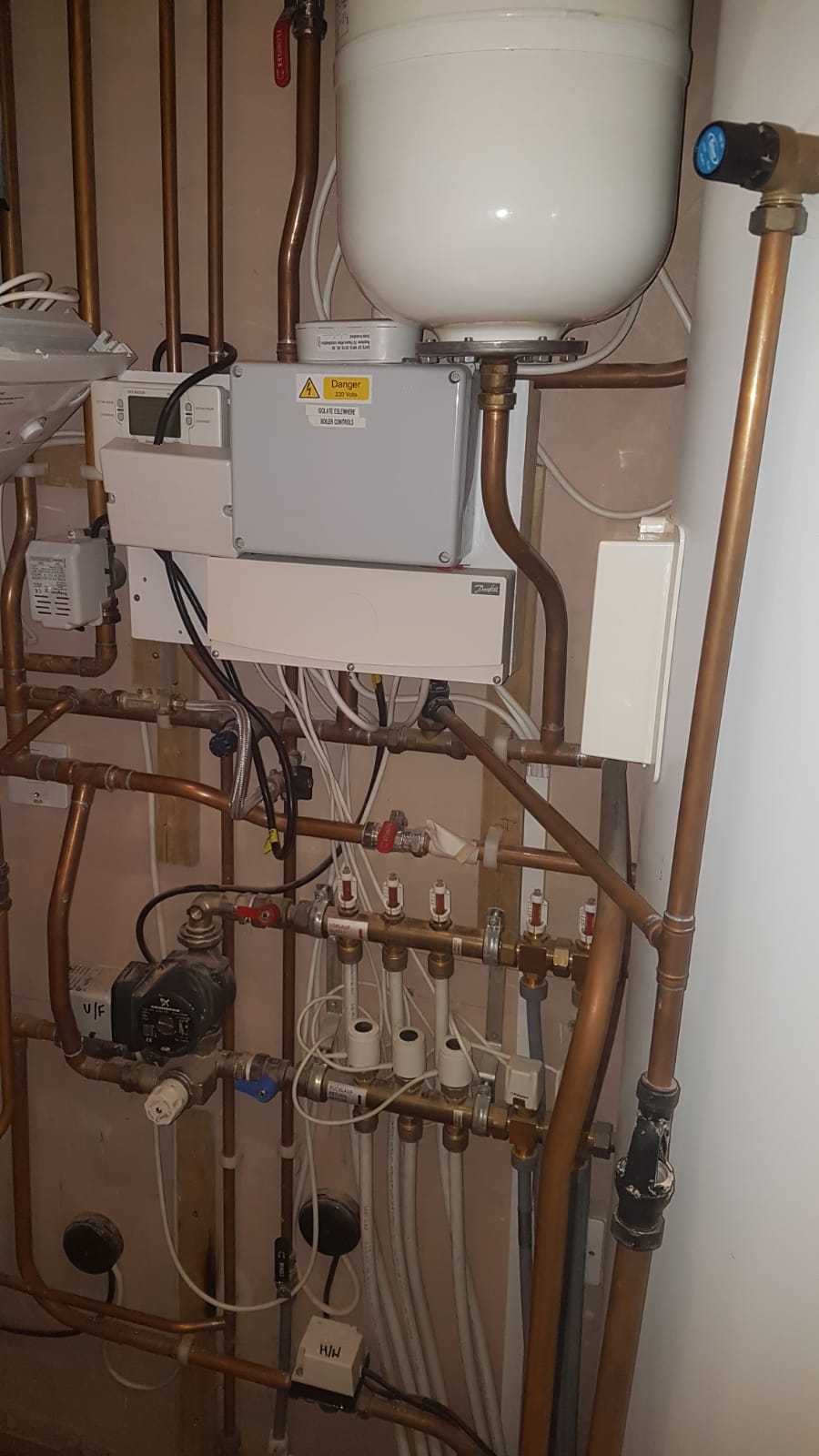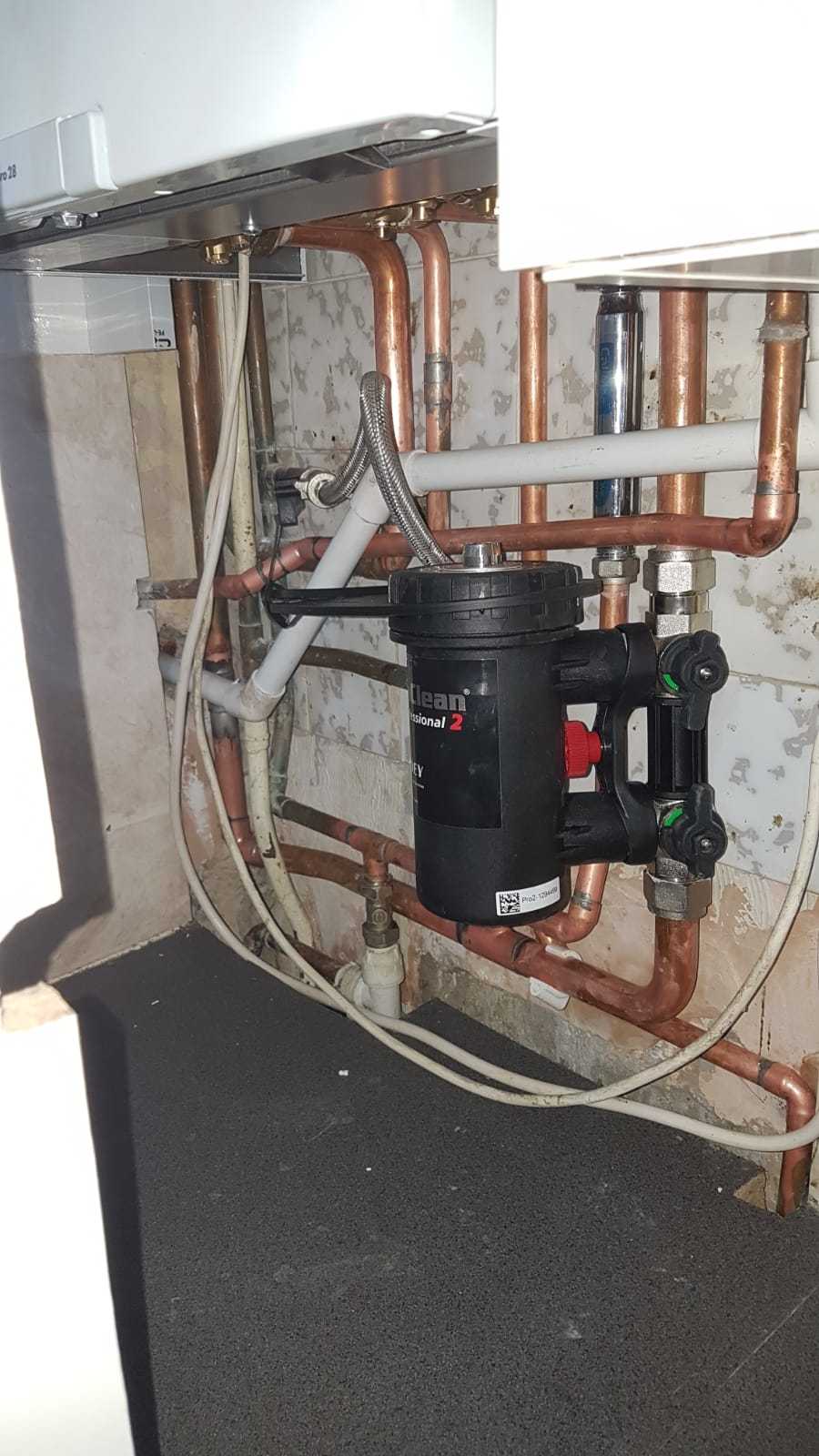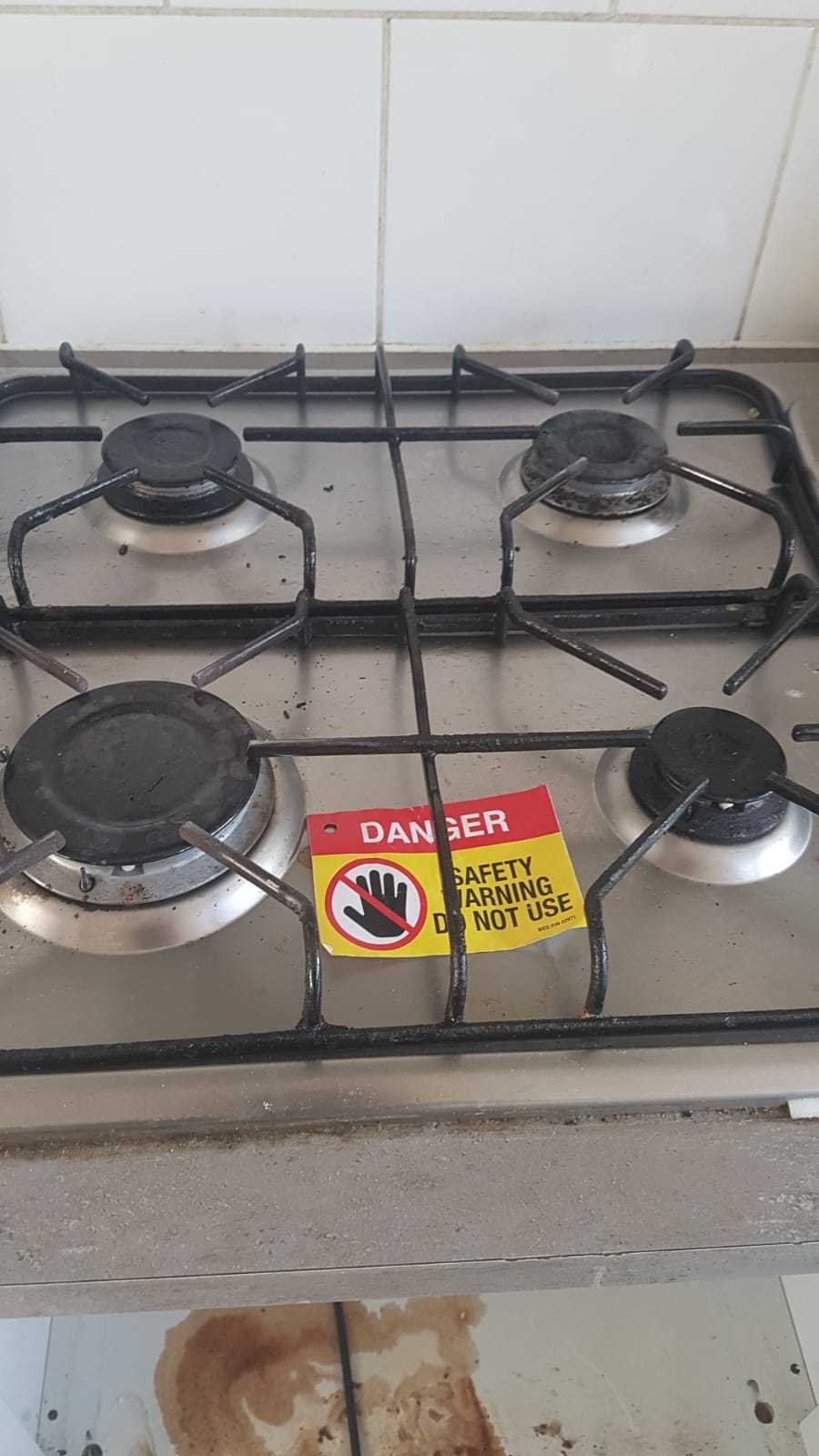

No, you do not need an electrical certificate (EICR) to sell a house in the UK. EICR is not a legal obligation, and it is not unlawful to sell a house without an EICR in the UK. The Electrical Safety Standards in the Private Rented Sector Regulations 2020 apply solely to rental properties.
A landlord needs to provide electrical safety in case of tenancy. The sellers are subject to the Consumer Protection of Unfair Trading Regulations of 2008. The buyer is not deceived regarding the state of the property. An EICR is not obligatory for the sale of a property, but any known electrical faults or hazards ought to be reported in good faith.
An EICR is recommended not due to legal reasons, but because it is a practical idea. EICR offers a written record of the electrical system inspection, a factor that ensures more buyers are confident and a factor that decreases the chances of disputes. EICR saves delays due to last-minute issues in the conveyancing process.
It is not legally obligatory for a landlord to offer an EICR upon selling a property. Legal liability to have a valid EICR occurs as long as the property is being rented under the Electrical Safety Standards in the Private Rented Sector Regulations 2020. EICR is no longer relevant to the sale transaction when the tenancy expires, and the landlord has chosen to sell the property.
The landlord still upholds the tenant’s rental safety legal requirements, even if the property is sold. The tenants are still living on the property until the property is completed. Landlords are willing to give a new EICR to assure buyers (investors) that the property is safe as expected.
A landlord can sell property with an unsatisfactory EICR, as the defects mentioned in the report should be made known. A poor EICR report implies problems that are coded as dangerous or potentially dangerous. Buyers can insist on having the repair done before exchange, demand a price discount, or include the cost of repair in their bid. There has to be transparency since the lack of disclosure of known issues is a violation of the Consumer Protection from Unfair Trading Regulations 2008.
A landlord can sell a property with an expired EICR. An out-of-date EICR report indicates the absence of recent assurance of electrical soundness, not the riskiness of the system. Buyers and mortgage providers can consider this a risk and insist on a revised inspection before taking the risk.
The provision of an EICR is voluntary because it encourages the prevention of complications in the sale process. Sellers also give out an Electrical Installation Certificate or a Part P Building Regulations compliance certificate. These certificates attest that the work was done to legal standards when it was done.
Sellers also provide options such as paying to get a new EICR or bargaining the price of the sale. Sellers also offer to pay the inspection fees following the sale, as per the documentation, in case of loss of the documentation. Customers also want to have their own EICR to be independent in the assessment. Insurance is another alternative to EICR, but it does not inherently ensure the safety of the electrical system itself.
The law does not compel the sale of a house with an EICR, but market demands do. EICR is necessary for buyer protection and transparency requirements, according to Dawoud Hamed et al, Electrical Fire Safety Knowledge and Awareness among Residential Buildings, published in 2026.
Does a landlord need an electrical certificate (EICR) to sell a house in the UK?
No, a landlord does not need an electrical certificate (EICR) to sell a house in the UK. The UK does not have any law that requires an EICR for property sales. The legal duty to have an EICR comes from the Electrical Safety Standards in the Private Rented Sector Regulations 2020.

This law applies only to a property that is rented. Under these regulations, landlords must ensure that at least once every five years, during a tenancy, they have an EICR. This obligation does not apply to the sale of a property once the landlord has decided to sell and the property is no longer in use.
Landlords are obligated under the Consumer Protection from Unfair Trading Regulations 2008. In this law, buyers must not be deceived, and any defects that are known, such as electrical problems, must be reported. This is the reason why an electrical installation condition report is advised in practice.
EICR gives evidence of the electrical condition, prevents controversy, and increases transparency, though it is not legally required to sell.
Do you need an electrical certificate to sell a house online?
No, you do not need an electrical certificate to sell a house online. UK property law does not legally stipulate that an EICR has to be obtained prior to the marketing or selling of a property online. The requirement to maintain an EICR under the Electrical Safety Standards in the Private Rented Sector Regulations 2020 only applies to rented premises during a tenancy. These regulations mandate Inspections and testing of electrical installations by the landlords every five years.
Sellers adhere to the Consumer Protection against Unfair Trading regulations of 2008. It is unlawful to deceive buyers or conceal significant information under this law. The seller should not hide the fact that electrical faults are present in the property. This is applicable in online listings, property portals, and estate agent marketing.
Should a tenant ask for an EICR when buying a house or flat in the UK?
Yes, a tenant should ask for an EICR when buying a house or flat in the UK to ensure safety. In the UK, an EICR is a legal safety report that is a requirement of the Electrical Safety Standards in the Private Rented Sector (England) Regulations 2020 in the eyes of a tenant. It has to be acquired by landlords at least once every five years. A copy of the report should be given to tenants by their landlords.
The report assures that electrical installations like wiring, sockets, and consumer units are not unsafe. All hazardous defects should be rectified according to the law. The tenants are entitled to ask for and see the EICR as evidence of compliance with safety.
Tenants have the opportunity to report the matter to the local authority if the landlord cannot offer an EICR. The government imposes fines and punishments on landlords, according to Laurent Lhardit, Residential electrical safety – How to ensure progress, published in 2020.
What electrical certificates must a landlord consider before selling a house in the UK?
The certificates a landlord must consider before selling a house in the UK are listed below.
- Minor works certificate
- Completion certificate
- Periodic inspection report
- Declaration of conformity
- Electrical installation certificate
Minor works certificate
Minor Works Certificate reports that the small electrical changes have been safely completed and tested to BS 7671 standards of wiring. It is issued when minor work, like adding sockets, lights, or minor circuit modifications, is performed. Selling a house in the UK does not legally require it. It is considered safe workmanship to make minor electrical modifications.
Completion certificate
A Completion Certificate is issued by Building Control to confirm that notifiable electrical work meets all relevant Building Regulations and Part P requirements. It grants the inspection and approval of electrical work and is reported to the local authority. It is not a particular requirement to sell a house in the UK, but it is a legal requirement to complete notifiable electrical work.
Periodic inspection report
Periodic Inspection Report evaluates the state and safety of an existing electrical installation, the presence of defects, deterioration, or risks. It is issued upon a complete inspection every 5-10 years or before renting or selling a property. It is not a statutory condition to sell a house in the UK. It is demanded when carrying out transactions involving property.
Declaration of conformity
The Declaration of Conformity report states that, to the best of the installer’s knowledge and belief, the electrical installation work has been installed in accordance with BS 7671 wiring regulations. It is a document that is issued by a qualified electrician when electrical installation or modification work has been done. It is a legal requirement in case electrical work is being done, but not a legal requirement to sell a house.
Electrical installation certificate
An Electrical Installation Certificate states that full electrical installations or rewiring work is designed, installed, and tested safely in accordance with BS 7671 standards. It is given upon completion of new or major electrical installation work. It is legally required for new or major electrical work, but not for selling a house that has not been subjected to such work. An Electrical Installation Condition Report (EICR) evaluates the safety and condition of an existing electrical installation, which distinguishes it from an Electrical Installation Certificate (EIC). An EIC is issued after new installation work, an addition, or an alteration to a circuit or consumer unit.
Does a landlord need an electrical installation certificate (EIC) to sell a house in the UK?
No, a landlord does not need an electrical installation certificate (EIC) to sell a house in the UK. An EIC is not necessary when a property is being sold, according to the Building Regulations 2010 (Part P -Electrical Safety).
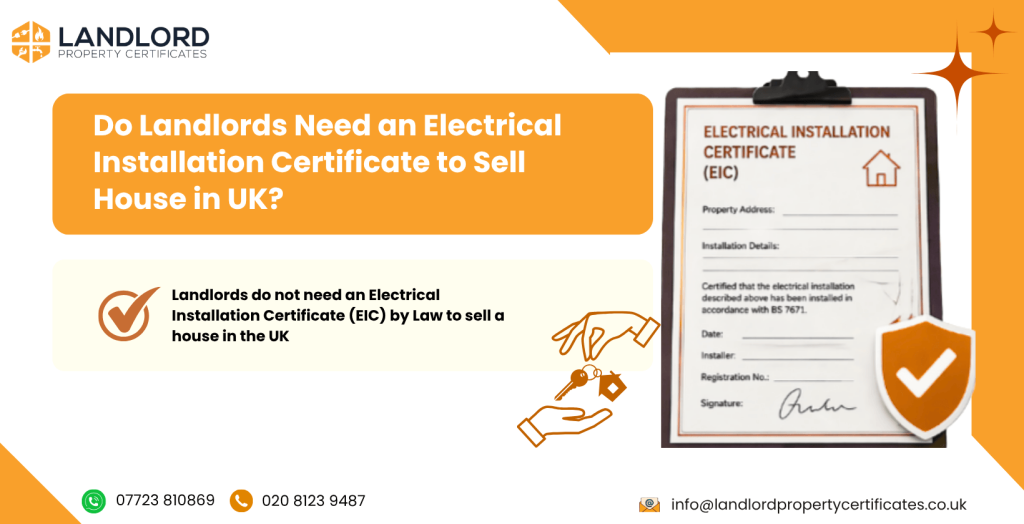
EIC is required where new electrical installation work or significant changes are being made. The Electricity at Work Regulations of 1989 also stipulate that electrical systems must be safe.
These legal conditions of sale of a house in the UK do not specify that an EIC is required as a legal condition of sale. They form part of the set of certificates that are requested as evidence of compliance and safety. An EIC is sometimes demanded by the buyer or solicitor, but the sale can take place without it.
Why do landlords need an EIC to sell a house in the UK?
Landlords need an EIC to sell a house in the UK because this is formal evidence that electrical installation or rewiring work was designed, installed, and subjected to testing according to BS 7671. EIC is not legally necessary in the sale, but is demanded by solicitors and buyers to ensure that the property is safe and certified.
In the absence of an EIC for recent or material electrical work, the buyer insists on additional inspection, postpones completion, or decreases their offer. The EIC serves as a record of regulatory compliance and minimizes liability issues when it comes to property transactions.
What’s the difference between an EICR and an electrical installation certificate?
An Electrical Installation Certificate (EIC) and an Electrical Installation Condition Report (EICR) are different electrical safety documents in the UK. An EIC is issued after new electrical installation work, such as a new circuit, consumer unit replacement, addition, alteration, or major remedial work. It confirms that the work was designed, installed, inspected, and tested in line with BS 7671 at the time it was completed. The IET states that an EIC should not be used for periodic inspection and testing of an existing installation.
An EICR is used to assess an existing electrical installation. It checks whether fixed electrics, including wiring, sockets, circuits, earthing, bonding, and consumer units, are safe for continued use. Electrical Safety First explains that periodic inspection and testing identify overloads, shock risks, fire hazards, defective work, lack of earthing or bonding, wear, damage, and deterioration. In England, rented-sector landlords must have electrical installations inspected and tested by a qualified person at least every 5 years and provide the report to tenants and the local council if requested. In simple terms, an EIC proves new electrical work was safe when installed, while an EICR checks whether an existing installation is still safe. For a full comparison, read our guide on the differences between EICR and EIC.
Can a landlord sell a house with an unsatisfactory EICR?
Yes, a landlord can sell a house with an unsatisfactory EICR. There is no legislation in the United Kingdom to stop selling the property based on EICR report conditions.
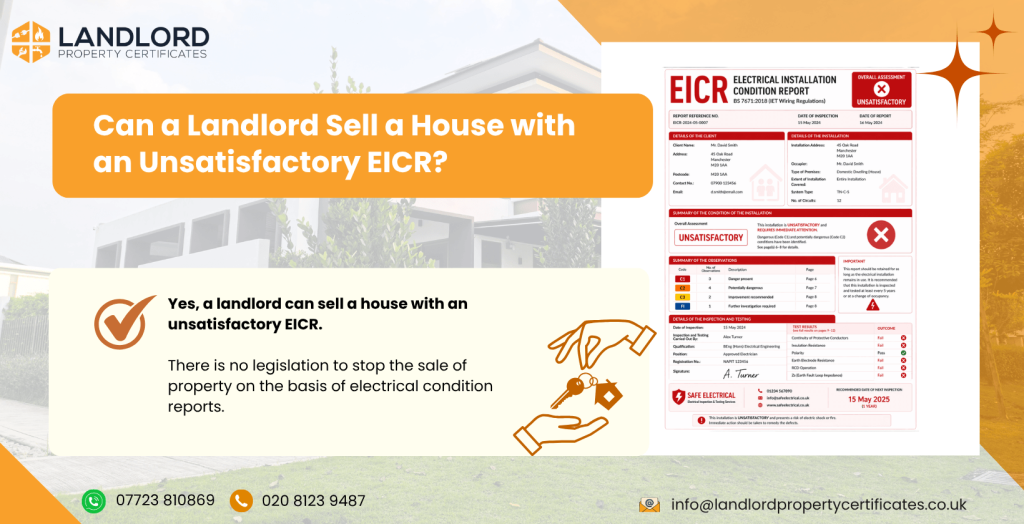
A poor EICR indicates the presence of C1 (danger present), C2 (potentially dangerous), or FI (further investigation required) problems in the electrical installation. These aspects indicate that the electrical installation is unsafe or not in agreement with BS 7671 standards. It demonstrates that the system contains severe faults like open live wires, overheated circuits, defective earthing, or old wiring, which make it more prone to fire and shock.
An unsatisfactory EICR represents old electrical systems, poor maintenance, overloading of circuits, water damage, or unqualified prior electrical work. These conditions are detrimental to tenants or occupants, since they cause the threat of electric shock, fire, and appliance breakdown. The sale is legal, but ethically, a landlord is required to report any defects and preferably fix the faults and sell the property. Concealment or neglect of safety errors exposes the occupants and prospective buyers to unwarranted risks and is unethical in terms of the duty of care.
Why do tenants not purchase a house with an unsatisfactory EICR in the UK?
The reasons why tenants do not purchase a house with an unsatisfactory EICR in the UK are listed below.
- Electric shock risk: Electric shock happens when faulty wiring, damaged insulation, or ineffective earthing permits the passage of current through unintended conductors. This is more hazardous in wet places such as kitchens or bathrooms, where water increases conductivity. An individual who comes in contact with metal surfaces or faulty appliances gets a severe or even fatal electric shock since the electric current is passed through the body to the ground.
- Fire risk: Electrical fires occur because of overheating of loose connections, overloaded circuits, or cables that are worn. As the damaged wires become more resistant, heat accumulates (I2R effect) and spills onto nearby combustible materials, like wood, plastic, or insulation. This renders unsatisfactory EICR properties very dangerous since faults go unnoticed until a fire breaks out.
- Appliance damage: Electrical appliances are damaged due to unstable voltage supply, inadequate grounding, or faulty wiring. This causes damage to sensitive electronics and household appliances due to overheating internal components or short-circuiting. In the long-run, this results in regular breakdowns and shortened life of the appliances and increased costs of replacement for tenants.
- Hidden electrical faults: Hidden electrical faults form in walls or ceilings or underground wiring where they cannot be observed, causing serious loss. These faults include insulation deterioration, corrosion, or loose joints that escalate as time passes without any noticeable appearance. This renders the risk uncertain in that the system seems normal but is unwieldy on the inside.
- Instability and destabilization of power: Instability and destabilization of power boards result in frequent tripping, power loss, or half power. This interferes with everyday operations like cooking, heating, and charging devices. It also shows more profound issues with the electrical system that need to be rewired completely.
- Older wiring systems are at an increased risk: The wiring material used in older properties, such as rubber or fabric insulation, is old and deteriorates as the building ages. Such materials are brittle in nature and easily crack and lose their insulating properties. These faults cause short-circuiting and electrical breakdowns.
- Moisture-related hazards: The moisture contained in places like bathrooms, kitchens, or basements decreases electrical resistance. This enables electricity to pass along unintended routes, which pose a great risk of shocking, short-circuiting, and system breakdown.
- Lack of safety assurance: In the absence of an acceptable EICR, there is no approved assurance that the electrical system complies with existing safety standards. It implies that protective equipment, such as circuit breakers or RCDs, can fail to work correctly. The occupants are exposed to electrical hazards that cannot be detected.
How to sell your property in the UK without an EICR?
The conditions to sell your property in the UK without an EICR are listed below.

- Legal position: The UK does not require property sales to be backed up by an EICR. It is not compulsory unless it is a rented property and subject to the Electrical Safety Standards in the Private Rented Sector (England) Regulations 2020. It is requested by solicitors and buyers during a sale as part of due diligence since electrical safety has an impact on property value, insurance, and mortgage approval.
- Disclosure to buyer: A landlord must inform the buyer that there is no recent EICR. The reason behind this is that the lack of disclosure of known safety risks results in legal contests during post-completion. Clear communication ensures the seller is protected against any future allegations of misrepresentation or negligence.
- Alternative electrical documentation: Other documents, such as Electrical Installation Certificates (EIC), Minor Works Certificates, or Building Control Completion Certificates, are used instead of an EICR. These indicate that all or part of the electrical work was performed by qualified individuals, but do not substitute for a complete safety evaluation of the whole installation.
- Buyer inspection and due diligence: The majority of buyers hire their own surveyor or electrician to determine the electrical system in the property. This is due to the fact that latent faults like old wiring, ineffective earthing, or overloaded circuits are hazardous and costly to fix once bought.
- Elective pre-sale compliance plan: The landlords prefer to acquire an EICR before selling to avoid delays. It is better to repair them beforehand to create more trust among buyers. It lessens the pressure during the negotiations and increases the probability of selling faster and at a higher price.
- Conveyancing completion process: The legal sale is still conducted even in the absence of an EICR by ordinary conveyancing with the agreement of the buyer. Non-electrical certification delays the checks by the law and heightens the suspicion of the solicitors and lenders before the final approval.
Who pays for the electrical certificate when selling a house?
The owner and landlord pay for the electrical certificate when selling a house, rather than the tenant. The Electrical Safety Standards in the Private Rented Sector (England) Regulations 2020 state that the owner of installations is liable for electrical safety. The owner is required to have installations inspected and tested by a competent person and to issue reports to the tenant. The EICR cost in the UK ranges from £80 to £350 for residential properties and £300–£500 for commercial premises.
Should a tenant buy a house or property in the UK without an electrical certificate?
A tenant should not buy a house or property in the UK without an electrical certificate, as it is risky. The buyer does not get any verified evidence of safe or compliant wiring and electrical systems without an EICR. No electrical certificate in a property causes the presence of latent risks like faulty wiring, fire risks, or costly repairs once bought. Surveyors and mortgage lenders frequently raise concerns about outdated or unsafe electrical systems, which can delay approvals, negotiations, or the overall property sale process.
Electrical safety is a legal priority in occupied properties, although it is not a legal requirement to have an EICR when selling a property. The Electrical Safety Standards in the Private Rented Sector (England) Regulations 2020 demonstrate that electrical safety should take priority. A cautious consumer must insist on an EICR, bargain the price where it is not provided, or seek to have an independent survey done before making a purchase.
What are the benefits of having an EICR when selling a house in the UK?
The benefits of having an EICR when selling a house in the UK are listed below.

- Increases buyer confidence: An EICR provides a clear indication that a qualified electrician has checked the electrical installation. There is a sense of safety as buyers are not basing their decision on assumptions regarding safety. It reduces the fear of undisclosed defects and builds confidence in the seller’s transparency. This trust enables customers to be more eager to do so without second thoughts.
- Enhances the value of the property: A property with an effective EICR seems to be better-kept and well-managed. Consumers tend to equate certified safety with the general quality of properties. A current EICR justifies the price at which it is being sold and eliminates the suspicion that it could be expensive to repair in the future. It is also an indication that the owner has invested in good maintenance.
- Enables quicker sales procedure: A smaller number of questions are asked in surveys and legal inspections when an EICR is already present. Documented electrical safety is trusted by conveyancers and surveyors without additional inspections being requested. This confidence reduces unnecessary back-and-forth communication and prevents procedural delays. The transaction is able to proceed to completion faster.
- Reduces risk of price negotiation: Without an EICR, buyers think about worst-case scenarios, and the price is negotiated down. The valid EICR eliminates doubts about electrical faults or upgrading expenses. This restricts the leverage that the buyer has by using the issues of safety. It assists the sellers in preserving their anticipated selling price.
- Demonstrates legal awareness: An EICR is not a requirement to sell, but it demonstrates compliance with safety requirements identified in the Electrical Safety Standards in the Private Rented Sector (England) Regulations 2020. It indicates that the seller is aware of regulatory requirements on electrical safety. This produces a good appearance in the process of reviewing the law and evaluation by the buyer. It also minimizes the chances of compliance-related issues.
- Prevents unexpected issues: An EICR highlights faults like old wiring, overloaded circuits, and earthing issues before the property is put on sale. Early correction of these problems helps in avoiding last-minute surprises when buyers are inspecting their goods. It avoids the collapse of deals because of newly found faults. Getting an EICR early also helps keep repair costs under control, as electrical problems can be identified and fixed before they become more serious or delay the property sale.
- Strengthens market competitiveness: In a competitive real estate market, any extra paperwork decreases a listing. Customers tend to make comparisons and buy houses with a proven safety history. EICR provides a professional benefit and distinguishes the property. This results in faster offers and negotiating results.
What certificates are required when selling a house as a landlord in the UK?
The certificates required when selling a house as a landlord in the UK are listed below.

- Energy Performance Certificate (EPC)
- Gas Safety Certificate (CP12)
- Electrical Installation Condition Report (EICR)
- Energy and safety compliance records
- Building Regulations Compliance Certificates
- Fire and Smoke Alarm Compliance
- Documents on tenancy (when selling with a tenant)
1. Energy Performance Certificate (EPC)
Energy Performance Certificate (EPC) is legally mandated in the marketing of a property to be sold. It displays the energy efficiency score between A and G, and it has suggestions on how to improve. This certificate is handed over to potential buyers by sellers. Under the Energy Performance of Buildings (England and Wales) Regulations 2012, an EPC is valid for 10 years.
2. Gas Safety Certificate (CP12)
Any property containing gas appliances should have a valid gas safety certificate (CP12) from its landlord. This certificate ensures that boilers, cookers, and flues are inspected by a registered engineer. CP12 is necessary when renting, but is demanded when selling to provide safety assurance under the Gas Safety (Installation and Use) Regulations 1998.
3. Electrical Installation Condition Report (EICR)
EICR is compulsory for rental properties and establishes the safety of electrical installations. It is not a mandatory condition to sell a property. Landlords are supposed to possess one to demonstrate compliance and reassure buyers. EICR is required by the Electrical Safety Standards in the Private Rented Sector (England) regulations of 2020.
4. Energy and safety compliance records
Landlords are expected to provide all the recent compliance documentation, including safety checks and maintenance records, to prove that they legally rented the property. The buyers demand an energy and safety compliance record to avoid legal risks.
5. Building Regulations Compliance Certificates
Building Regulations Compliance Certificates are provided where any structural work, rewiring, or extensions have been done. These certificates ensure that the work is safe and meets the legal requirements. The absence of Building Regulations Compliance Certificates slows down or influences the sale process.
6. Fire and Smoke Alarm Compliance
The landlords have to ensure that smoke detectors and carbon monoxide detectors are installed and operational in their rented houses. Buyers request evidence of compliance before purchasing a property. Fire Alarm certificates and smoke compliance are in accordance with the Smoke and Carbon Monoxide Alarm (England) Regulations 2015.
7. Documents on tenancy (when selling with a tenant)
Documents on tenancy affirm the legal tenancy management and safeguard the rights of the buyer and the tenant. If the property is sold with a sitting tenant, the tenancy agreement, deposit protection certificate, and prescribed information have to be delivered.
Is an EICR a legal requirement for all properties?
No, an EICR is not a legal requirement for all UK properties. EICR applies to privately rented residential property under the Electrical Safety Standards in the Private Rented Sector (England) Regulations 2020. This law places a duty on landlords to have electrical installations inspected and tested at least every 5 years. It is also applicable to Houses in Multiple Occupancy (HMOs) under the Housing Act 2004, whereby more stringent safety standards are imposed.
There are no EICR regulations for landlords of owner-occupied houses or those houses that are sold. It is highly suggested, in order to ensure safety and confidence to purchasers, according to G. Tsagarakis, A. J. Collin & A. E. Kiprakis, Statistical Review of UK Residential Sector Electrical Loads, published in 2013.