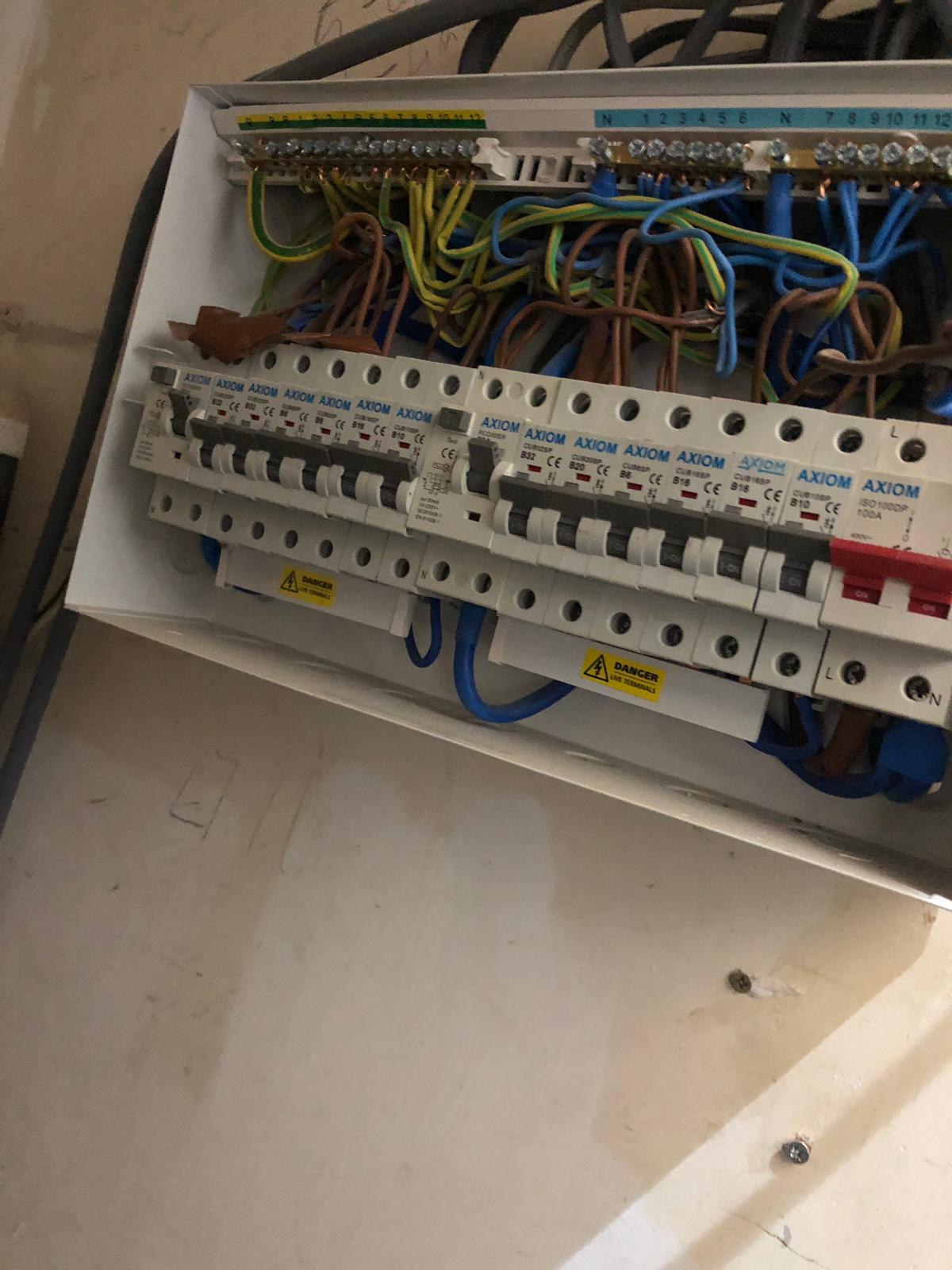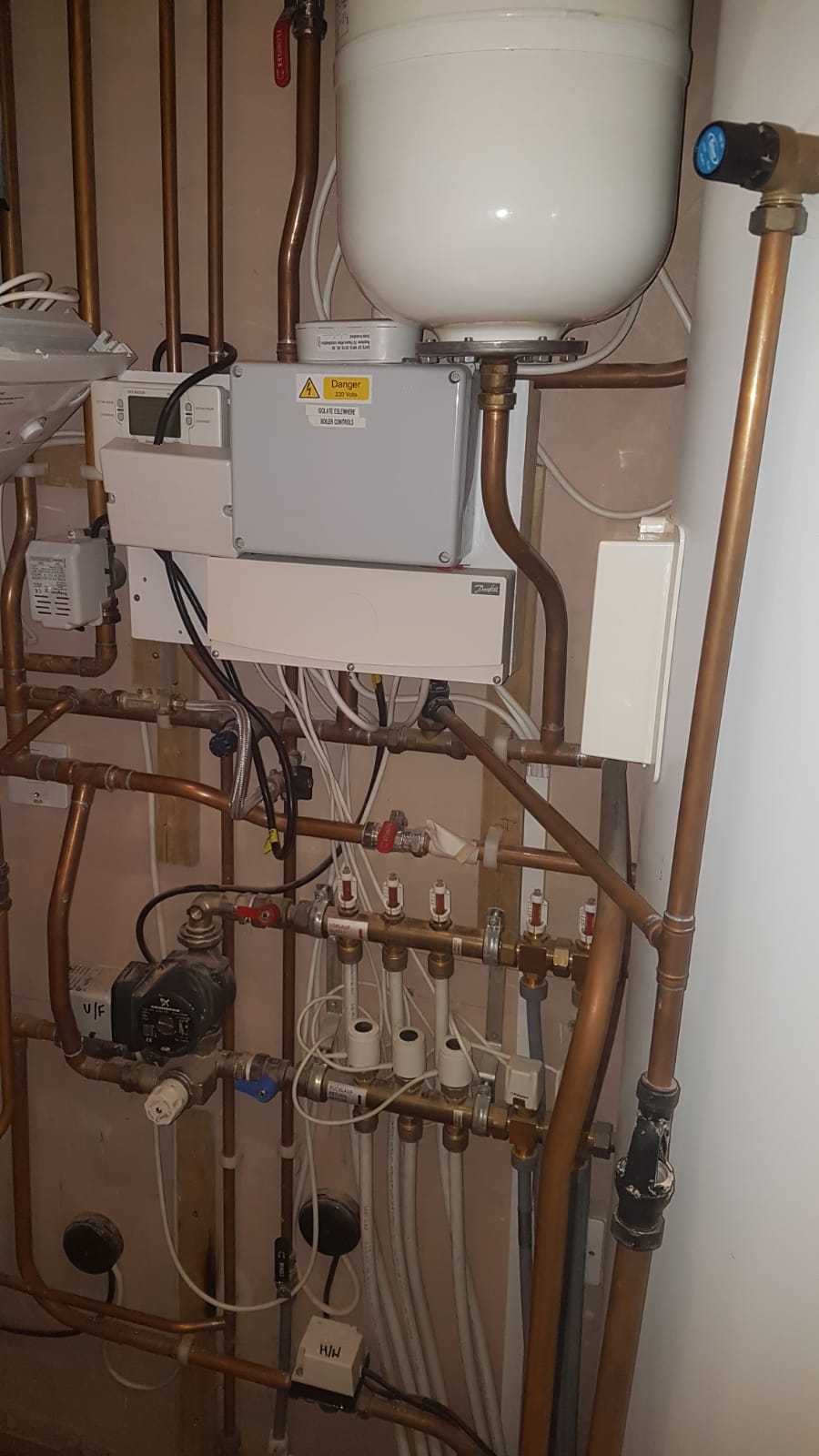
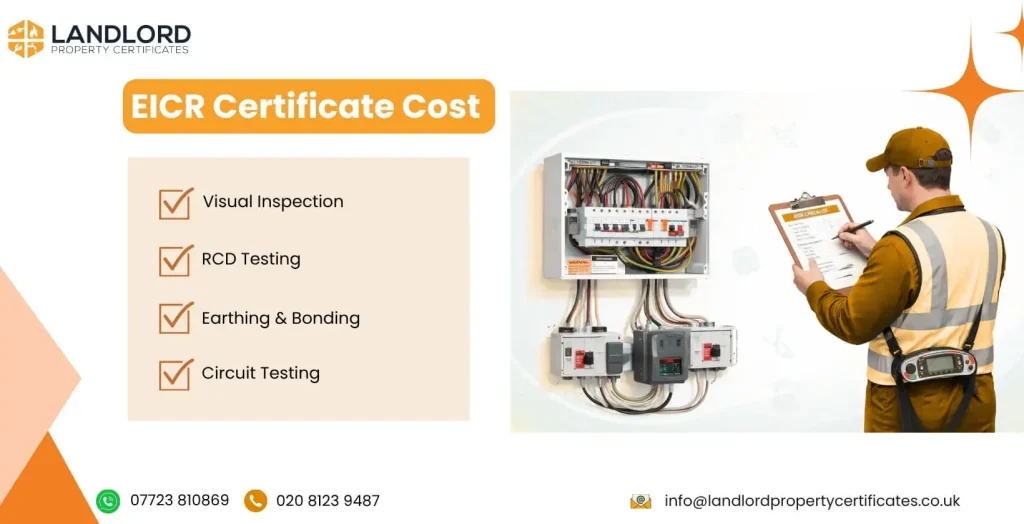
The EICR (Electrical Installation Condition Report) cost is the charge for inspection, testing, and certification of fixed electrical installations in the UK to meet the BS 7671 standards of safety. EICR cost is based on the type of property, circuit load, and the extent of the inspection.
The cost of EICR in 2026 is between £130 and £350 for domestic properties in the UK.
The EICR cost for commercial properties in the UK starts from £280, depending on the size of the system and the testing requirements.
The main effects on EICR cost are the size of the property, the total number of circuits, and the location (London vs outside London). The wiring system age, the number of consumer units, accessibility of the electrical installation, urgency of inspection, and the state of the electrical system also affect EICR cost.
A 1-bedroom property with a small number of circuits has EICR costs between £130 and £150.
A 2-bedroom property costs between £130 and £160.
A 3-bedroom property costs between £130 and £170, and a 4-bedroom property costs between £170 and £200 for EICR.
Properties outside London cost for EICR £130-£250, and properties in London cost £170-£250 since it has higher labour, congestion, and parking costs. Age of the wiring system also affects EICR cost, as £130-£180 is for 10-20 years old wire, £130-£220 for 20-30 years, and £130-£300 for 30-40 years old.
Very old or poor-quality wire costs £140-£250 for EICR because the old system takes longer to be tested and fault-traced.
A single modern unit costs between £130 and £180, two units cost between £180 and £200, and three units cost between £200 and £280 for EICR. Four or more units in an HMO, large home, or commercial premises cost starting from £280 for EICR, depending on the spread of the system. The electrical points that are easily accessible cost £130-£180 for EICR and, with some limitations, cost £140-£240. Very limited access in commercial plant rooms or complicated buildings costs starting from £300 for EICR in the UK because of extra labour.
Standard scheduled inspection costs £130, and £180 for EICR, and faster booking of an appointment within a short period of time is between £180 and £300. Same-day inspection costs for EICR are between £180 and £400, and emergency or out-of-hours inspection costs £300 and £500, because urgent bookings take priority. Well-maintained systems cost £130 to £180, systems with minor faults cost £160 to £240 or more, and systems with complex faults cost from £220 to more for EICR.
Systems that are severely deteriorated or non-compliant cost £450 to £900 for EICR, depending on the time spent in remedial inspection. The UK EICR cost trend displays a slow annual increment trend of about £100 and £300 in 2025. EICR cost increased from £120 to £350 in 2026 as a result of changes in labour and compliance requirements. Landlord EICR certification costs £130-£180 per property after every 5 years, as required by Electrical Safety Standards in the Private Rented Sector (England) Regulations 2020. The landlords are encouraged to hire well-registered electricians for an EICR certificate, not very inexpensive ones. The quality of compliance and proper testing is paramount to legal safety requirements, according to “Bautista, Castro & Landesa”, “Maintenance Cost Assessment for Heterogeneous Multi-Component Systems Incorporating Perfect Inspections”, published in 2024.
EICR Cost Calculator (UK 2026)
Estimated EICR Cost
£0
Indicative 2026 UK rates. Hourly £40–£80 · Day £250–£450 · Emergency call-out £80–£150 · Per-circuit reporting £5–£15. Landlord renewal required every 5 years (Electrical Safety Standards 2020). Confirm with at least 2 NICEIC/NAPIT-registered electricians.
What is the cost to get an EICR certificate in the UK?
The cost to get an EICR certificate in the UK is between £130 and £250 for domestic properties. The smaller flats cost between £120 and £180, and larger houses with more complicated systems cost £250-£350 for EICR. An average with larger and more complicated commercial properties costing between £200 and £800 for EICR.

The lowest cost for EICR is £130 for a small 1-bedroom house or small flat with a simple electrical installation and fewer circuits, which takes less time to check and requires a simple test. The median cost for EICR is £130-£200 for a 2-3 bedroom house with a standard amount of circuits and normal accessibility. It demands a full check-up and standard reporting. The highest cost of EICR (domestic: £350; commercial: £800 or more) is for a large property, HMO, or commercial building with more than one circuit, several consumer units, and a complicated wiring system.
The property size and number of circuits, location (London vs outside London), and age of the wiring system affect the cost of EICR. The number of consumer units, accessibility of the electrical installation, urgency of inspection, and condition of the electrical system also affect the cost of EICR in the UK.
What is the cost to get a residential EICR certificate in the UK?
The cost to get a residential EICR certificate in the UK is between £130 and £350. The cost of an EICR for a small flat or 1-bedroom house is between £130 and £180. A 2-to 3-bedroom house EICR cost is between £130 and £250, based on the time of inspection, the condition of the wiring, and the location.
What is the cost to get a commercial EICR certificate in the UK?
The cost to get a commercial EICR certificate in the UK ranges from £200 to £800 or more, depending on the size of the premises, number of circuits, and complexity of the electrical system. Smaller commercial premises like small shops or offices cost around £280- £550 for an EICR. Medium commercial premises like restaurants, larger retail premises, or multi-room offices cost around £ 400- £ 800 for an EICR. Larger buildings with extensive wiring systems, multiple distribution boards, or three-phase supply cost starting from £800 for an EICR.
What factors affect the cost of an EICR Certificate in the UK?
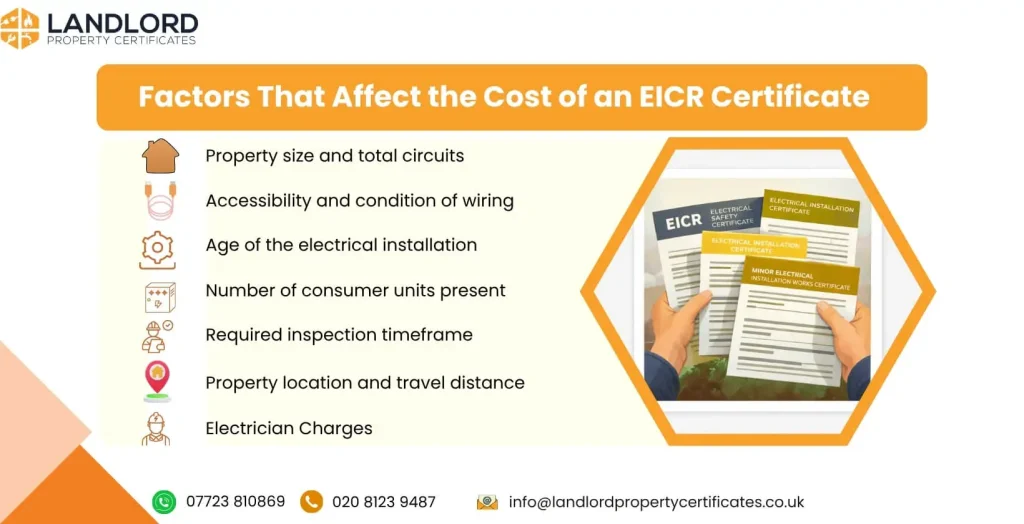
The factors that affect the cost of an EICR Certificate in the UK are listed below.
- Property size and total circuits
- Accessibility and condition of wiring
- Age of the electrical installation
- Number of consumer units present
- Required inspection timeframe
- Property location and travel distance
- Electrician Charges
1. Property size and total circuits
Property size and the total circuits influence EICR cost. A larger property has more electrical circuits, sockets, lighting points, and distribution loads, which makes the inspection time longer and testing more complicated.
- Studio apartment: Studio apartment costs for EICR are between £120 and £150 because of extremely limited circuits and a simple wiring design.
- 1-bedroom flat: A 1-bedroom flat costs between £ 130 and £ 140 for EICR due to a little more circuiting, but still has small electrical systems.
- 2-bedroom flat: A 2-bedroom flat costs between £130 and £150 for EICR, with additional rooms adding sockets and lighting circuits.
- Flat with 3 bedrooms: A flat with 3 bedrooms costs between £130 and £160 for EICR because the wiring is now more elaborate, and more circuits are required.
- 4-bedroom flat: A 4-bedroom flat costs £140-£170 for EICR due to numerous circuits and potential extra consumer load.
- 5-bedroom flat: A 5-bedroom flat costs between £ 150 and £ 180 for EICR, as it is a high-circuit area and needs more time to inspect.
- 1-3 bedroom house: A 12-bedroom house costs between £130 and £200 for EICR since houses come with outdoor circuits, a garage, or extensions.
- 4-5 bedroom house: A 4-5 bedroom house costs £150-£300 for EICR because of higher circuit distribution and multiple ring mains.
- House with 5 bedrooms: A house with 5 bedrooms costs £170-£350 for EICR due to increased electricity consumption and the intricacy of the wiring systems.
- 6 or more bedroom property (large house or HMO): A 6 or more bedroom property costs £275-£800 for EICR because of the large circuit networks, several boards, and much longer testing and reporting time.
2. Accessibility and condition of wiring
Wiring accessibility and condition affect the cost of EICR, as challenging access to electrical points can be. Poor wiring conditions raise inspection time, testing effort, and fault-finding effort.
- Very easy access (new building, exposed consumer unit, clear socket access): Very easy access buildings cost between £130 and £160 for EICR since inspection is fast and simple.
- Standard residential access (average houses with limited limitations): Standard residential access buildings cost between £130 and £150 for EICR since sockets and fittings must be checked as a matter of routine.
- Difficulty with moderate access (lofts, cupboards, half-blockage, extensions): Moderate access buildings cost between £180 and £280 for EICR because of the additional time required to access and test circuits.
- Difficult access (enclosed wiring, tight spaces, sealed off spaces, restricted access): Difficult access buildings cost between £250 and £350 for EICR since the inspection involves dismantling or a longer test period.
- Most atrociously inaccessible or complicated systems (commercial plant rooms, industrial installation, restricted electrical areas): Atrociously inaccessible or complicated systems cost between £300 and £800 for EICR because it takes a lot of labour and complicated safety measures.
- Good state of wiring (newly installed or well-maintained systems): Good state of wiring costs between £130 and £180 for EICR, as fewer faults and little diagnosis are needed.
- Satisfactory condition (minor wear, small defects): Satisfactory condition buildings cost £150–£240 for EICR, as limited fault checking is needed.
- Older systems (wire wear, or old-fashioned parts): Older systems cost £200-£300 for EICR because of the extra testing and certification.
- Bad condition wiring (high frequency of faults, old-fashioned materials, safety issues): Bad condition wiring costs between £250 and £400 for EICR because of the need to conduct the investigation.
- Poor or unsafe condition (significant faults, risk of rewiring, non-compliant systems): Poor or unsafe condition buildings cost £300-£800 for EICR due to the possibility of a lot of testing, reporting, and rechecking.
3. Age of the electrical installation
The age of the electrical installation influences the cost of EICR since older systems of the wiring normally need more testing, fault finding, and verification than the newer compliant systems.
- New electrical installation (05 years and new modern wiring to current standard): A new electrical installation ( 5 years) costs between £130 and 180 for an EICR, since the testing process is quicker with few faults anticipated.
- Relatively new system (5-10 years, updated but not brand new): A relatively new system (5-10 years) costs £140-200 for an EICR, as a standard inspection check is enough.
- Moderately old system (10- 20 years, older standards but still serviceable): A moderately old system ( 10-20 years) costs between £130 and £240 for an EICR because of the more thorough compliance check.
- Old installation (20-40 years, can be upgraded in parts): Old installation(20-40 years) costs between £130 and £300 for EICR since additional testing is required to determine the wear and validity of old parts.
- Very old installation (40 or older, original or minimum rewiring): Very old installations (40 years or older) cost £140-£400 for EICR because there is a greater potential for faults and it takes longer to inspect.
In the UK, renewals of EICR cost the same as a standard inspection, between £130 and £350 for residential properties, and are done by landlords every 5 years (60 months). The recommended frequency of safety compliance with older systems is to demand a higher renewal fee because of their extra testing demands.
4. Number of consumer units present
Consumer units (fuse boards) affect the cost of an EICR because an extra distribution board adds work, inspection, circuit testing, and documentation.
- 1 Consumer unit: A 1 Consumer unit costs between £130 and £140 for EICR because all circuits are centralized, making it faster to test.
- 2 Consumer units: 2 Consumer units cost £160-£240 for EICR because split circuit testing is done on two boards.
- 3 Consumer units: 3 Consumer units cost between £200 and £300 for EICR because coordination and testing time become much more important.
- 4 consumer units: 4 consumer units cost between £250 and £400 for EICR since various boards have to undergo repeated inspection and isolation processes.
- 5 consumer units: 5 Consumer units cost £300-£500 for EICR because of the extensive testing in various electrical areas.
- 6 consumer units: 6 consumer units cost £350-£800 and more for EICR in large HMOs, commercial buildings, or industrial sites where the distribution network is complex and needs detailed testing and reporting.
5. Required inspection timeframe
The time period of the required inspection affects the EICR cost since the quicker service needs to be prioritized, additional labour is required, and sometimes out-of-hours testing is needed.
- Normal booking (full inspection included): Normal booking costs £130–£250 for EICR and is a standard scheduled EICR since it is based on regular appointment programs and a complete test procedure.
- Flexible scheduled EICR (split visit or phased inspection in phases): Flexible scheduled costs between £130 and £280 for EICR since the inspection is split up over circuits or regions.
- Fast-track EICR (booking a few days before): Fast-track EICR costs between £150 and £350 because of the preference over regular jobs.
- EICR urgency (next-day or within a week guaranteed completion): EICR urgency costs between £150 and £400 as electricians shift work to finish the inspection promptly.
- Emergency EICR (inspection on the same day with instant report): Emergency EICR (same day of inspection) costs £250-£500 due to the need for urgent deployment and interrupting the scheduled work.
- Basic testing only: Basic testing costs £130-£200 for EICR when only circuit testing and visual inspection are involved, without wide scope fault resolution.
- EICR survey price (complete condition survey of the property in terms of circuits, safety checks, and reporting): EICR survey (survey and reporting) costs £130-£350 based on property size and complexity.
- EICR report cost per circuit (assessment of individual circuit, as part of full test): EICR report cost per circuit between £5 and £15 per circuit based on complexity and test time.
6. Property location and travel distance
Location of the property and distance to travel affect the EICR cost. The varying costs of electrician labour rates, travel time, and demand in different regions of the UK, with London and the South East being more expensive than other regions.
- Beyond London (rural and small towns in the UK): Beyond London costs £130-£170 for an EICR since labour rates and travelling distance are lower, decreasing the total cost.
- Northern England (Manchester, Leeds, Liverpool areas): Northern England costs £130-£240 for an EICR owing to average labour prices and average demand.
- Midlands (Birmingham, Nottingham, Leicester areas): Midlands costs between £140 and £260 for EICR as labour costs and the demand in the city are balanced.
- South West (Bristol, Exeter, Cornwall areas): South West costs between £150 and £280 for EICR due to the possibility of travel distance between properties taking up more time.
- Outside London (South East, Kent, Surrey, Sussex): Outside London costs between £130 and £300 for EICR since prices in the region are higher and closer to London market rates.
- Greater London: Greater London costs between £170 and £350 for EICR due to the added labour costs, congestion, and access costs.
- Central London areas: Central London areas cost between £170 and £350 for EICR since travelling time, congestion fees, and limited access add a lot to the cost of inspection.
- Remote or inaccessible locations (islands, rural periphery): Remote or inaccessible locations cost between £200 and £450 for EICR because of the greater travel distance and the small number of qualified electricians.
7. Electrician Charges
Electrician charges affect EICR cost since the majority of inspections are charged by labour time, qualification, and complexity of the job, and various electricians charge hourly, daily, or a fixed project rate based on the work scope.
- Hourly rate: A qualified electrician (Level 3 NVQ Diploma) in an EICR job costs between £110 and £130 an hour (60 Minutes) in London or on an emergency basis.
- Per day rate: A qualified electrician (Level 3 NVQ Diploma) in an EICR job costs between £350 and £450 or more per day in London or on an emergency basis.
- Per-week charge: The cost of continuous contracted work is £1,200-£2,500 per week (7 days), but is applied to larger projects and not to individual EICR jobs.
- Per-month fee: The per-month (30-day) charge in an EICR job is between £4,000 and £9,000 for full-time contracted electricians to do maintenance on an ongoing project or commercial premises.
- According to the full EICR job (fixed price), the cost for an electrician for domestic properties is between £130 and £350. The charge for electrification for commercial properties is between £280 and £800 or more in an EICR job, depending on the number of circuits, condition, and complexity.
- Emergency call-out rate: The emergency call-out rate for an electrician in an EICR job is between £180 and £250 or more to attend. This cost is applied even without the inspection or repair costs, particularly in the evening or on a weekend or when there is a real emergency, according to “Ajayi, Daramola and Adhuze”, “Cost Management Evolution in Building Projects: A Review of Innovations and Challenges”, published in 2024.
How has the EICR certificate cost evolved over the last 10 years?
The prices of EICR have shifted downwards from the middle of 2016 to higher values in 2026, particularly in London and in big houses.
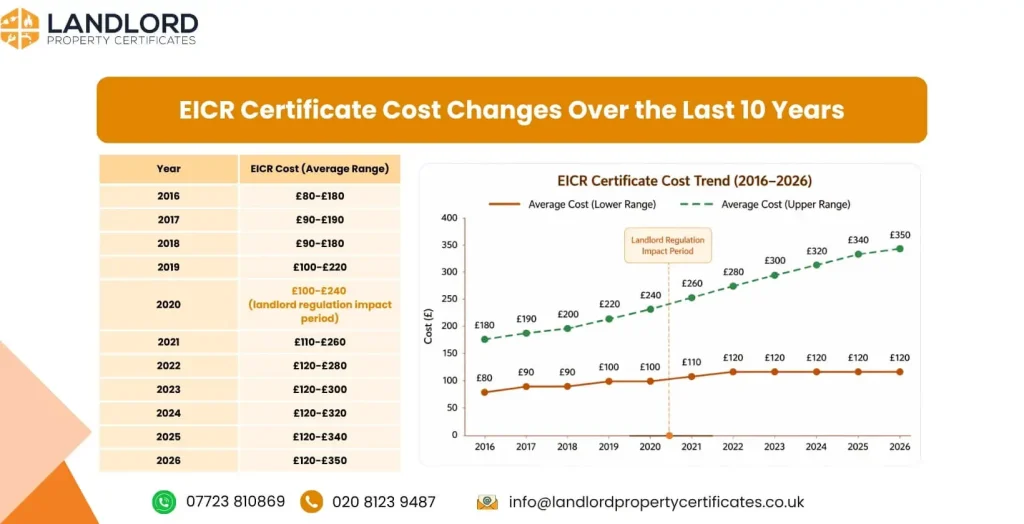
The EICR certificate cost has evolved over the last 10 years, as described in the table below.
| Year | EICR Cost |
| 2016 | £80 – £180 |
| 2017 | £90 – £190 |
| 2018 | £90 – £200 |
| 2019 | £100 – £220 |
| 2020 | £100 – £240 (landlord regulation impact period) |
| 2021 | £110 – £260 |
| 2022 | £120 – £280 |
| 2023 | £120 – £300 |
| 2024 | £120 – £320 |
| 2025 | £120 – £340 |
| 2026 | £130 – £350 (standard residential average range) |

Should you choose a cheap EICR certificate provider?
No, you should not choose a cheap EICR certificate provider because very cheap inspections are associated with low competency, haste testing, or failure to perform a full test instead of a true value. Very low costs of EICR services cause a short inspection period, omission of circuit testing, and an increase in faults. An insufficient number of faults in a report is representative of the safety of the property. Other providers also do several inspections within one day, and their focus on detail is minimal. This exposes them to the danger of not identifying any possible hazards, like faulty wiring or overloaded circuits. This led to severe repercussions in the future, such as insurance claims, unsuccessful compliance audits, or even unforeseen, costly cleanup following a deeper inspection.
Unqualified or less experienced electricians also engage in cheap EICR services, which cause more risks of wrong coding of electrical faults or not reporting them fully. Registered and qualified electricians according to BS 7671 standards offer extensive circuit testing, making the certificate legally and technically sound.
Low prices seem appealing, but it is seen as creating greater risk in the long term. Electrical safety does not solely rely on paperwork, but on proper testing. The bad quality of testing in inspections creates several hidden electrical faults. It ends in landlords taking the risk and facing costly repairs from future inspections, according to “Tighnavard Balasbaneh et al.”, “A Systematic Review of the Life Cycle Cost Estimation of Upgrading Buildings for Sustainability”, published in 2025.
What are the tips for reducing EICR cost in London?
The tips for reducing EICR cost in London are listed below.
- Choose certified electricians: Choose NICEIC or NAPIT registered contractors to prevent electrical inspections from being made repeatedly. Certified EICR experts in London are electricians known to follow standard inspection procedures and precautions (BS 7671). Certified electricians are less likely to have reports fail. Re-inspection is needed on a failed EICR, doubling the cost.
- Compare multiple quotes: Get info on a minimum of 3-5 electric inspection providers’ charges in London. The EICR market is competitive, and prices fluctuate depending on the overheads of the companies, experience, and demand. Making comparisons helps determine fair prices and avoid overpricing because of information asymmetry.
- Bundle multiple properties: Multi-unit inspections of several rental properties reduce EICR cost. Inspection firms lower the unit costs in the event of sharing travel, setup, and administrative expenses among multiple properties (economies of scale).
- Get the property ready: Make fuse boards, sockets, and wiring easily accessible to save time and EICR cost. EICR cost is time-dependent, as electricians use additional time to relocate furniture or find circuits. The number of labour hours used goes up, and the overall cost goes up.
- Pre-repair small defects: Repair any broken sockets or loose switches in advance to reduce EICR cost. Less serious faults observed in EICR are coded (C2 or C3). Unless pre-set, electricians impose greater on-the-fly repair costs or insist on a follow-up visit.
- Service electrical systems: carry out maintenance regularly rather than do it every 5 years to reduce EICR cost. Preventive maintenance helps to minimize the chances of significant faults (insulation faults, earthing faults), which are more costly to detect and fix during EICR.
- Book when there is an off-peak period and hire local electricians: Check the schedule of the electrical inspection Service industries and hire when the demand is low to reduce EICR cost. Service industries are characterized by pricing based on the forces of demand and supply. Electricians also give discounted prices during slow seasons in order to keep their business going. Travel expenses (fuel, time, congestion fees in London) are reduced by local electricians.
- Submit past EICR reports: Submit previous inspection reports to the electrician to reduce EICR cost. Past reports enable electricians to determine what is known and the circuit layouts at a glance. It saves their time and labour used in diagnosis.
- Upgrade systems gradually: Install new or replace old wiring or fuse boards on phases to reduce EICR cost. The older systems tend to fail EICR standards. The gradual upgrade is a cost-sharing activity that saves on big and urgent repairs in case of a failed report.
- Negotiate fixed pricing: Agree on a set fee for inspection to minimise EICR cost. Hourly pricing rises unexpectedly when there are complications. Fixed pricing allows transfer of cost risk to the contractor and provides certainty in the budget.