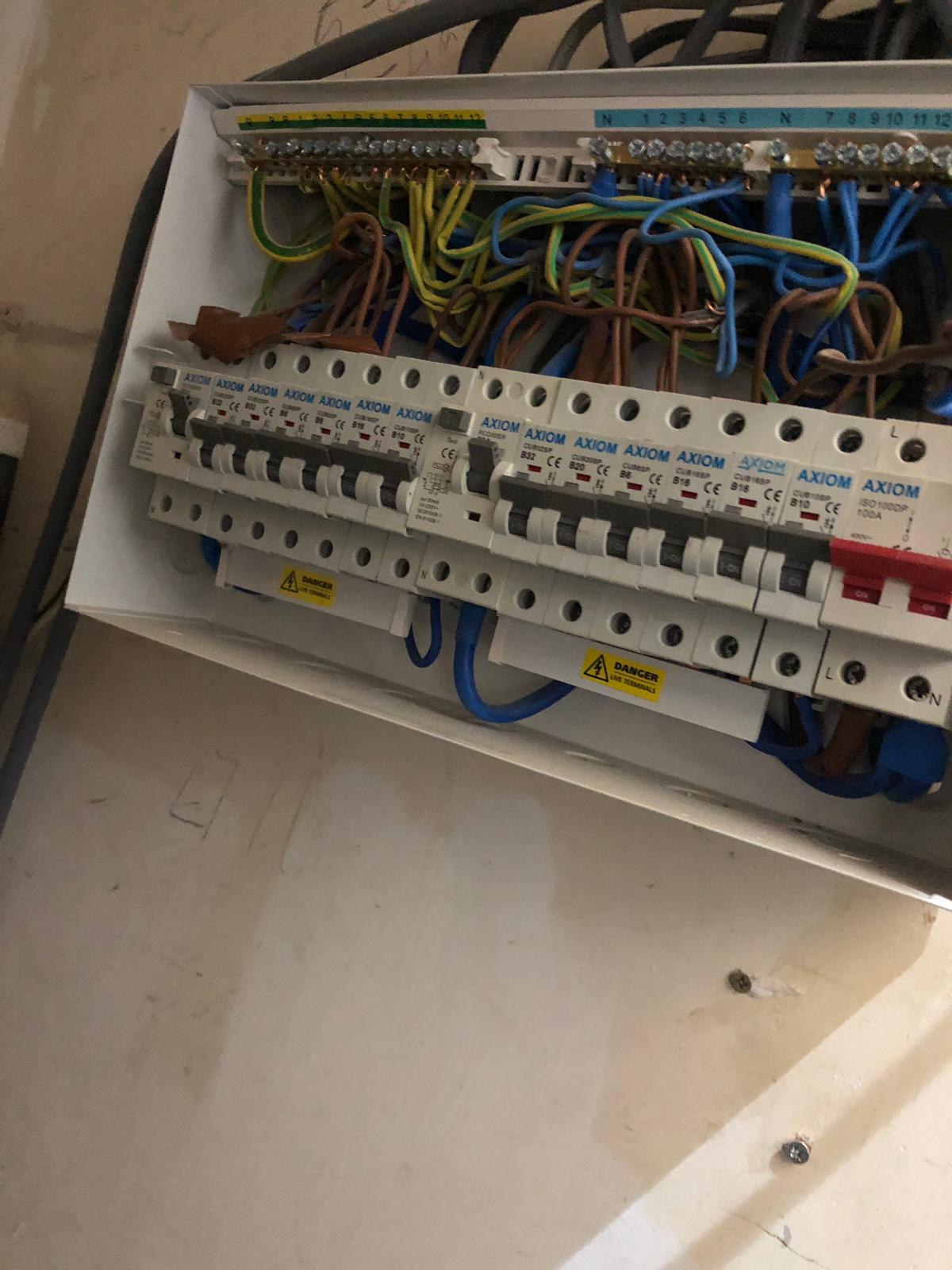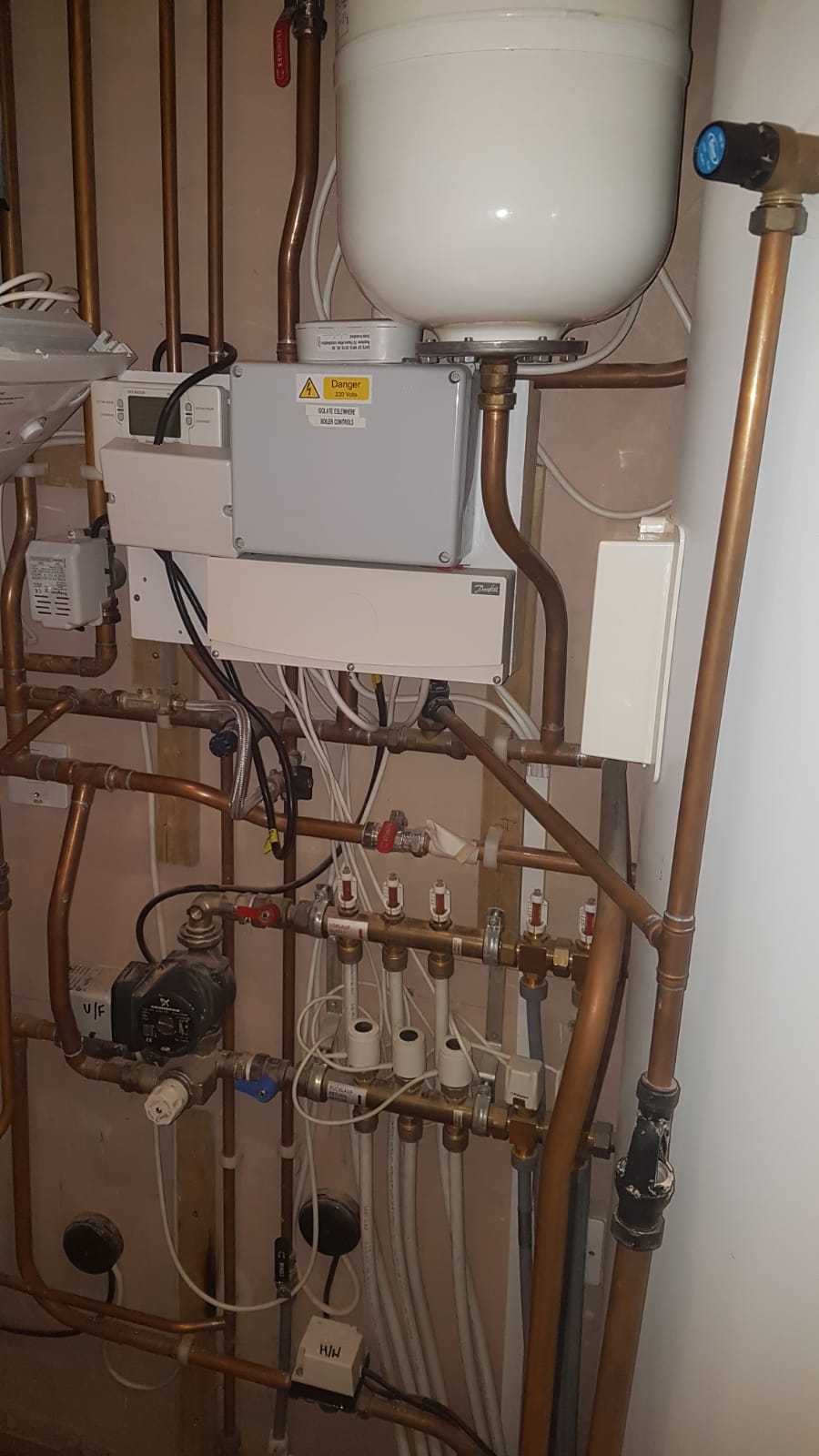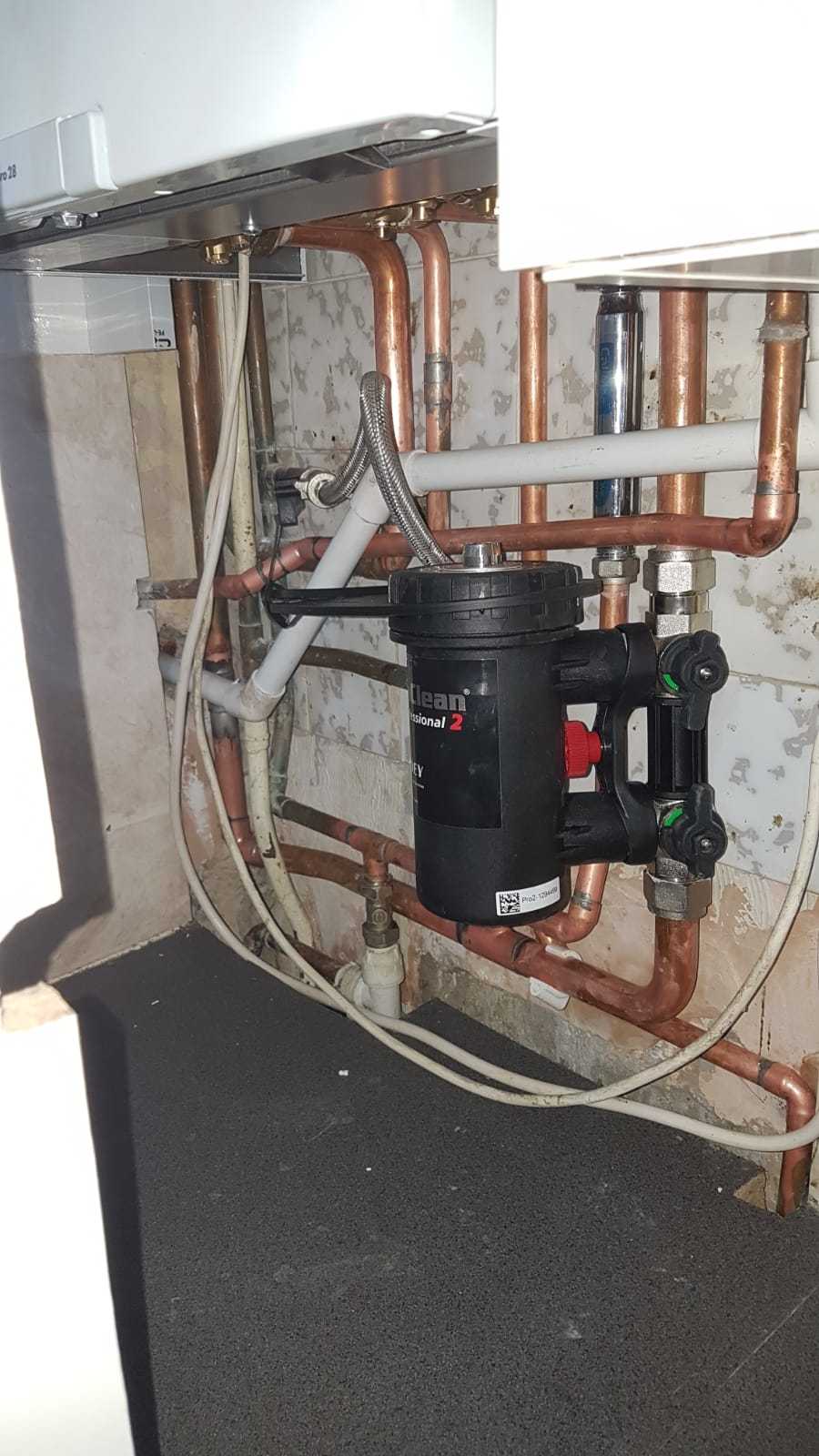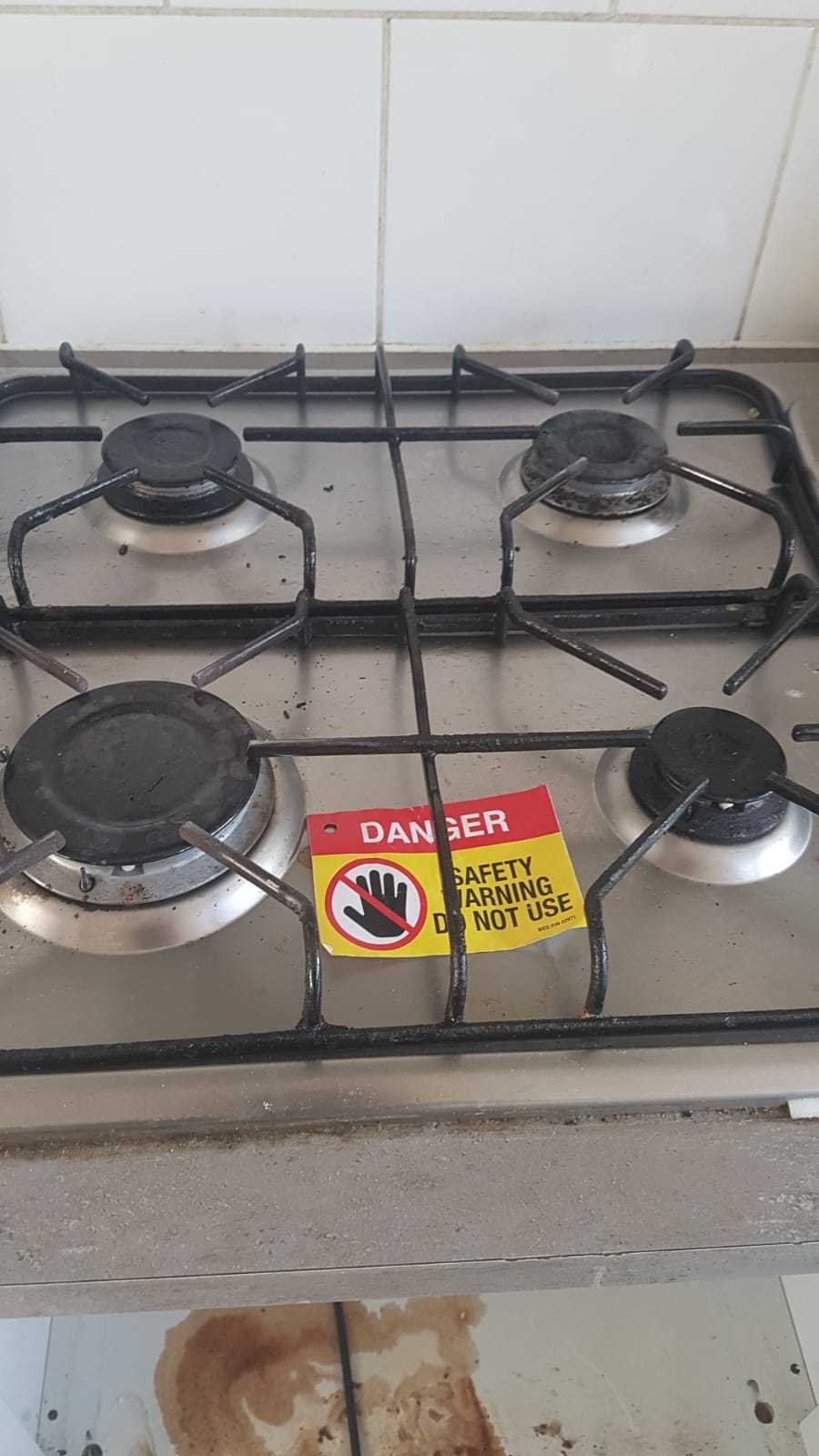

An EICR checklist is a detailed and systematic guide for electricians to examine each critical electrical component. This checklist is employed for domestic properties, commercial buildings, rental properties, offices, and retail centres in the UK. EICR checklist includes checks for a consumer unit, circuit breakers, wiring systems, sockets, lighting circuits, earthing, and bonding. This checklist also includes Residual Current Devices (RCDs), electrical accessories, and the general load capacity. This checklist contains testing methods, types of defects, safety observations, and recommendations for repair or improvement.
The EICR checklist is necessary for homeowners, landlords, tenants, business owners, property managers, and commercial property operators. EICR inspections for homeowners are crucial to fulfill their legal duty for safety in rental properties in the UK. EICR inspections for commercial property owners are necessary to ensure that workers and visitors are safe on the job.
The EICR checklist enables property owners to identify potential electrical risks before they become a serious problem. The EICR checklist ensures that the electrical inspection complies with the UK electrical safety standards and regulations, BS 7671. The EICR checklist aids in property maintenance planning and creating safer working environments. An EICR checklist minimizes the chances of electrical faults going unnoticed and helps increase the inspection process, according to Arfan et al, titled “Performance Analysis of High Voltage Disc Insulators With Different Profiles in Clean and Polluted Environments,” published in 2024.
Being a top-rated landlord certificates provider in UK, we at Landlord Property Certificates prepare an EICR checklist that is based on the current EICR regulations in the UK for electrical safety rules and industry inspection practices. We designed EICR sections that enable accurate electrical inspections of homes, businesses, and tenanted properties. Safety, compliance, and professional reporting are our primary areas of focus, enabling owners to take on their electrical duties with confidence.
What is the EICR checklist for domestic, commercial properties, and landlords in the UK?
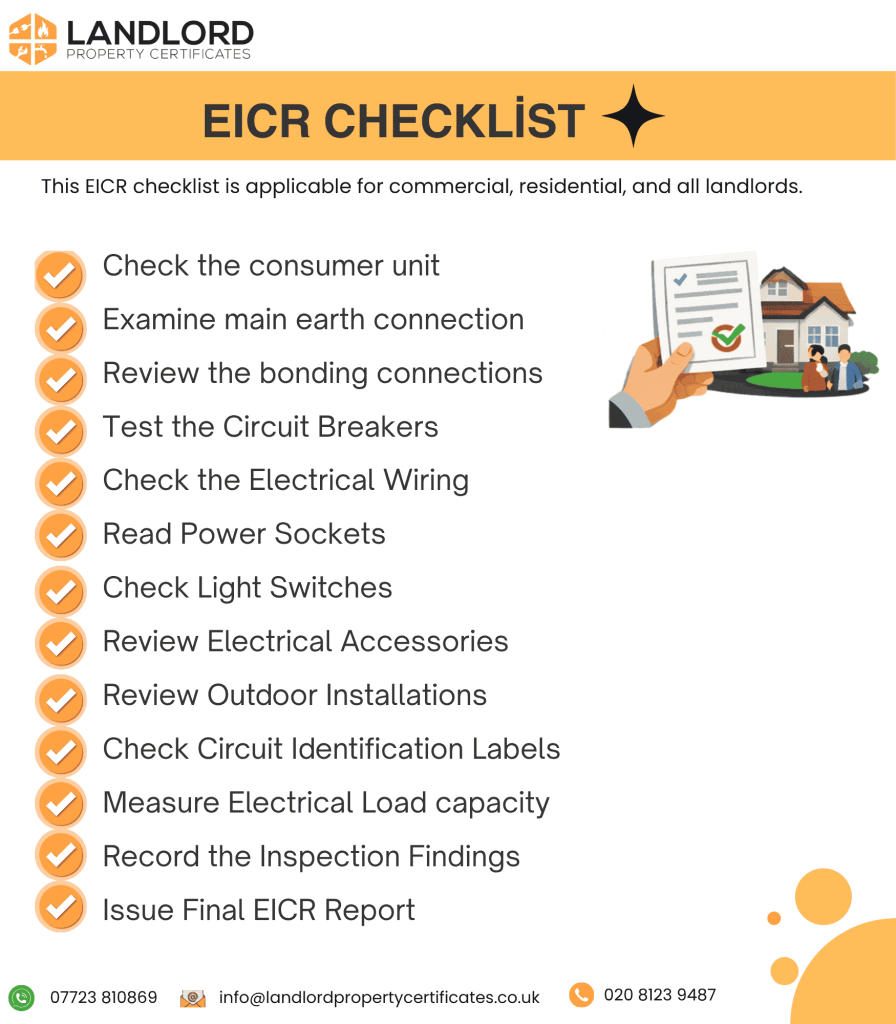
The EICR checklist for domestic, commercial properties, and landlords in the UK is listed below.
- Check the Consumer Unit
- Examine the Main Earthing System
- Review The Bonding Connections
- Test the Circuit Breakers
- Check the Electrical Wiring
- Read The Power Sockets:
- Check The Light Switches
- Test the RCDs
- Evaluate the Lighting Circuits
- 10, Review the Electrical Accessories
- Review the Outdoor Installations
- Check the Circuit Identification Labels
- Measure Electrical Load Capacity
- Record the Inspection Findings
- Issue the Final EICR Report
1. Check the Consumer Unit
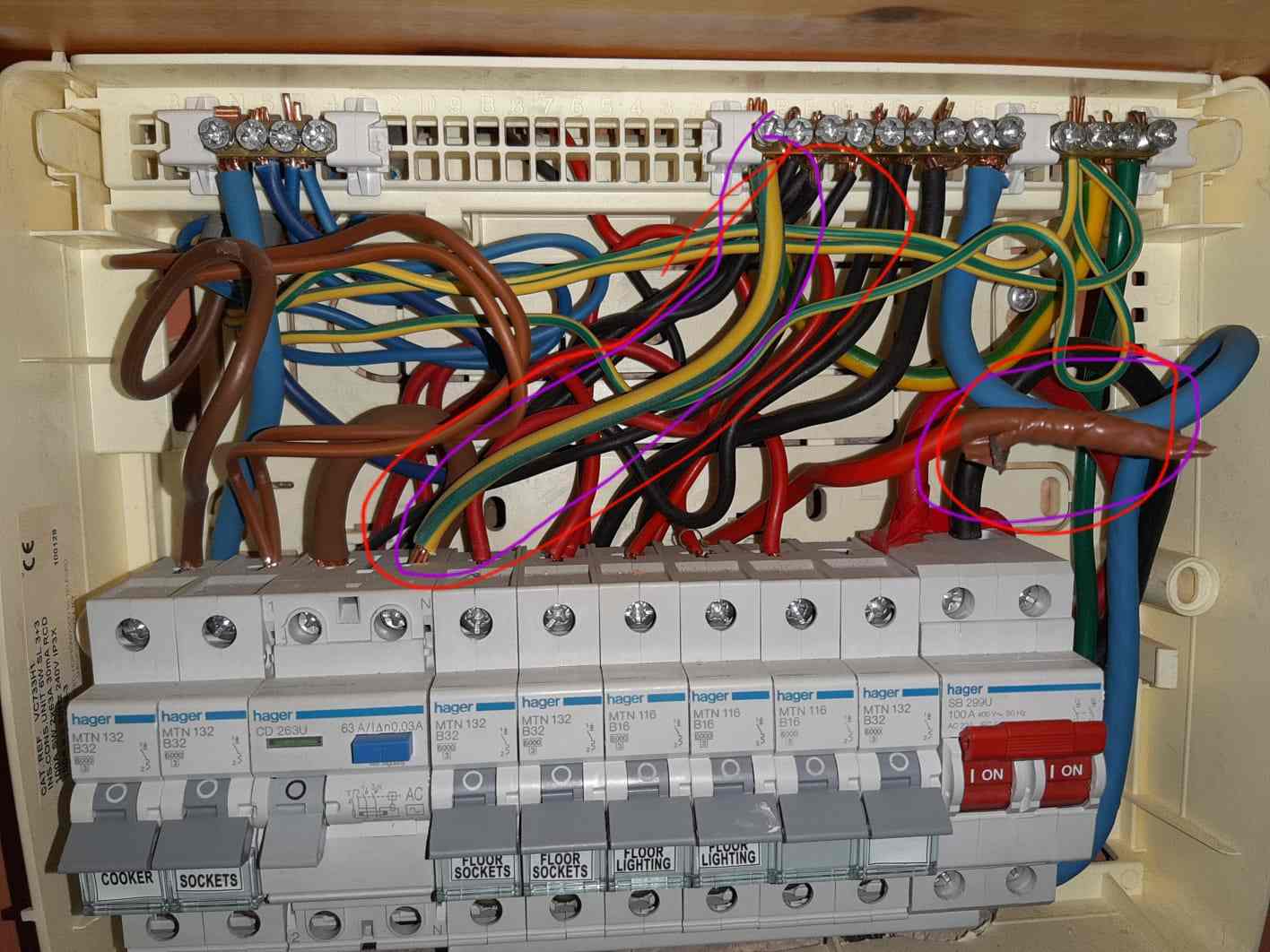
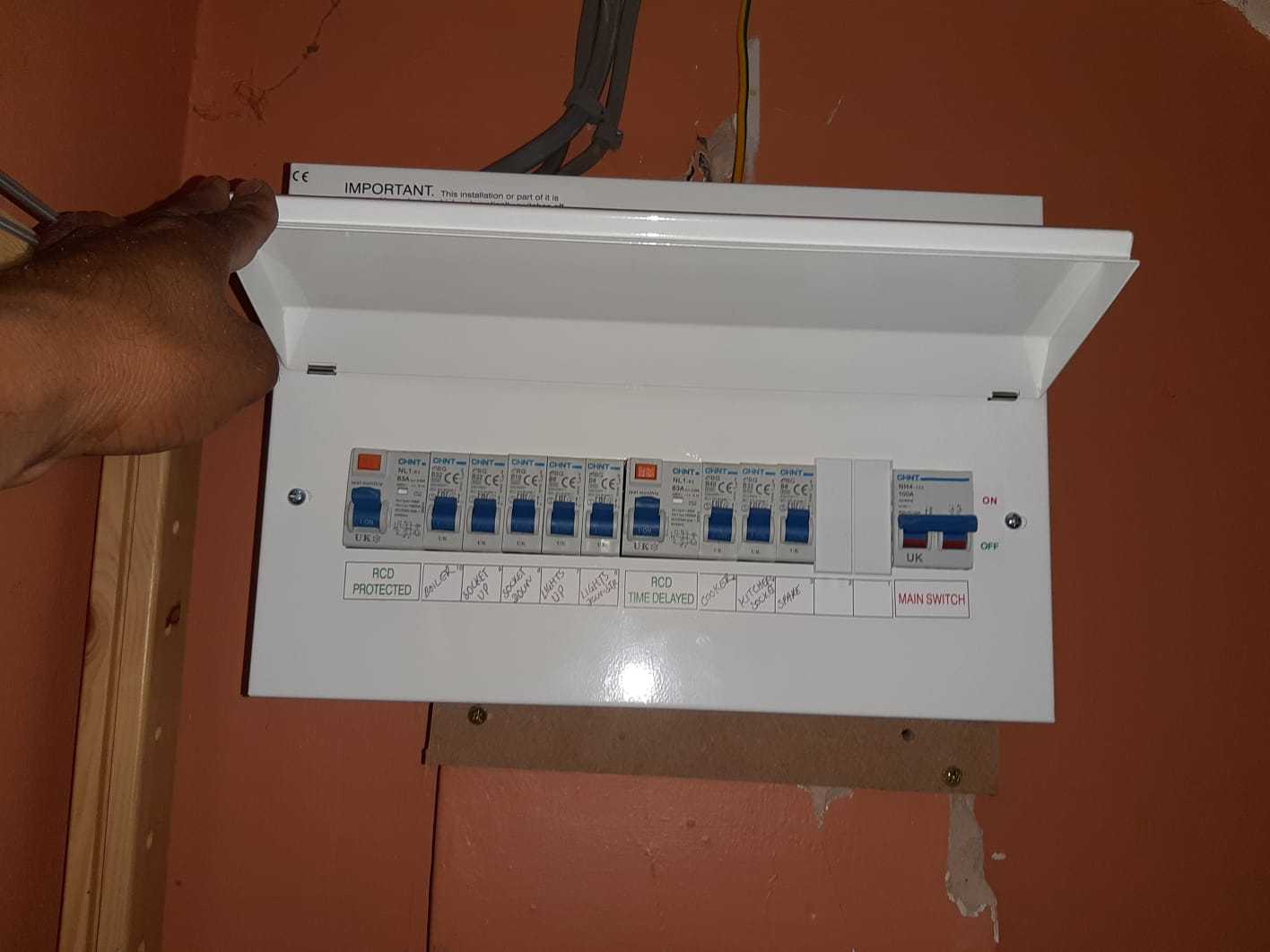
Check the consumer unit for damage, smoking, frayed or exposed wiring, or missing covers. Ensure circuit breakers are functioning properly and are up to current UK safety standards. Ensure all labels are easily understood and visible. Carefully check fuses and safety switches to reduce the risk of electrical fires and power faults within the premises.
2. Examine the Main Earthing System
Examine the main earth connection system of the property. Provide not only proper electrical installation of the earthing conductor but also ensure that it is securely connected. Check for rust, insecure connections, or faulty cables near an earthing point. The risk of electric shock is lessened during electrical faults if proper earthing is done. This inspection is important for general electrical protection and stability of the system.
3. Review The Bonding Connections
Review the bonding connections on gas, water, and metal services. Ensure bonding cables are in place and connected. Inspect the connections for wear, corrosion, or looseness. Correct bonding helps control voltage differences during electrical faults. This inspection increases the safety of the occupants utilising electrical appliances within the home.
4. Test the Circuit Breakers
Test each circuit breaker to determine if it operates properly during an overload or short circuit. Look for signs of overheating, any unusual noises, or faulty switches. Connect the ratings with the connected electrical circuits. Emergencies cause failure of faulty breakers to protect wiring and appliances. This inspection enables safe electricity to be supplied throughout the building.
5. Check the Electrical Wiring
Check exposed electrical wiring for damage, wear, or improper installation. Check for bare wires, broken insulation, or overheating. Ensure that cables are correctly supported and routed safely. There is a risk of electrical shock or fire if the wiring is old and damaged. This check assists in uncovering concealed safety issues within the electrical installation.
6. Read The Power Sockets:
Read all power Sockets for cracks, burn marks, loose connections, or damaged parts. Test sockets to check if they are delivering electricity properly and safely. Make sure that sockets are properly fitted into the wall, and there is no exposed wiring. Damaged sockets lead to electrical faults and even shock hazards. This inspection contributes to confidence in the use of electricity in day-to-day activities.
7. Check The Light Switches
Check light switches for any damage, overheating, or bad electrical contacts. Check the smoothness of switch operation and that there are no sparks or unusual noises. Check the mounting and condition of faceplates carefully. The faulty switches cause electrical problems or safety hazards within the home.
8. Test the RCDs
Test Residual Current Devices, or RCDs, for correct performance and response times. Make sure that the devices trip fast in simulated fault conditions. Check the unit for missing or broken test labels and parts. RCDs offer valuable protection against electrical fires and electric shocks. Regular testing maintains the protection system in good working order.
9. Evaluate the Lighting Circuits
Check lighting circuits for overloaded connections, damaged cables, and incorrect fittings. Ensure ceiling roses, junction boxes, and fixtures are secure and safe. Monitor for overheating around lighting locations. Flickering, short circuits, or electrical fires are possible due to unsafe lighting circuits. This evaluation step helps to maintain safe and stable conditions for indoor lights.
10. Review the Electrical Accessories
Review electrical accessories like extractor fans, connection units, and fused spurs. Make sure all parts and accessories are properly fitted and undamaged. Check the operation when needed and check the wiring around the area thoroughly. The electrical system is compromised and adversely affected by defective accessories. Reliable performance of household electrical equipment is ensured through proper checks.
11. Review the Outdoor Installations
Check outdoor plugs, outdoor lights, and outdoor electric appliances for weather damage. Ensure that outdoor fittings are protected and covered properly. Look for bare wires or wet electrical parts. Rain and the environment pose a greater threat to outdoor electrical systems. This inspection has made an improvement to electrical safety outside the property.
12. Check the Circuit Identification Labels
Ensure circuits are labelled and identified within the consumer unit. Make sure that the labels are consistent with the real circuits used in the property. Misidentification causes maintenance or emergency issues. Electricians quickly and safely discontinue the power to a circuit when they know the equipment and how to identify it. This check makes it easier to ensure safety at the time of repairs and the next inspection.
13. Measure Electrical Load Capacity
Determine if the electrical installation is able to safely support the electrical load of the property. Look for overloaded circuits from modern appliances/extensions. Verify cable sizes and breaker ratings are correct for the electrical load. Excessive loads cause the systems to overheat and to pose an internal fire hazard. This process helps in the safe and efficient use of electricity.
14. Record the Inspection Findings
Make note of observations, test results, and electrical defects found during the inspection. Identify problems based on severity following standard EICR coding guidance. Record suggestions for repair, improvement, or further investigation if necessary. A good electrical report provides property owners with a clear understanding of electrical safety. This record also assists in complying with the law and keeping the system in good working order.
15. Issue the Final EICR Report
Issue the Electrical Installation Condition Report once inspection is complete. Add in the findings, safety notes, and suggestions for corrective actions. Establish if the installation has been made satisfactory or if there is an urgent need for repair. The final report is considered the official report of the state of the property’s electrical system. An EICR report is significant for landlords, tenants, and homeowners in the UK.
How does an EICR checklist help in the EICR process?
The EICR checklist helps to create an accurate, organised, and effective Electrical Installation Condition Report (EICR) process. The EICR checklist offers a framework for electricians to examine a building’s electrical systems in detail and in the right order.
The EICR checklist ensures that nothing is overlooked when testing and doing a visual inspection of wires, outlets, lighting circuits, bonding, earthing, and protective devices.
The EICR checklist guarantees that the same safety procedures are taken each time during an electrical inspection. This checklist provides a professional and reliable electrical inspection procedure that guarantees adherence to the UK electrical safety regulations and standards. The EICR checklist allows electricians to identify electrical problems early and minimize the possibility of electrical accidents, equipment failure, and property damage.
An EICR checklist increases electrical system documentation and reporting. Electricians make observations, test, and categorize the defects during the inspection according to the items in the checklist. This checklist results in an organized and comprehensive report for tenants, landlords, business owners, and homeowners. Clear electrical records help to find out what needs to be repaired or investigated.
Landlords and property managers need to demonstrate evidence of electrical safety compliance for rental and commercial properties.
The EICR checklist saves time when conducting the electrical inspection. Electricians do not have to remember the order of their inspections as they use a prepared inspection sequence. This checklist cuts down delays and the risk of overlooking potential issues (configuration mismatch and data loss).
A structured approach is helpful as electrical systems tend to be more complex for larger commercial buildings. The EICR checklist helps electricians to take the time to properly isolate circuits, test protective devices, and check earthing and bonding systems. These measures minimize the chance of electric shock and electrical fires during and after the EICR process, according to Serdar Paker, title “Electrical Hazards in Industrial Facilities and Evaluation of the Measures,” published in 2021.
Does the EICR checklist help reduce EICR cost?
Yes, the EICR checklist helps to reduce EICR cost. An EICR checklist helps to make the inspection more organised, efficient, and systematic. This checklist enables electricians to follow a systematic inspection procedure rather than ‘shot in the dark’ inspections. This checklist reduces the time and cost needed for the inspection. The labour cost is reduced if the inspection is carried out in a shorter time, particularly in commercial buildings with complex electrical systems.
An EICR checklist helps the electrician spot issues early, before they become significant and costly. Loose connections, damaged sockets, weak bonding, or overloaded circuits are all identified in the inspection phase. These faults escalate into serious issues that result in expensive repairs or a complete rewiring if they are not detected and resolved promptly.
The EICR checklist also minimises the risk of missing inspection points (hidden sockets and extra switches). An electrician without a checklist misses parts of wiring, safety components, or entire circuits. Repeat inspections, further testing, or emergency repairs result from missed faults. The total costs of the EICR process in the UK are higher if the visits are repeated. A detailed EICR checklist ensures that the electrical inspection is done properly the first time, saving time and money for the property owner and landlord.
An EICR checklist ensures the inspection is done properly and in compliance with UK law and minimises the chances of facing penalties. In the UK, landlords and businesses are responsible for adhering to electrical safety regulations. EICR costs are reduced by an organised electrical inspection and unnecessary repair work.
Can an EICR checklist help you sell your property in the UK?
Yes, an EICR checklist helps you sell your property in the UK. It demonstrates that the electrical installation has been thoroughly inspected and reassures the buyer. Buyers want to be assured that the property is safe and in good condition before deciding to buy. Evidence of electrical components being professionally checked is provided by the complete EICR and detailed checklist.
The checklist ensures that the EICR process is more organised and reliable. At inspection, electricians thoroughly check consumer units, wiring systems, sockets, lighting circuits, bonding, earthing, and protective devices using the EICR checklist. This organised procedure minimises the risk of overlooking potential electrical issues.
An EICR checklist prevents delays in property transactions as buyers ask for electrical safety information before their purchase. The EICR checklist helps to spot electrical problems at an early stage and allows the property owner to make repairs before selling. EICR checklist results in a smoother and quicker selling journey.
The EICR checklist helps with transparency between the buyer and the seller. The final EICR report records the findings, test results, and recommendations in accordance with the checklist of the inspection and UK law. Buyers clearly see the state of the electrical system, t that eleminates their worry about any hidden issues after purchasing the home. The EICR for selling a house contributes to increasing trust and reducing uncertainty during negotiations.