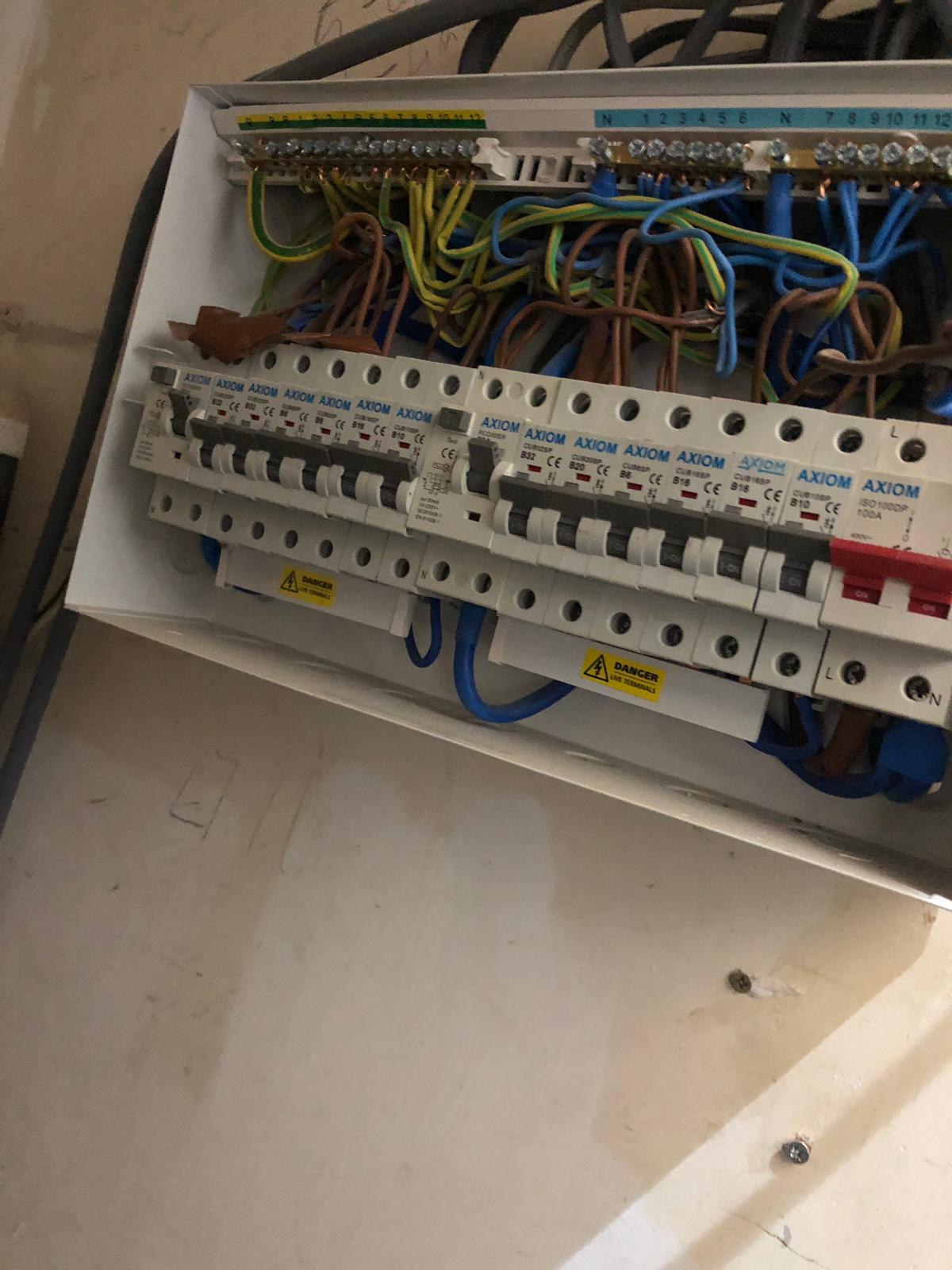
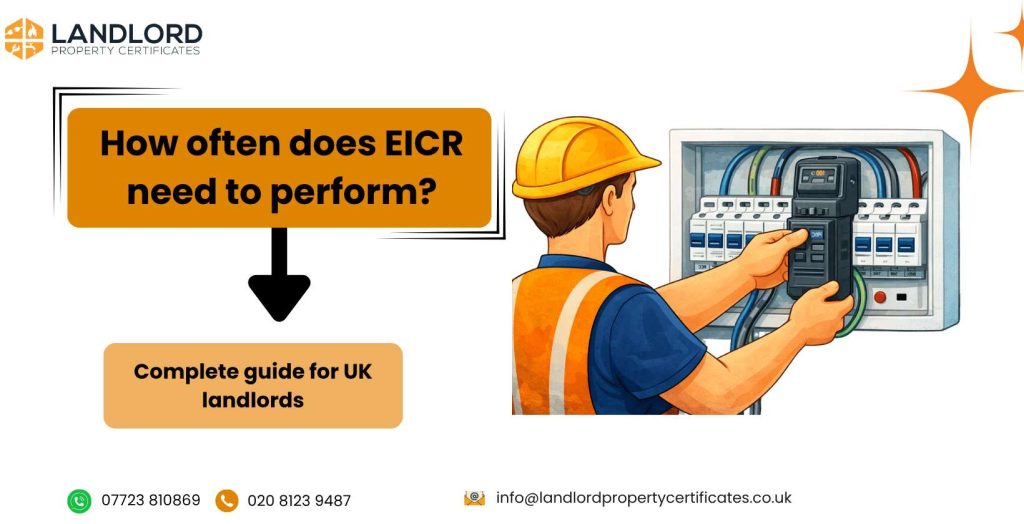
The EICR frequency is the interval at which an Electrical Installation Condition Report is conducted on a property to ensure its safety and compliance. In England, EICR renewal every 5 years is a legal requirement for landlords, in accordance with the UK Government Electrical Safety Standards in the Private Rented Sector (England) Regulations 2020.
The frequency of the EICR is not always fixed, as an electrician suggests a low EICR frequency if the installation is in good condition and has a short lifespan. It is necessary to know the right EICR frequency because electrical systems wear out over time as a result of heat, moisture, overloading, and wear. Failure to perform the proper electrical inspection on time results in fines, insurance issues, tenant complaints, or fire and electric shock hazards.
Residential rental housing is electrically inspected every 5 years (60 months). The commercial buildings are inspected every 3 to 5 years, depending on the public use and demand for electricity. Occupied and higher electrical loads have 3-year EICR frequency inspections for HMO’s.
The industrial premises, factories, or workshops have a 3-year EICR frequency, as they are more stressful on the electricity. Hospitals and healthcare centers have stringent EICR requirements for inspections (1 year) because loss of electrical power impacts patient safety. Schools and colleges are inspected every 5 years, but laboratories and technical rooms need to be inspected more frequently.
High-risk installations, such as swimming pool installations, construction sites, and caravan parks, have an EICR frequency of 1 year. The reason for the 1-year frequency is the temporary nature of these installations, exposure to weather, and moisture. Restaurants, entertainment venues, and older commercial buildings have EICRs every 3 years. The rented offices, retail stores, schools, and houses are 5 years EICR frequency. The low-risk owner-occupied properties, new residential construction, and new domestic installations have a 10-year EICR frequency.
The date of reinspection is stated on the EICR for the guidance of the landlord as the recommended compliance period, according to Smith, title “Electrical Safety Standards in the Private Rented Sector Regulations Explained”, published in 2021.
EICR frequency in the UK depends on property type, location, electrical risk, and the next inspection date written on the previous report. For rented homes, landlords normally need an EICR at least every 5 years, or sooner if the electrician recommends a shorter interval. For commercial, industrial, public, medical, and special installations, inspection periods are risk-based and usually follow BS 7671 / IET guidance rather than one fixed legal rule.
| Premises / Installation Type | Correct EICR frequency in the UK | Legal / guidance status |
|---|---|---|
| England rented homes | At least every 5 years, or sooner if the report says so | Legal requirement for rented properties. Landlords must give existing tenants the report within 28 days, new tenants before occupation, councils within 7 days if requested, and complete remedial work within 28 days or sooner if specified. |
| Wales rented homes | At least every 5 years, or sooner if the report says so | Legal requirement under Welsh renting/fitness rules. GOV.WALES says landlords must ensure an electrical safety inspection is done at least every 5 years and provide a valid report. |
| Scotland private rented homes | At least every 5 years | Legal duty under Scottish repairing-standard guidance. Scotland also includes landlord-provided appliance testing as part of the electrical safety inspection framework. |
| Northern Ireland private tenancies | At least every 5 years | Legal requirement from 1 April 2025 for new private tenancies and 1 December 2025 for existing tenancies. |
| HMOs in England | Not more than every 5 years | Legal HMO management duty for fixed electrical installations; local licence conditions may add requirements. |
| Owner-occupied homes | Usually 10 years/change of occupancy | Recommendation, not a landlord legal duty. |
| Offices, shops, commercial premises | Commonly 5 years | Guidance/risk-based, not one universal legal period. |
| Industrial premises | Commonly 3 years | Guidance/risk-based because of load, vibration, heat, dust, moisture, and machinery. |
| Hospitals / medical locations | General areas often 5 years; medical locations often 1 year | Guidance/risk-based, not the same as ordinary rental law. |
| Swimming pools, marinas, fish farms | Commonly 1 year | Guidance/risk-based because water and corrosion increase shock risk. |
| Construction sites | Commonly 3 months | Guidance/risk-based because temporary wiring is exposed to weather, movement, and damage. |
| Fire alarms / emergency lighting | Separate inspection regime, not EICR | These should not be placed inside the EICR table as if they are EICR frequencies. |
How often should landlords perform an EICR in the United Kingdom?
Landlords should perform an EICR in 5 years (60 months) in the United Kingdom, according to the Electrical Safety Standards in the Private Rented Sector (England) Regulations 2020.
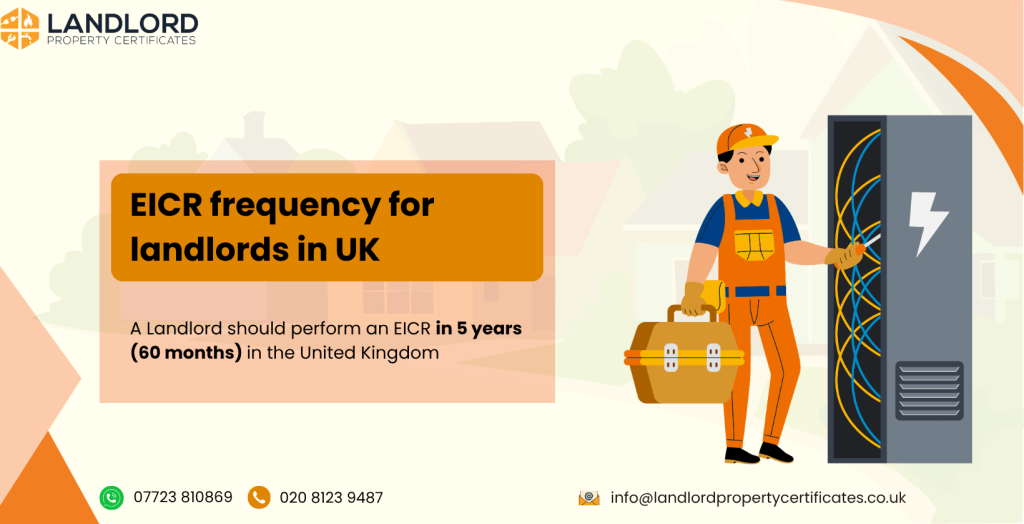
This law requires landlords to ensure the electrical installations are inspected and tested by a competent person “at frequencies of not more than 5 years.” The EICR report also includes a definite short inspection frequency (1-3 years) if deterioration, damage, outdated wiring, and increased electrical risk are detected by the electrician. The existing tenants require a copy of the EICR within 28 days (4 Weeks). The new tenants require an EICR copy before moving into the property.
The EICR frequency for residential properties is 5 years or when a new tenancy begins, if earlier required by the previous EICR. EICR 5-year frequency is applicable to houses, flats, apartments, and HMOs. It is important to perform regular inspections to detect electrical faults, including overloaded circuits, bad earthing, broken cables, and a lack of RCD protection, before they cause hazards.
There is no single legal period of EICR for commercial properties, as with residential rentals. The frequency of EICR is determined by the BS 7671 Wiring Regulations of the Institution of Engineering and Technology. EICR frequency for commercial properties depends on the nature of the business, electrical loading, environmental factors, and the use of the premises by the public.
The offices and shops are inspected every 5 years, and restaurants, commercial premises, or high-risk industrial premises every 1-3 years. The recommended next inspection date is provided in the EICR according to Brown, A., title “Landlord Electrical Compliance and EICR Requirements in England”, published in 2022.
Do some properties need more frequent EICRs than others?
Yes, some properties need more frequent EICRs than others because electrical systems are not used to the same extent and are not exposed to the same level of safety risk. The frequency of electrical inspection varies according to the type of property, the age of the wiring, occupancy, moisture, electrical load demand, and previous installation. A qualified electrician suggests a shorter frequency if the property is at a greater electrical risk or deteriorating in nature.
The heavier the electrical usage of a building, the more regularly an EICR is required every 1 year. A building with a high load has more circuits, distribution boards, and sockets that are used more and stressed more. Electrical inspections are required every 1-3 years in restaurants, factories, commercial kitchens, and industrial workshops. The machinery loads, heat, grease, and continuous equipment operation have high risks of electrical blast. The electrical inspection time for HMO or student housing units is reduced due to the increased risk of damage and overloading.
Low-risk properties do not require as frequent electrical inspections if the property has a modern electrical system. The low electrical demand of newly built owner-occupied homes is frequently checked every 5-10 years when their installation is in good condition. The date of the reinspection set out on the EICR report is based on the state of the electrical installation and determines EICR validity in the UK.
What is the EICR frequency for Residential properties in the United Kingdom?
The EICR frequency for residential properties in the UK is 5 years, according to Electrical Safety Standards in the Private Rented Sector (England) Regulations 2020.
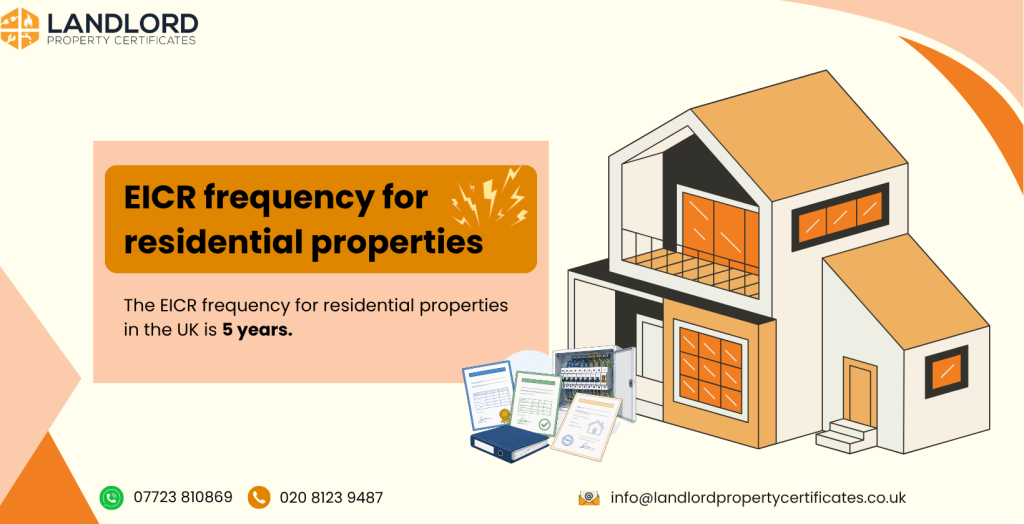
An Electrical Installation Condition Report (EICR) assesses the safety, compliance, and freedom from dangerous defects of the electrical installation in a property. The new inspection date is to be followed as if the electrician suggests a shorter period than the 5 years.
Domestic properties, such as owner-occupied houses and private residential homes, have 10 years ( 120 months). EICR is not required by UK law for a homeowner, but it is highly recommended to ensure electricity safety.
Rented houses and flats have an EICR frequency every 5 years (60 months). Landlords are required to give tenants a copy of the EICR within 28 days (4 weeks) of the inspection and before the start of a new tenancy. Private rented housing, such as apartments, terraced houses, and shared rented housing, must meet this requirement. Any unsafe electrical conditions need to be remedied within 28 days if stated in the report.
The House in multiple occupation (HMO) needs more careful electrical monitoring every 5 years. HMOs have higher electrical use and several unrelated tenants in the same house and electrical system. EICR frequency becomes shorter if the property has been subject to a previous electrical inspection with defects or if occupancy guidelines suggest a shorter frequency.
Student halls, shared housing, and high-turnover rental properties are considered higher electrical-risk properties. These properties have a greater risk of electrical faults and fire due to loads on sockets, extension leads, and appliances being used often.
What is the EICR frequency for Rental Properties (Landlords) in the United Kingdom?
The EICR frequency for Rental Properties (Landlords) in the United Kingdom is every 5 years, according to Electrical Safety Standards in the Private Rented Sector (England) Regulations 2020. The landlord has to give an existing tenant a copy of the EICR within 28 days of the inspection and to a new tenant before they take over the tenancy.

EICR must be provided within 7 days of the request by the landlord if a local authority requests a copy. Remedial work should be done within 28 days or less if the EICR report indicates that there is an electrical danger. The landlord is legally obliged to follow instructions if reinspection is recommended within five years in the EICR report. A failure to meet these requirements leads to financial penalties of up to £30,000 and enforcement action.
This legal requirement ensures that the electrical installation is safe for the duration of the tenancy. Wiring systems, sockets, consumer units, earthing, and protective devices are due for replacement over time due to age, overloads, moisture, heat, or lack of proper maintenance. The legislation also safeguards tenants and requires landlords to keep their homes safe and to fix electrical issues in a timely manner.
The statutory period of electrical inspection for rental properties is 5 years, but it turns in 1-3 years in some conditions. These conditions include old buildings, HMOs with high congregate populations, and buildings that have had electrical problems in the past. The next inspection date always comes first on the EICR, as this indicates the condition and level of safety of the electrical installation.
What is the EICR frequency for Commercial properties in the United Kingdom?
The EICR frequency for Commercial properties in the United Kingdom is 5 years, recommended under the guidance of the Institution of Engineering and Technology BS 7671 Wiring Regulations. EICR frequency for commercial properties is based on the nature of the premises, degree of electrical use, environmental conditions, and potential for deterioration.

Employers and commercial property owners have strict obligations under the Health and Safety Executive Electricity at Work Regulations 1989 with regard to ensuring that electrical systems are kept safe. The re-inspection is needed in 2-3 years if the electrician finds the electrical conditions are at a higher risk.
The offices are inspected every 5 years, as they are considered a low electrical risk commercial environment. EICRs are recommended for shops and retail premises every 5 years. Retail properties tend to have a lot of customers in, a lot of lights on, a lot of display equipment load, and a lot of extended operating hours. EICRs are required in restaurants or hotels every 3-5 years.
The electrical installations in kitchens, heating systems, extraction equipment, and continuous electrical appliances have 3 years EICR frequency. Pubs and bars are inspected every 3-5 years as they have an entertainment system, a commercial kitchen, or extended opening hours.
Regular electrical testing is important in these environments due to the high usage of electrical equipment. Village halls and community centres are recommended for EICRs every 5 years, as they are buildings used by the public and have different electrical demands.
A shorter inspection frequency (3 years) is recommended if the premises are used for large events, according to Patel, S., in the title “Risk-Based Electrical Inspection Intervals in Commercial Premises”, published in 2023.
What is the EICR frequency for industrial Properties in the United Kingdom?
The EICR frequency for industrial Properties in the United Kingdom is recommended 5 years under the guidance of the Institution of Engineering and Technology BS 7671 Wiring Regulations. In the UK, industrial and high-risk commercial properties need more regular EICRs than domestic properties.
The electrical systems of industrial properties are subject to increased vibration, moisture, heat, chemicals, and continuous-use stresses. The Health and Safety Executive Electricity at Work Regulations 1989 require employers and property owners to keep electrical equipment in a safe state, free from danger. The type and risk level of the installation are also considered when assessing the frequencies for electrical inspections.
EICRs in laboratories have regular frequencies of 3 to 5 years. Regular testing is more critical for scientific equipment, chemicals, precision instruments, and continuous electrical usage. Laboratories that use equipment for specialized research or have hazardous materials or moisture need to have less time to minimize the potential for electrical issues and equipment failure.
Farms, greenhouses, livestock buildings, and similar agricultural and horticultural installations are at high risk of electrical problems and need an EICR every 3 years. Electrical systems quickly become damaged due to exposure to moisture, dust, ammonia, rodents, and the outdoors. Dairy farm, poultry, and irrigation electrical installations are subject to corrosion and damage, and regular inspection (3 years) is important for safety and fire prevention.
Use of launderettes is recommended to carry out an electrical inspection every 12 months. Wiring systems and protective devices are stressed by the continuous operation of washing machines, dryers, heating systems, and moisture-producing equipment. Time, heat, and humidity also contribute to a breakdown in electrical insulation.
Petrol filling stations require EICRs to be carried out every 1-3 years as they are considered hazardous locations with a higher risk of fire and explosion. Electrical inspection is essential for ensuring the safety of the public and workers. The fuel vapours and underground electrical equipment, forecourt lighting, pumps, and external exposure to weather conditions occur regularly.
The construction sites need an EICR every 3 months if site conditions or temporary electrical installations dictate. Construction temporary wiring is subject to frequent and constant changes, physical damage, weather, and changing electrical loads. To ensure compliance with UK safety regulations and minimise the risk of electric shock, equipment failure, and fire on active worksites, regular inspections must take place.
What is the EICR frequency for educational establishments in the United Kingdom?
The EICR frequency for educational establishments in the United Kingdom is 5 years under the guidance of the Institution of Engineering and Technology BS 7671 Wiring Regulations.

All schools, colleges, universities, nurseries, and other educational premises have to comply with the Health and Safety Executive Electricity at Work Regulations 1989. This law states that any electrical system must be kept in a state such that no danger arises.
The classrooms, offices, libraries, and teaching buildings are inspected every 5 years. The frequency of electrical inspection is reduced if the installation is older, used extensively, and has a poor electrical condition. The electrician conducting the EICR suggests a high EICR frequency if the electrical system is in good condition and the risk level determined at the inspection is low.
Schools have large electrical networks, computer systems, specialist teaching equipment, emergency lighting, and laboratory equipment, which are all in constant use during term time. Frequent EICRs detect broken electrical wiring, overloaded circuits, inadequate earthing systems, and outdated consumer units. This frequent electrical inspection prevents dangerous situations.
Some sections in educational buildings are inspected more frequently than every five years. Higher-risk electrical equipment is frequently found in science laboratories, engineering workshops, food technology rooms, and technical training areas and needs a yearly inspection.
What is the EICR frequency for hospitals and medical clinics in the United Kingdom?
The EICR frequency for hospitals and medical clinics in the United Kingdom is once every 1 year under the guidance of the Institution of Engineering and Technology BS 7671 Wiring Regulations.
Electrical safety in healthcare is critical as failure in the electrical system has a direct impact on patient treatment, life support systems, emergency systems, and medical operations. Healthcare operators are required to ensure that the electricity at work is maintained to prevent danger in line with the Health and Safety Executive Electricity at Work Regulations 1989.
The EICR in hospitals and medical clinics, other than DRG, is every 5 years. These areas are for normal offices, waiting rooms, reception areas, administrative areas, cafeterias, and normal consultations. These spaces are considered to be standard commercial or public spaces and have moderate electrical demands. These places are used for regular checks to ensure that circuits are not overloaded, sockets are in good condition, and earthing is correct, for the safety of both patients, visitors, and staff.
Hospitals or clinics have medical facilities that need more frequent electrical inspections. The medical equipment and electrical systems are directly connected to patient care. The recommendation for electrical inspections in areas like operating theatres, intensive care units, treatment rooms, diagnostic imaging, dental surgeries, and recovery wards is every 1 year. These are environments with sensitive medical equipment, conductive medical facilities, and greater patient susceptibility. Medical devices, Emergency power systems, and specialist healthcare equipment are used continuously, creating extra electrical stress on installations.
Hospitals and clinics also have shorter inspection periods if they have older wiring systems, heavy electrical usage, damp surfaces, or even previous EICR faults. The inspecting electrician or health care compliance body sets an earlier reinspection date depending on the state and risk of the installation. This is why medical facilities in the UK have more regular electrical check-ups than regular homes or buildings.
What is the EICR frequency for buildings open to the public in the United Kingdom?
The EICR frequency for buildings open to the public is once every 3 to 5 years in the United Kingdom. EICR frequency for buildings in the UK depends on occupancy, electrical load, environmental factors, and the risk to the public. Public buildings are required to have safe electrical installations under the Health and Safety Executive Electricity at Work Regulations 1989.
Cinemas are advised to have an EICR every 3 years. Cinemas have several complex electrical systems, emergency lighting, projection equipment, sound systems, and high public occupancy. Reliable electrical safety systems are important where electrical equipment is in operation around the clock, and light is limited.
Church wiring is tested once every five years, unless the church has older wiring, a large lighting system, or public event facilities. Many churches are forced to operate in buildings that have historical wiring and are susceptible to fire hazards. Electrical installations in churches need to be monitored to ensure safe public access and minimize fire hazards.
The EICR frequency for leisure complexes without swimming pools is between 3 years. EICR frequency for leisure complexes depends on the size of the complex and the amount of electricity consumed. Gymnasiums, indoor sports centers, fitness centers, and recreation areas have HVAC systems, lighting systems, and exercise equipment. These areas have high commercial power loads that demand constant power from the electrical installation.
Concert venues, event halls, and entertainment centres are regularly suggested for EICRs every 3 years. Public entertainments have high occupancy, temporary connections, stage lighting, audio systems, and high electrical usage during events. The risks of electrical failure, fire hazard, and unsafe public conditions are reduced by conducting frequent inspections.
Theatres have an EICR frequency of 3 years because they have complex lighting systems and are operating backstage electrical equipment, emergency lighting, sound systems, and stage machinery. The high electrical energy usage and crowds that attend mean regular EICRs are essential for keeping the public venue safe and compliant in the UK.
What is the EICR frequency for special and specific installations in the United Kingdom?
EICR frequency for special and specific electrical installations in the United Kingdom is 1-5 years, depending on the type of installation. These installations are subject to high-risk factors, including moisture, exposure to the outdoors, and public access, as well as temporary installations.
The Health and Safety Executive’s Electricity at Work Regulations 1989 require duty holders to ensure that electrical systems are maintained. The Institution of Engineering and Technology BS 7671 Wiring Regulations suggest reduced periods for inspections if the wiring installation is under environmental stress, water, corrosion, or under constant operating requirements.
Swimming pools have an EICR frequency of 1 year due to the risk from the water, moisture, and conductive environment. Pools and pool filtering systems, underwater lighting, pumps and pool heating systems, and electrical gear around pools are all subject to high-moisture conditions. These installations have a higher electrical deterioration rate than in normal buildings.
Caravans and caravan parks are inspected at least once a year or before seasonal use. These installations are subjected to greater stresses due to external hook-up systems, weather exposure, temporary electrical connections, and frequent caravan travel. Periodic inspections detect corroded hook-up points, damaged cables, overloaded hook-up points, and corrosion due to outdoor conditions.
EICRs are required every 1-3 years on highway power supplies, depending on the type of installation, environmental exposure, and authority. Street lighting systems, traffic lights, roadside electrical cabinets, and public infrastructure are constantly subjected to rain, vibration, temperature swings, and physical abuse.
Marinas have an EICR frequency of every 1 year. Marinas have electrical risk conditions associated with water exposure and salt corrosion, floating structures, and external electrical hook-up systems. Regular testing is needed for shore power supplies, dock installations, and connection points for boats to avoid electric shock hazards and equipment failure.
Fish farms have an EICR frequency of 1 year as they are constantly exposed to water, pumps, aeration systems, outdoor electrics, and corrosive environments. Wiring systems and devices quickly degrade with moisture and operating conditions on a farm.
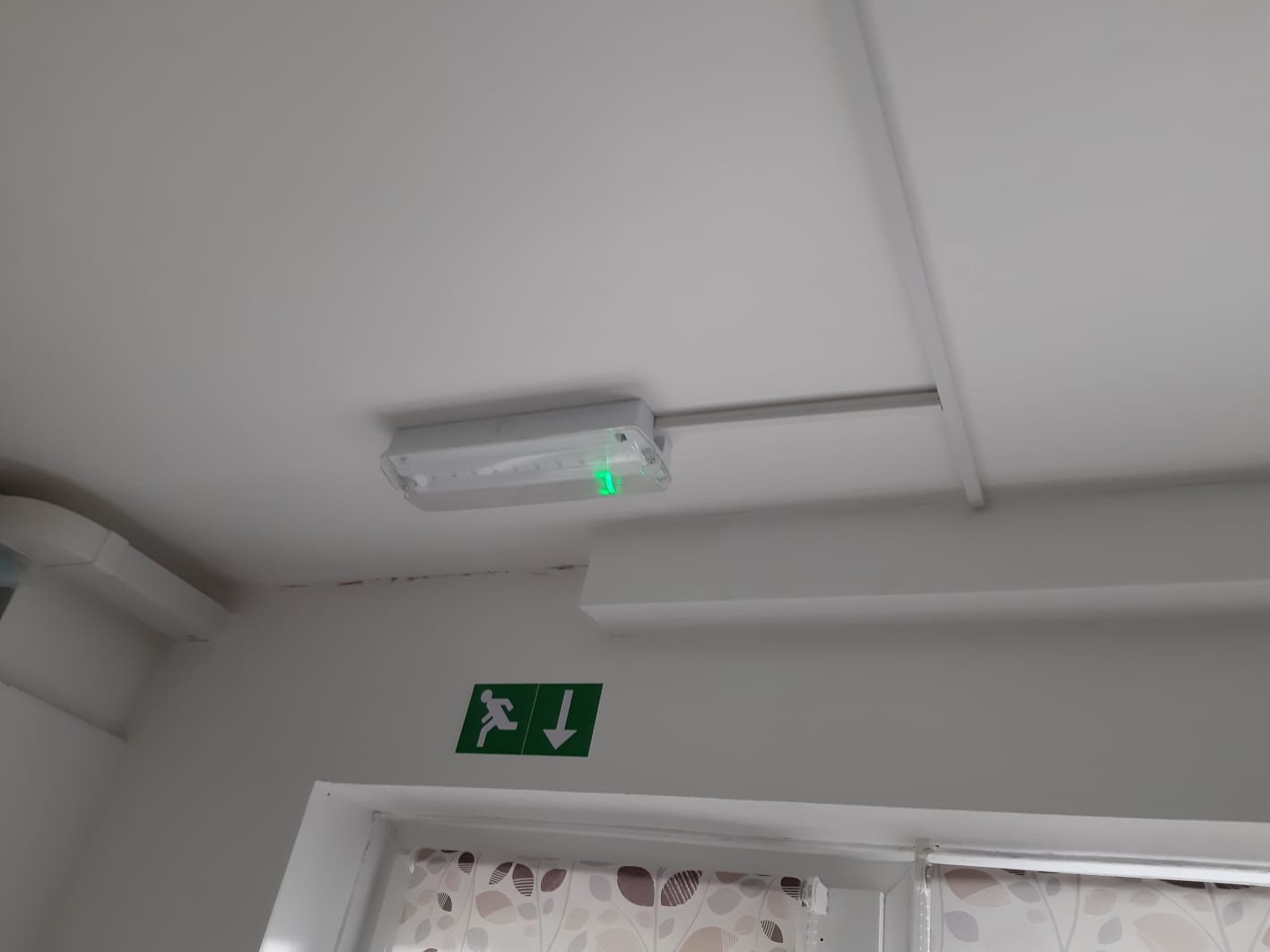
Annual testing and inspection of emergency lighting is carried out in addition to monthly testing. These systems are safety-critical because they are used for lighting during emergencies, evacuations, and when the power goes out. Annual Inspection keeps batteries, circuits, lights, and backup systems working and safe to use in the UK.
There is an annual inspection and servicing of fire alarm systems, with routine weekly and periodic testing provided on a year-round basis. Fire alarms are a vital life safety system in public, residential, commercial, and industrial buildings. Testing is performed on a regular basis to ensure detectors, control panels, sounders, and emergency warning systems are in good working order during a fire alarm.
What is the EICR frequency based on the risk level in the United Kingdom?
The frequency of EICR in the United Kingdom is dependent upon the perceived risk of the property, as opposed to a single inspection period for all installations.
According to the 1989 Health and Safety Executive Electricity at Work Regulations, electrical systems need to be maintained in a safe condition. Institution of Engineering and Technology BS 7671 Wiring Regulations state that periodic testing of electrical installations is necessary after intervals depending on the environment, use, and condition. Properties with higher electrical risks, such as exposure to higher electrical stresses, moisture, and public access, need an EICR on a more regular basis compared to lower-risk areas.
Frequencies of EICR are high on high-risk properties, between every 1 and 3 years. They include industrial facilities, temporary set-ups for construction projects, swimming pools, marinas, petrol filling stations, and hospitals. They also include commercial kitchens, caravan parks, and other entertainment businesses with a high level of occupancy.
Electrical deterioration and dangerous faults occur due to high electrical demand, water exposure, outdoor conditions, machinery vibration, temporary wiring systems, and public safety risks. These types of areas benefit from regular EICR testing. An up-to-date EICR detects insulation failure, circuit overloads, corrosion, faulty earthing, and faulty protective devices before they pose a fire or electric shock risk.
EICR frequency for medium-risk properties is every 3-5 years. Medium-risk properties involve offices, schools, shops, hotels, restaurants, churches, village halls, and leisure complexes. These buildings have moderate electrical power requirements and are subject to frequent public access. There is a focus on avoiding deterioration and keeping staff, visitors, tenants, and customers safe during electrical inspections in medium-risk properties.
Lowest-risk properties have the longest EICR periods, every 5-10 years, depending on the occupancy and the condition of the installation. Low-risk properties include modern low-demand installations and newly constructed residential homes with new wiring systems. These environments have lower electrical stress, minimal public access, and reduced high-risk operating conditions. The low-risk properties also need to be inspected if there are indications of electrical damage or recommendations from the previous EICR report.
What factors affect the EICR frequency in the UK?
The factors that affect the EICR frequency in the UK are listed below.
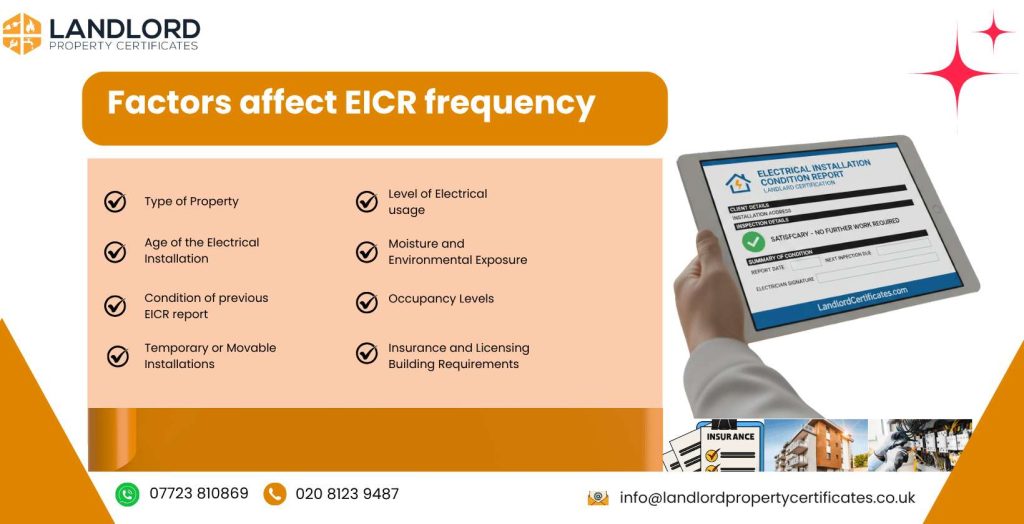
- Type of Property: Various types of properties have varying electrical risk levels in the UK and need to have different EICR frequency levels. A residential home (EICR frequency: every 10 years) has less electrical stress than a factory (every 3 years), a hospital (1-3 years), or an entertainment center (every 3 years). The electrical systems in industrial and public-use buildings are more intricate, so they are deteriorate or have electrical issues. The BS 7671 Wiring Regulations require inspection periods to be dependent on the nature and use of the installation.
- Age of the Electrical Installation: Older electrical installations have a higher EICR frequency in the UK. A 30-year-old house has 3 years, a 10-year-old house has 5 years, and a 50-year-old house has 2 years of EICR frequency. Old electrical installations have old wires, sockets, earthing systems, and distribution boards that deteriorate over time. Overheating issues, loose connections, and obsolete protective equipment that do not meet modern safety standards are more likely to become issues in aging systems. The Electricity at Work Regulations 1989 state that electrical systems have to be maintained in a hazard-free condition.
- Condition of previous EICR report: The electrician suggests a shorter period of electrical inspection in the UK if the previous EICR found dangerous faults. The high-risk faults C1 and C2 (exposed wires and damaged circuit breaker) have a 1-year EICR frequency. The medium-risk faults C2 and F1 (loose sockets) have an every 3-year EICR frequency. The low-risk fault C3 (minor labelling issues) has an every 5-year EICR frequency. The next inspection date that is written by the qualified inspector is incorporated into the recommended compliance guidance of BS 7671.
- Level of Electrical usage: Properties that require electricity 24/7 require more frequent EICRs, as circuits and protective devices have more chances to wear out. Businesses such as restaurants, hotels, factories, and entertainment centers have high EICR frequency (1-3 years) as their electrical systems run for long periods of time daily. Offices, schools, and small businesses have a medium EICR frequency (3-5 years) due to less electric load. Small flats have a low EICR frequency (5-10 years) due to fewer electrical installations and load. These long run use of electricity causes overheating and overloading. The Electricity at Work Regulations 1989 make it an employer’s and property owner’s duty to ensure that electrical systems are safe to operate.
- Moisture and Environmental Exposure: Electrical deterioration is caused by water, humidity, dust, chemicals, and outdoor weather conditions. Swimming pools, marinas, caravan parks, farms, and construction sites have a high EICR frequency (1 year). The premises, like hotels, have less moisture exposer have less EICR frequency (3-5 years). The high-risk places have a high risk of electric shock and insulation failure due to high moisture and corrosion. BS 7671 regulation requires a rigorous approach to inspection and maintenance of these moisture-prone places.
- Occupancy Levels: There is a bigger demand for electrical systems if a building has a significant number of people. In HMOs, schools, hotels, and public places, the EICR frequency is every 3 years. In small flats and small rented hoses EICR frequency is every 5 years. Overloaded sockets and frequent appliance use result in higher EICR frequency. Health and Safety at Work UK law Act 1974 (HSWA) states that property owners have a responsibility to provide a safe environment for their tenants, visitors, and staff.
- Temporary or Movable Installations: The high mobility of the equipment and cables used in temporary electrical systems are exposed to physical risks. The demolition sites are inspected every 3-6 months, mobile catering vans are inspected every 6-12 months, and field labs are inspected every year. These movable installations are used in varying conditions, so they need frequent inspections. Temporary installations must remain safe during the period of use according to UK law BS 7671 and the Electricity at Work Regulations.
- Insurance and Licensing Building Requirements: Licensed premises, such as HMOs, public entertainment venues, and commercial buildings, are required to have more stringent inspection schedules (1-3 years). They have a higher EICR frequency to keep their premises licensed and insured for operations. Health and Safety at Work etc., Act 1974 (HSWA) states that the premises should be safe for tenants and visitors.
What installations require an EICR every year in the United Kingdom?
The installations that require an EICR every year in the United Kingdom are listed below.
- Hospitals
- Swimming pools, marinas, and fish farms
- Caravan parks
- Petrol filling stations
- Temporary event installations and Temporary electrical systems outside
- Hazardous industrial environments (Toxic chemicals)
What installations require an EICR every 3 years in the United Kingdom?
The installations that require an EICR every 3 years in the United Kingdom are listed below.
- Cinemas, Theatres and Entertainment venues
- Leisure complexes
- Agricultural installations and Horticultural installations
- Industrial workshops and Older commercial premises
What installations require an EICR every 5 years in the United Kingdom?
The installations that require an EICR every 5 years in the United Kingdom are listed below.
- Offices
- Laboratories
- Restaurants and Hotels
- Public houses
- Shops and Retail premises
- Schools and colleges
- Churches
- Village halls and Community centres
- Standard commercial buildings
- Residential rental properties and HMOs.
- General hospital areas
- Apartment buildings and Public buildings with medium use
What properties require an EICR every 5 years or on change of tenancy in the United Kingdom?
The properties that require an EICR every 5 years or on change of tenancy in the United Kingdom are listed below.
- Private rented houses and flats
- Student accommodation and Social housing rentals
- Residential apartments and tenant-occupied residential properties
- Rental maisonettes and shared rented accommodation
- Buy-to-let properties
What properties require an EICR every 10 years in the United Kingdom?
The properties that require an EICR every 10 years in the United Kingdom are listed below.
- Owner-occupied houses and flats
- Newly built domestic properties and Low-risk residential homes
- Modern domestic installations and residential buildings with low electrical consumption
- Detached private homes and Semi-detached owner-occupied homes
- Residential bungalows and privately owned apartments