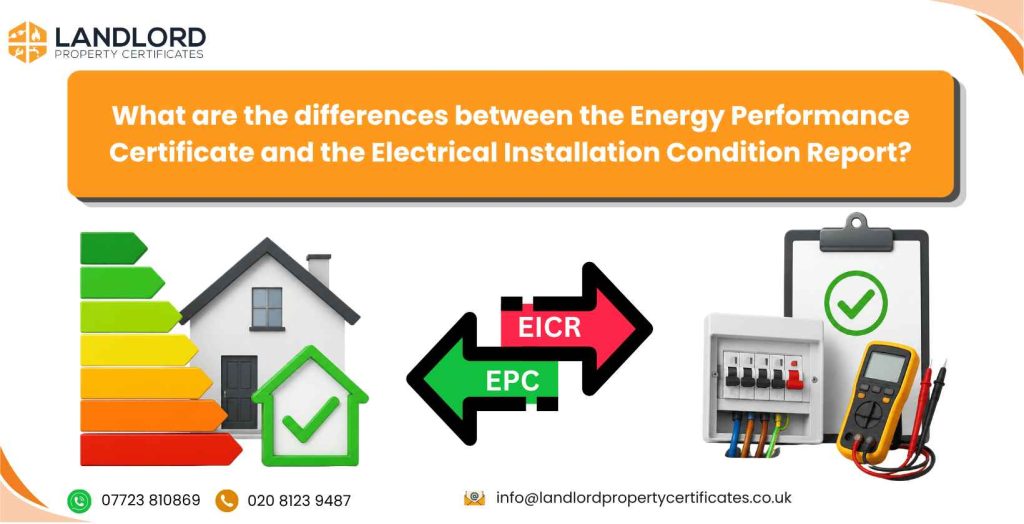
EPC stands for Energy Performance Certificate, and EICR stands for Electrical Installation Condition Report. EPC focuses on a building’s energy efficiency; in contrast, an EICR focuses on the property’s electrical safety. EPC and EICR are required for the landlord, property owner, seller, buyer, tenant, and letting agent to establish energy performance and certify the electrical installation as safe for use.
An EPC measures the energy efficiency of a property and rates it from A to G. An EPC includes recommendations on how to minimize energy consumption and carbon emissions, and on improving insulation and heating systems.
An EICR is an in-depth inspection report provided by a qualified electrician after the inspection of wiring, sockets, fuse boards, and electrical circuits, according to Jim Ascroft, title “What is an Electrical Inspection Condition Report”, published in 2025.
The main differences between EPCs and EICRs are energy efficiency and electrical safety, environmental performance, electrical installations, energy ratings, and fault observations. EPC and EICR also differ in validity (EPC: 10-year; EICR: 5-year). An EPC includes energy grading, carbon emission analysis, and cost-saving recommendations in a building. An EICR includes the coding of electrical faults, testing of circuits, safety observations, and identification of fire and shock hazards in a building. Landlord certificates in London provide valid EPC and EICR certificates according to the UK safety regulations.
What is an energy performance certificate?
An Energy Performance Certificate (EPC) is a document in the UK that quantifies the energy efficiency of a building or property. EPC assigns an energy rating to the property ranging from A to G, with ‘A’ being the most energy efficient and ‘G’ being the least.
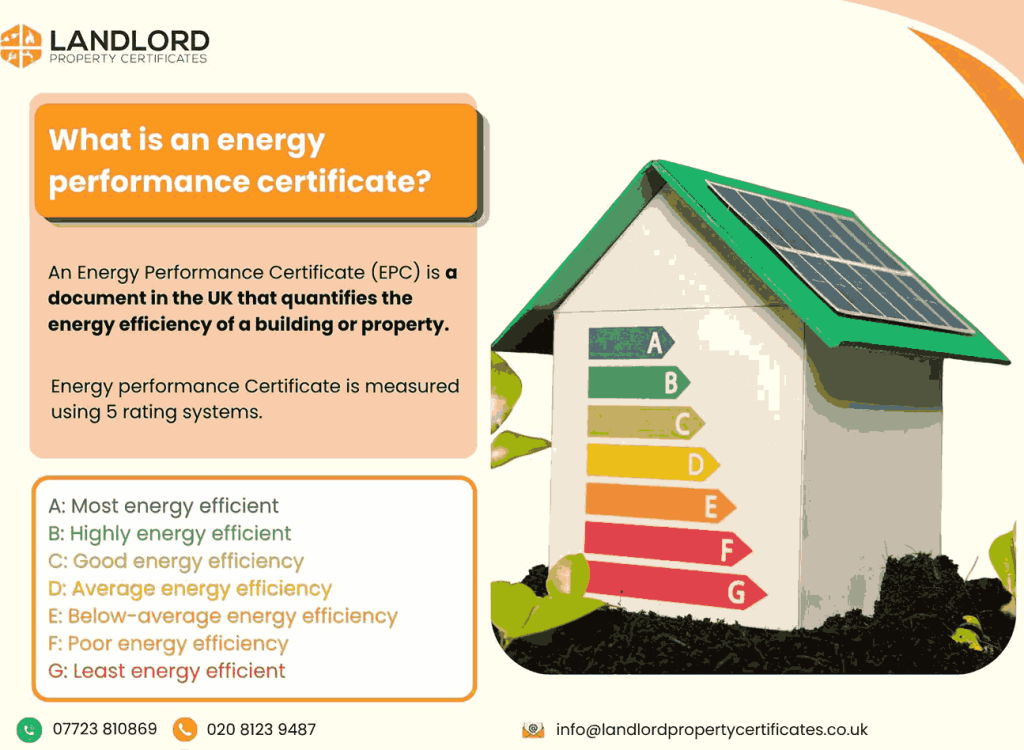
The EPC contains recommendations to improve a building’s energy performance, reduce carbon emissions, and decrease fuel and electricity costs. In the UK, EPCs are legally required when residential and commercial properties are built, sold, or rented.
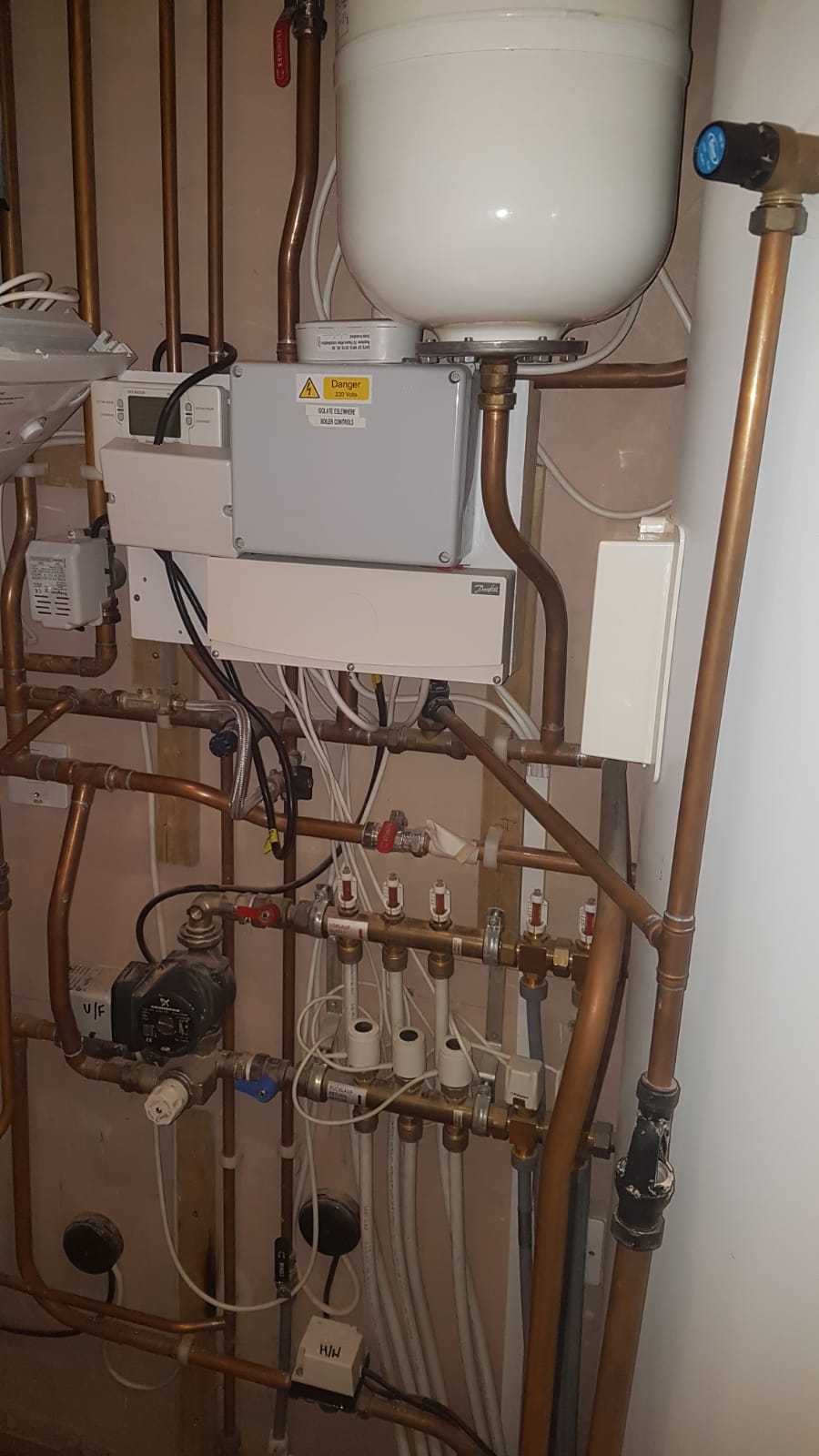
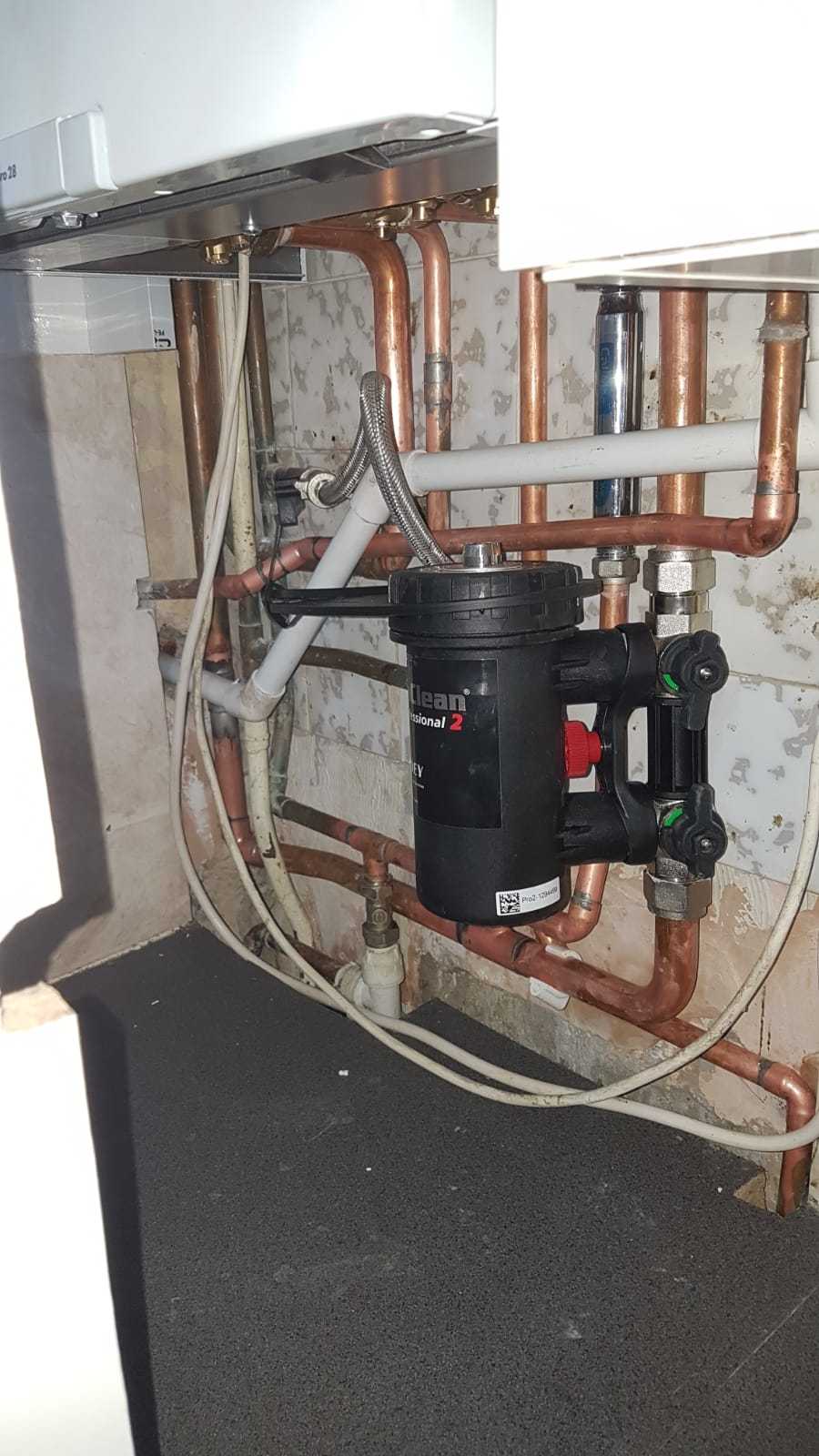
An EPC focuses on the quality of the insulation, the efficiency of the heating systems, hot water systems, lighting, window glazing, and the energy use of the building as a whole.
Europe’s idea of energy certification began in the 1990s when governments began to encourage building energy conservation. This idea came into general use with the adoption of the European Union’s Energy Performance of Buildings Directive (EPBD) in 2002. In the United Kingdom, EPC requirements were made compulsory for the sale or rent of larger homes in August 2007, and then implemented for all buildings up for sale or rent in August 2007, since 2008.
An EPC is valid for 10 years from the date of issue. An Energy Performance Certificate also has to be renewed if major changes are made in the property, like new insulation, new boilers, new windows, and heating systems. The landlords or sellers are responsible for renewing the EPC if it has expired before the house is sold or rented out again, according to Richard Fitton, title “Energy Performance Certificates: Informing Energy Efficiency Improvements in Housing”, published in 2020.
What is an electrical installation condition report?
An Electrical Installation Condition Report (EICR) is a document used to review the safety and condition of the electrical installation in a property in the UK. EICR is performed by a licensed electrician to determine if electric systems are safe to be used. An EICR is used for all residential, commercial, industrial, and rental properties in the UK.
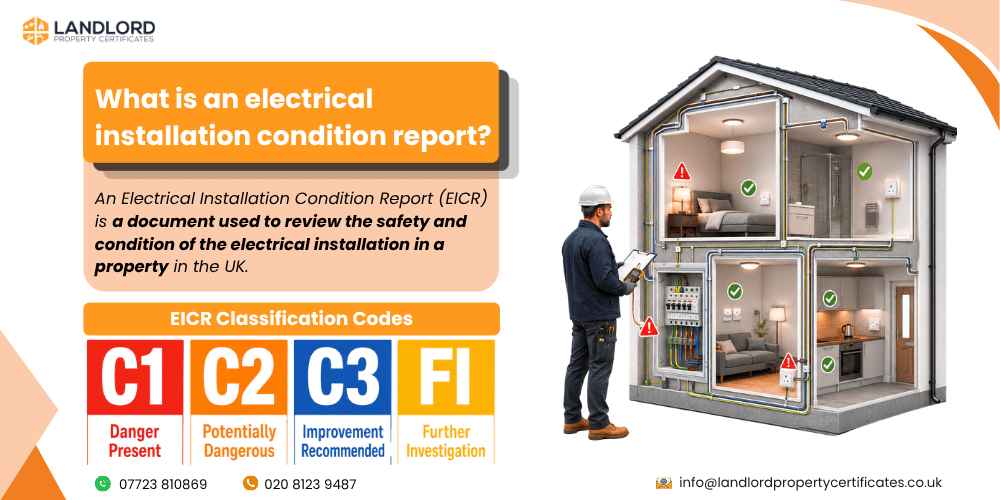
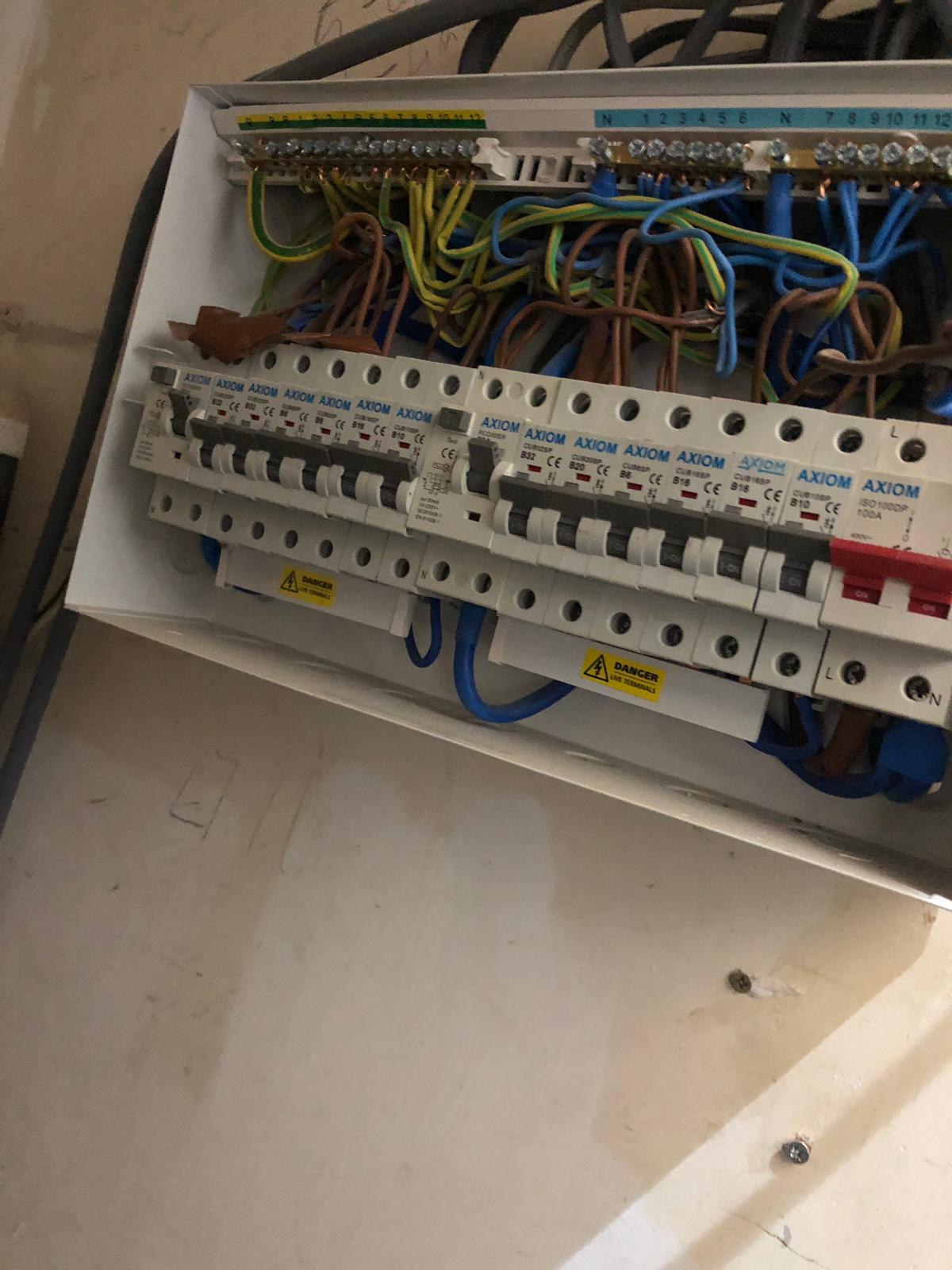
An EICR focuses on the permanent electrical installations in a building. EICR includes wiring systems, sockets, switches, consumer units or fuse boards, earthing and bonding arrangements, lighting circuits, and permanently installed electrical equipment. The EICR inspection involves checking for faults, wear, deterioration, or unsafe conditions, using visual and electrical tests. These electrical problems are classified in an EICR by observation codes (C1, C2, C3, and F1) based on the severity of the problem.
The 17th Edition of the IET Wiring Regulations (BS 7671) was introduced in 2008. The term “Electrical Installation Condition Report” (EICR) was used to replace the “Periodic Inspection Report” (PIR). EICRs are legally required in the UK for Private Rented Sector properties in England, from July 2020.
An EICR is valid for 5 years in residential rental properties, according to the previous report. EICR validity varies based on the property’s type, state, and size. EICR has to be renewed after major electrical changes (new electrical wiring), property damage, or a change of occupancy. The Electrical Installation Condition Report has to be updated when previous testing reports show an urgent safety issue that needs further investigation.
What are the differences between the Energy Performance Certificate and the Electrical Installation Condition Report?
The differences between the Energy Performance Certificate and the Electrical Installation Condition Report are described in the table below.
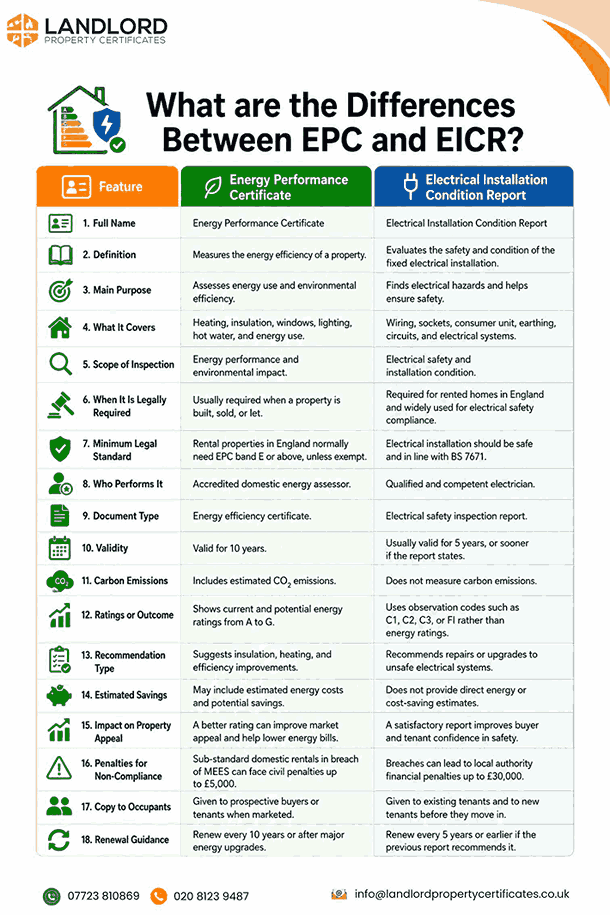
| Feature | EPC | EICR |
| Definition | A document that measures the energy efficiency of a property. | A report to evaluate the safety and condition of the electrical installations in a building. |
| Main Purpose | EPC assesses energy use and environmental efficiency. | EICR finds electrical hazards and ensures safety. |
| What It Covers | Heating systems, windows, lighting, energy consumption, and insulation. | Wiring, sockets, fuse boards, earthing, circuits, and electrical systems. |
| When It Is Legally Required | Legally required for the sale, hire, or development of a property in the UK. | Legally required for rental homes and businesses to ensure their electrical safety. |
| Minimum Legal Standards | The EPC rating should not be lower than E for rental properties in England. | The electrical installation should be safe and in accordance with BS 7671. |
| Who Performs It | EPC is performed by a domestic energy assessor. | A qualified and competent electrician and electrical engineer perform the EICR. |
| Full Name | Energy Performance Certificate | Electrical Installation Condition Report |
| Document Type | Energy efficiency certificate | Electrical safety inspection report |
| Carbon Emissions | Contains an estimate of the amount of carbon dioxide emissions. | Does not measure carbon emissions. |
| Potential Rating Shown | Displays energy ratings and potential energy ratings (A-G). | Not using energy ratings. |
| Recommendation Type | Proposes changes to insulation, heating, and efficiency. | Makes suggestions for repairs or upgrades to unsafe electrical systems. |
| Suggested Cost Savings | Includes energy cost savings resulting from improvements, as an approximation. | Does not make a direct estimation of financial savings. |
| Impact on Property Value | An improvement in EPC ratings increases the property’s market value and appeal. | A satisfactory EICR increases the confidence of the buyer and tenant. |
| Penalties for Non-Compliance | Landlords face 5 years’ jail and a £20,000 fine if they rent out a property with a below-legal EPC rating. | Landlords face a £ 40,000-per-breach fine if they rent out a property without a valid EICR. |
| Copy to Tenants Required | Tenants are required to have a copy of the EPC before coming in. | A copy of the EICR report is given to tenants before coming in. |
| Homeowner Recommendation Interval | EPC is renewed every 10 years or when major energy upgrades are made. | The EICR is renewed every 5 years, according to the previous report. |
| Scope of Inspection (Energy vs Electrical Safety Focus) | EPC focuses on energy performance and environmental efficiency. | EICR focuses on the safety and condition of electrical systems. |
EPC vs EICR: Legal Requirement
EPC and EICR are legal requirements for selling and renting a property in the UK. An EPC is legally required when building, selling, or renting a property in the UK under the EPC Regulations 2012. EPC assesses the energy efficiency and the running costs of a building. An EICR is a legal requirement for rented properties in the UK to ensure that their electrical installations are safe for residents, in accordance with “The Electrical Safety Standards in the Private Rented Sector (England) EICR Regulations 2020”.
EPC vs EICR: Mandatory for Sale / Letting
EPC and EICR are both mandatory for the sale/letting of a property in the UK. An EPC is mandatory before it is put up on the market for sale or lease under the EPC Regulations 2012. An EICR is mandatory pre- or during a tenancy in rental properties in accordance with “The Electrical Safety Standards in the Private Rented Sector (England) EICR Regulations 2020”. EPCs assess the energy performance of buildings and build the trust of tenants and buyers. EICR assists landlords in demonstrating that a building’s electrical installation is safe for use.
EPC vs EICR: Output / Rating System
EPC has a rating system, but EICR has a coding system to assess the building. An EPC rating System ranges from A to G, depending on a building’s energy efficiency. A-rated properties are the most energy efficient, and G-rated properties are the least. An EICR records observations and faults in the form of EICR codes (C1, C2, C3, and FI) rather than the letter grading system.
EPC vs EICR: Validity / Duration
EPC validity is 2 times more than EICR. EPC Validity is 10 years, unless new energy consumption amendments are made in the building. EICR validity is 5 years for rental properties, according to the previous report, unless a new electrical system is installed in the building. Energy efficiency performance changes slowly, so EPCs have a longer lifetime. Electrical systems change over time, so EICR needs to be renewed frequently.
EPC vs EICR: Cost
The EPC cost is 3-6 times less than the EICR cost. The EPC cost ranges from £60–£120 for residential properties and £150–£500+ for commercial properties in the UK. The EICR cost ranges from £80 to £350+ for residential properties and £250 to £2,000+ for commercial premises in the UK. EICR is more costly because it requires in-depth testing of electrical circuits and components. The EPC is less costly because it only evaluates the building’s energy efficiency.
EPC vs EICR: Can They Substitute for Each Other?
An EPC cannot substitute for an EICR, as an EPC only assesses a building’s energy efficiency. An EICR cannot be a substitute for an EPC, as an EICR only examines electrical safety, not the energy efficiency of a building. EPC and EICR have different legal and practical requirements, so neither of them can substitute for the other.
EPC vs EICR: Frequency of Issue
The EPC issuance frequency is 2 times the EICR issuance frequency. EPC frequency is 10 years, and EICR frequency is 5 years, according to the previous report. EPC is issued only when a house is sold, rented, or newly constructed. EICR frequency depends on the type of property, change of tenancy, or major electrical alterations.
What are the advantages of EPC when compared to EICR?
The advantages of EPC when compared to EICR are listed below.
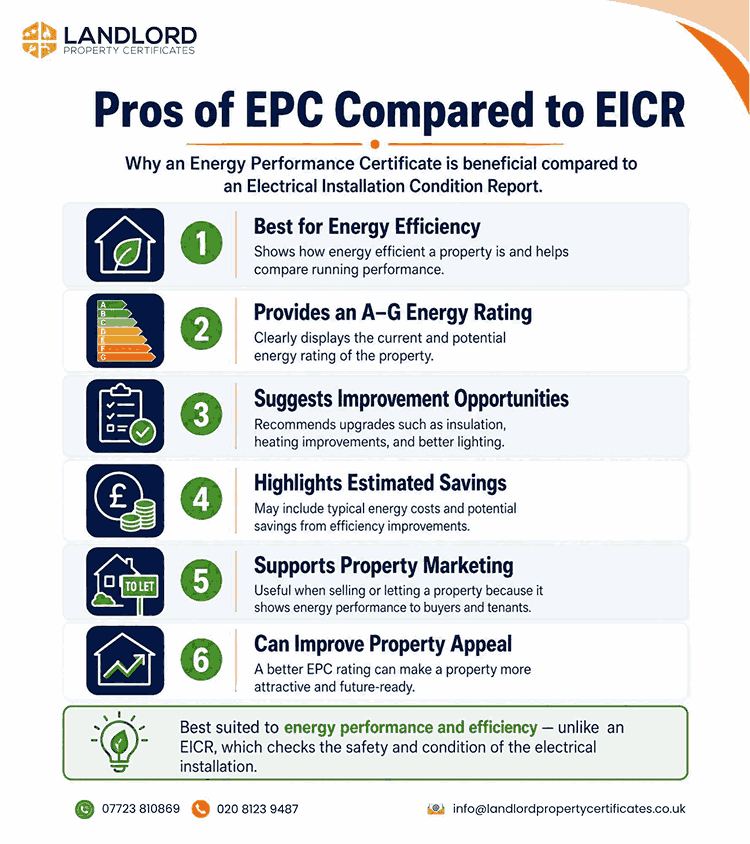
- Combined Energy Efficiency Rating System (CEERS): An EPC has an energy rating system that ranges between A and G, so it’s easy to see a home’s energy efficiency. EPC rating assists buyers, tenants, and landlords in quickly and easily understanding the energy efficiency of properties. An EICR won’t offer efficiency grading, as it’s only about electrical safety.
- Carbon Emission Assessment: An EPC includes details of the property’s carbon dioxide emissions. This EPC enables property owners to understand the building’s environmental impact and promotes sustainable energy use. An EICR does not include a carbon emissions measurement or assessment.
- Estimated Energy Costs: An EPC shows an approximate amount of energy your home consumes during a year for heating, lighting, and hot water. EPC assists tenants and buyers in estimating future utility costs before entering a property. An EICR does not give a cost estimation of energy consumption.
- Suggested Energy Improvements: An EPC provides comprehensive recommendations on how to improve energy efficiency, including insulation, windows, and efficient boilers. These recommendations minimize energy waste and increase comfort. An EICR is concerned with electrical repairs and not efficiency.
- Support for Environmental Sustainability: An EPC helps with environmental sustainability and promotes lower energy use and lower greenhouse gas emissions. EPC encourages environmentally friendly building operations. An EICR, on the other hand, is electric safety compliance only.
- Better Property Marketability: A high EPC rating makes a property more appealing to potential buyers and tenants, as it indicates that the home or building is likely to be more efficient and cost-effective in terms of energy usage. A quality EPC helps to upsell and increase the market rating for a property. An EICR only provides reassurance to the building’s occupants in terms of electrical safety.
- Longer Validity Period: An EPC lasts for 10 years and is less frequently renewed and more convenient. An EICR is renewed every 5 years in rental properties, so it is more frequent and expensive than the EPC.
What are the advantages of EICR when compared to EPC?
The advantages of EICR when compared to EPC are listed below.
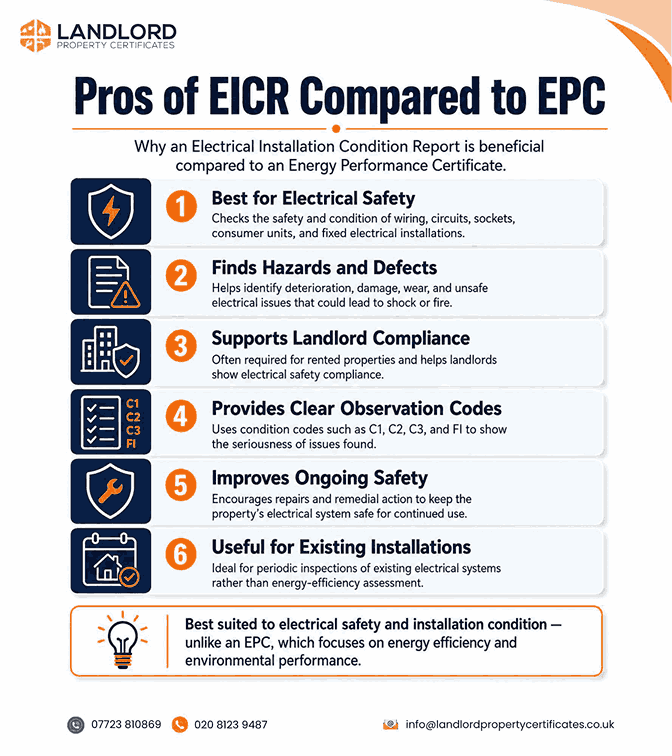
- Electrical Safety Assessment: An EICR assesses the electrical safety of a property, including wiring, circuits, consumer units, sockets, switches, earthing, and bonding. An electrical safety assessment identifies electrical hazards that result in electric shock or fire. An EPC assesses only the energy efficiency, not the electrical safety, of a building.
- Detect electrical faults: An EICR detects dangerous, potentially dangerous, or defective electrical components and records them with codes (C1, C2, or FI). Fault detection helps fix them before they lead to accidents or property damage. An EPC is not a test of electrical faults or safety issues.
- Meeting Electrical Safety Regulations: An EICR helps landlords and property owners comply with the Electrical Safety Regulations 2020. EICR is the evidence that the electrical installation has been inspected and tested by a qualified electrician. An EPC is not compliant with electrical safety standards, but with energy efficiency standards.
- Safety of Electrical Installations: An EICR is conducted to ensure that electrical installations in the building are safe for use, protecting the property assets, homeowners, and visitors. A satisfactory EICR is a reassurance that the electrical system has been professionally inspected. The main purpose of an EPC is to give information on energy performance, not the safety of occupants.
- Direct Contribution to Life Safety: The EICR ensures people’s safety from electrical hazards such as electric shock, burns, and fire. An EICR contributes to the safety and protection of building occupants, but an EPC helps to assess energy efficiency and environmental goals.
Can EPC replace EICR?
No, an EPC cannot replace an EICR because an EPC assesses energy efficiency, while an EICR assesses the electrical installation of a building. An EPC is a document that rates a building’s energy efficiency by assessing insulation levels, heating and hot water systems, ventilation, glazing, carbon emissions, and energy consumption. An EICR examines fixed electrical wiring, circuits, devices, earthing, bonding, sockets, switches, and consumer units. An EPC can’t assess electrical installations, and an EICR can’t assess energy efficiency.
A house that has a good EPC rating and is well insulated, has double glazing, solar panels, and an efficient heating system, but still fails an EICR because of having electrical faults. A property with a valid EICR for a safe, compliant electrical installation, but with low insulation, inefficient heating, single-glazed windows, or high energy consumption, gets a poor EPC rating. An EPC is not legally or practically able to replace an EICR because neither can substitute for the other.
Can EICR replace EPC?
No, an EICR cannot replace an EPC because an EICR assesses electrical installations, whereas an EPC assesses a building’s energy efficiency. An EICR assesses the safety of electrical installations, including the wiring, circuits, consumer units (fuse boards), earthing, bonding, sockets, and switches. EICR detects potential electric shock or fire hazards, deterioration, defects, or non-conformance in the electrical system. An EICR does not evaluate the energy efficiency or heating performance of a property, the quality of its insulation, carbon emissions, or energy use.
EPC assesses the energy efficiency of a property in terms of heating and hot water supplies, ventilation, glazing, lighting efficiency, and carbon dioxide emissions. An EPC does not assess electrical safety, circuit testing, the condition of wiring, earthing and bonding arrangements, or electrical faults.
A property with a high EPC rating or excellent energy efficiency, but with a poor EICR code due to a faulty electrical installation, is not considered safe. A property with an efficient EICR due to a good electrical installation, but a low EPC rating due to poor energy efficiency, is not considered safe. An EICR is not legally or practically able to replace an EPC because neither can substitute for the other.