
No, you do not need a gas safety certificate to sell a house, as there is no legal requirement for it in the UK. Owners of residential property are not subject to the annual requirement for a Gas Safety Certificate to sell their own property under the Gas Safety (Installation and Use) Regulations 1998. The buyers or their solicitor can ask for a gas safety certificate or request that they carry out their own gas safety check before the exchange of contracts. This demand for a certificate gives the buyer confidence, reduces questions during conveyancing, and prevents delays and renegotiations. The landlord must continue to meet all gas safety requirements until the tenancy is terminated if the property is already rented or is on sale with tenants in place.
Is a gas safety certificate needed to sell a house in the UK?
No, a gas safety certificate is not needed to sell a house in the UK. The Gas Safety Certificate is an annual requirement for landlords renting out their properties, but not for homeowners who are selling their own homes.
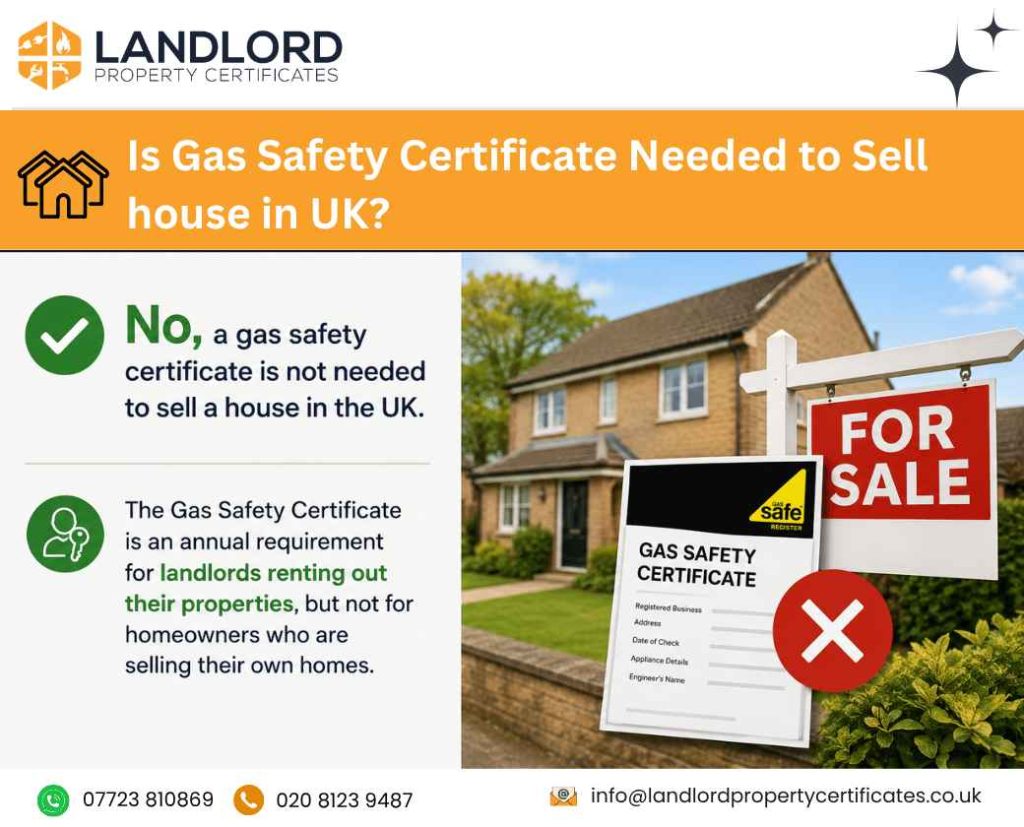
The buyer or their solicitor during the conveyancing process can request the latest gas safety record and proof that the boiler has been serviced. The buyer can pay for their own gas inspection or negotiate the sale if these documents are not provided. The property is being sold with tenants in; the landlord needs to continue meeting the requirements of the Gas Safety (Installation and Use) Regulations 1998 until the tenancy’s ‘legality’ has ended.
What does UK law say about selling a house without a gas safety certificate?
A Gas Safety Certificate is not a legal requirement in the UK when selling an owner-occupied property. The current landlords must comply with the Gas Safety (Installation and Use) Regulations 1998 for as long as tenants occupy the property.

The UK law guidelines on selling a house without a gas safety certificate are listed below.
- Determine whether a CP12 is legally required: First, find out whether the property is owner-occupied or tenanted. The Gas Safety (Installation and Use) Regulations 1998 only legally require landlords of rented accommodation to have a valid Gas Safety Record annually.
- State that there is no Gas Safety Certificate: Sellers are required to provide honest responses to any conveyancing inquiries. The failure to disclose that there is no gas safety for the property being sold and misleading information result in legal action or claims for misrepresentation pursuant to general contract law.
- Include other boiler records if possible: Submit boiler service records, installation certificates, warranties, or repair invoices if a CP12 is not available. These documents are not required by law, but are useful in showing that the heating system has been maintained.
- Be ready for another inspection by buyers: Buyers can have their own Gas Safe-registered engineer check the boiler and gas appliances before exchange of contracts. This practice is done when there is no recent gas safety documentation.
- Be ready for further conveyancing questions: The buyer’s solicitor may request details about the age and history of the boiler and gas system, including installation and servicing records, as well as the boiler’s condition. Quick responses to buyers help prevent delays in the sale of a house.
- Price negotiations possibility: A buyer can demand a reduction in purchase price if there is no evidence of recent gas servicing or a gas safety record.
- Ensure legal compliance where relevant (for a tenanted property): The seller is responsible for meeting the requirements of the Gas Safety (Installation and Use) Regulations 1998 until the tenancy formalities are finalized if a property is being sold whilst tenants are living there.
Is a gas safety certificate required by law in the UK?
No, a Gas Safety Certificate is not required by law in the UK. A Gas Safety Certificate is a legal requirement for rented residential properties where the landlord supplies gas appliances, pipework, or flues under the Gas Safety (Installation and Use) Regulations 1998. There is no legal requirement for owner-occupied properties to have a Gas Safety Certificate unless the property is to be rented according to gas safety certificate landlord obligations.
Why is a gas safety certificate important if it is not a legal requirement?
There is no legal requirement for a Gas Safety Certificate for owner-occupied properties. A Gas Safety Certificate is still important, as it confirms that a Gas Safe-registered engineer has inspected gas appliances, flues, and pipework, and that they are safe to use. A valid gas safety certificate helps identify gas leaks, malfunctioning appliances, and carbon monoxide hazards before they become harmful. This certificate also helps reassure buyers, insurers, and mortgage lenders, serves as evidence of proper maintenance of the gas system, and helps prevent expensive repairs or safety issues.
Is it illegal or unethical to sell a house without a gas safety certificate?
No, it is not illegal or unethical to sell a house without a gas safety certificate. The sellers must be truthful about the state of the property’s gas system and respond to any gas-related questions raised during the conveyancing process. The landlord must still comply with the Gas Safety (Installation and Use) Regulations 1998 if the property is currently rented, even after it has been sold, provided ownership and landlord obligations have not yet been transferred.
Do homeowners need a gas safety certificate to sell a house?
No, homeowners do not need a gas safety certificate to sell a house.

The requirement for a gas safety certificate under the Gas Safety (Installation and Use) Regulations 1998 applies to landlords of rented residential property, not to people selling their home. The buyers can ask for a boiler service or an independent gas inspection during the conveyancing process.
Do you need a gas safety certificate to sell a house with an existing boiler?
No, you do not need a gas safety certificate to sell a house with an existing boiler, but recent boiler service records or installation documents reassure buyers and answer their inquiries.
Do you need a gas safety certificate to sell a house if the property is vacant?
No, you do not need a gas safety certificate to sell a vacant house. The Gas Safety (Installation and Use) Regulations 1998 do not require a CP12 as long as the property is not tenanted.
Do you need a gas safety certificate to sell a house that has been rented out?
Yes, you need a gas safety certificate to sell a house that has been rented out, provided the tenants are still residing in the property at the time of sale, under the Gas Safety (Installation and Use) Regulations 1998. A Gas Safety Certificate is not required for the sale if the tenancy has finished and the property is not under a lease.
Do you need a gas safety certificate to sell a house if there are no gas appliances?
No, you do not need a gas safety certificate to sell a house if there are no gas appliances, under the Gas Safety (Installation and Use) Regulations 1998. This law applies only to properties with gas appliances and installations.
Is there any penalty for selling a house without a gas safety certificate?
No, there is no penalty for selling a house without a gas safety certificate in the UK.

The landlord is subject to enforcement action and legal fines ( unlimited) if the property is under contract and the landlord has neglected to meet their obligations under the Gas Safety (Installation and Use) Regulations 1998.
How to get a gas safety certificate before you sell a house?
Contact a Gas Safe registered engineer to conduct a gas safety inspection. The engineer will inspect gas appliances, flues, and accessible gas pipework to ensure they are operating safely and meet safety standards.
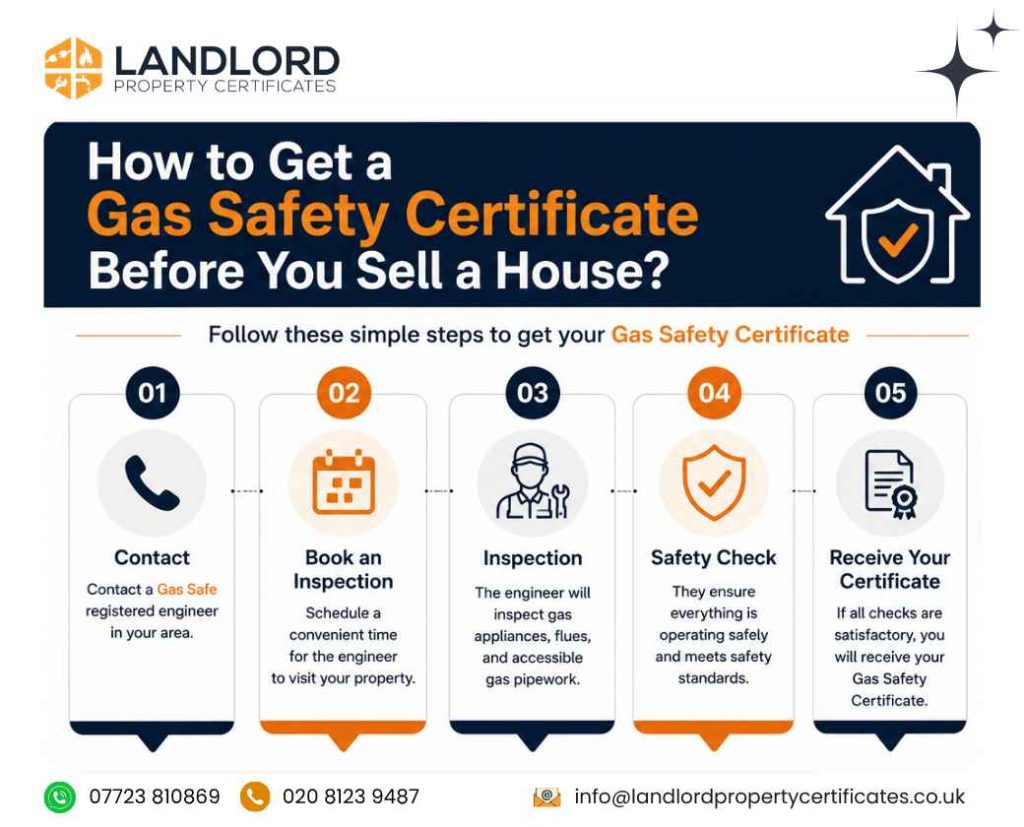
Any defects found in the gas installation should be rectified before the gas safety certificate is issued. After the inspection, if it is successful, the engineer will issue a Gas Safety Certificate (CP12) detailing the status of the gas installations inspected. This process answers the question “how to get a gas safety certificate UK” and provides an easy way to obtain one before you sell a house.
Do solicitors ask for a gas safety certificate when you sell a house?
Solicitors do not ask for a Gas Safety Certificate (CP12) when selling an owner-occupied house, as there is no legal requirement for homeowners to have one before selling under the Gas Safety (Installation and Use) Regulations 1998. A buyer’s solicitor can enquire about the boiler and its servicing history, or ask for any gas-related documents. The solicitors can ask to view a valid Gas Safety Record if the property is currently rented, as landlords are required to comply with the Gas Safety (Installation and Use) Regulations 1998 until the lease is terminated or the property is sold.
How much does a gas safety certificate cost when selling a house?
A Gas Safety Certificate (CP12) costs range from £60 to £120 when selling a house with a single gas appliance, such as a boiler. Additional gas appliances (such as gas fires, hobs, or ovens) incur an extra fee of £10-£15 per appliance, depending on the number of appliances. The final cost of a Gas Safety Certificate varies depending on the property’s location and the engineer’s call-out fees. The gas safety certificate cost is higher (£80 for 2 appliances) if you have more than one gas appliance at your property, or if the property is in a high-risk area, such as London (£85- £150).
How long is a gas safety certificate valid for when selling a house?
Gas Safety Certificate (CP12) is valid for 12 months from the date of inspection. A Gas Safety Certificate is not required for the sale of an owner-occupied house, as there is no legal requirement that it be valid for the sale. A recent gas safety certificate reassures the buyer that a Gas Safe-registered engineer has inspected the gas appliances and fittings.
Gas safety certificate vs boiler service record when selling a house
A Gas Safety Certificate (CP12) and a boiler service record are two different documents with different needs. A Gas Safety Engineer issues a Gas Safety Certificate after inspecting your gas installation.
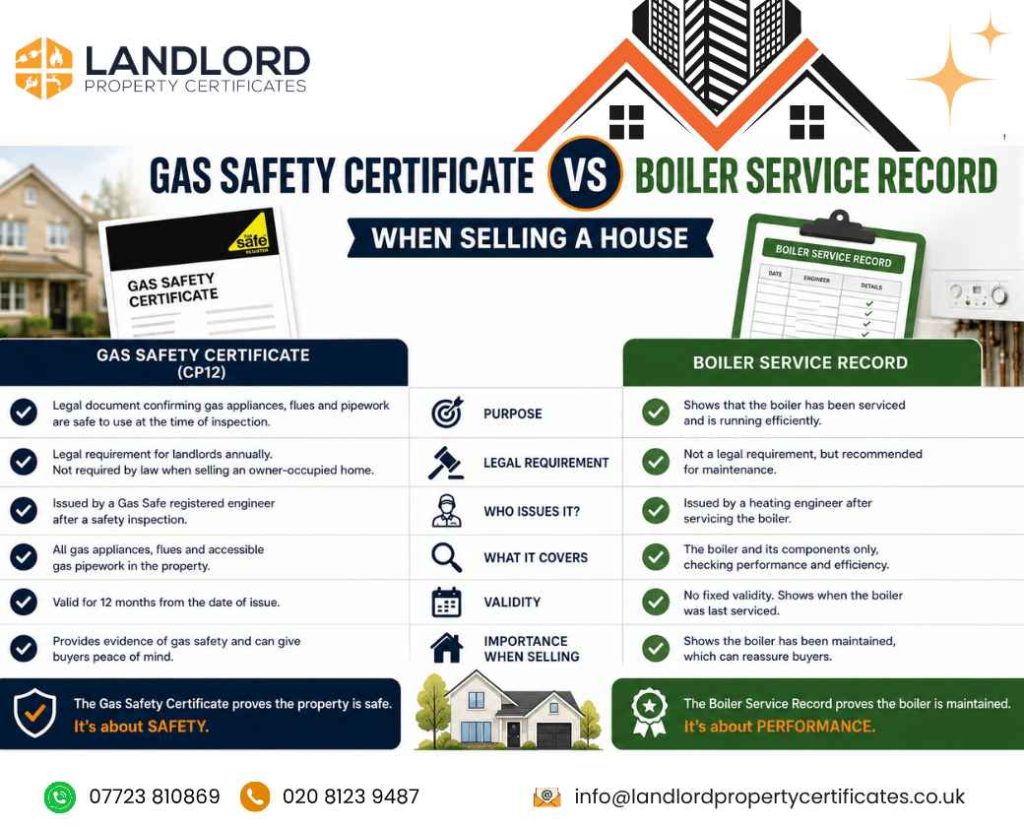
CP12 is a legal requirement for rented residential gas installations, under the Gas Safety (Installation and Use) Regulations 1998. A boiler service record is simply evidence that the boiler has been serviced and maintained, and it is not a legal replacement for a CP12.
There is no legal requirement for a Gas Safety Certificate or boiler service record to sell an owner-occupied house. Recent boiler service records, the installer’s documentation, and warranty or repair bills can be used to make the sale. These documents give buyers peace of mind that the boiler is well maintained, but buyers can opt to have their own gas inspection before completion.
What other certificates do you need to sell a house besides a gas safety certificate?
The other certificates you need to sell a house besides a gas safety certificate are listed below.
- Energy Performance Certificate: The Energy Performance Certificate (EPC) is a report that rates a building’s energy efficiency.
- Electrical Installation Certificate (EIC): An Electrical Installation Certificate confirms that the recently installed or substantially altered electrical installation in a building complies with the law of Building Regulations and safety standards (BS 7671).
- Electrical Installation Condition Report (EICR): An EICR is not required when selling an owner-occupied house, but having a recent report reassures the next buyer that the electrical installation has been inspected.
- Building Regulations Compliance Certificate: This certificate confirms that structural work, extensions, loft conversions, window replacements, or electrical work in a building complies with the Building Regulations.
- FENSA or CERTASS Certificate: This certificate is required to confirm that the replacement windows or external doors were installed after April 2002 and comply with the Building Regulations.
- Boiler Installation Certificate: A boiler installation certificate proves that a new gas boiler has been installed in line with the Building Regulations and properly notified.
- Boiler Service Record: This certificate is not required by law; a boiler service history is important for demonstrating that the boiler has been properly serviced.
- Electrical Minor Works Certificate: This certificate is required where minor electrical work has been done and certified.
- Planning Permission Documents: Planning permission documents are required by local authorities for extensions or alterations to the existing building.
- Completion Certificate: A Building Control Completion Certificate is a document certifying the completion of building work approved by the local authority and an approved Building Inspector.
- NHBC Warranty/New Build Warranty: Newer homes come with a structural warranty (NHBC Buildmark) that provides cover for structural faults, such as poor floors and basements.
- Damp or Timber Treatment Guarantee: A Damp or Timber Treatment Guarantee is required if any damp-proofing or timber treatment (such as woodworm or dry rot control) has been carried out.
- Roofing Structure Guarantee: A Roofing Structure Guarantee is a commitment to replace the roof or make major repairs, demonstrating the quality of the work performed.
- Indemnity Insurance Policy: The conveyancer suggests obtaining an insurance policy to assist with the sale when other certificates or approvals are unavailable.
Can you purchase a house without a gas safety certificate in the UK?
Yes, you can purchase a house without a gas safety certificate in the UK. There are no legal requirements for a gas safety certificate in the UK to purchase a house.
Can you rent out a house without a gas safety certificate in the UK?
No, you cannot rent out a house without a gas safety certificate in the UK under the Gas Safety (Installation and Use) Regulations 1998. According to this law, landlords must have a valid Gas Safety Certificate (Gas Safety Record) in place before and during the tenancy if the property has landlord-provided gas appliances, pipework, or flues. Failure to comply with gas safety law results in enforcement action, prosecution, and unlimited fines.