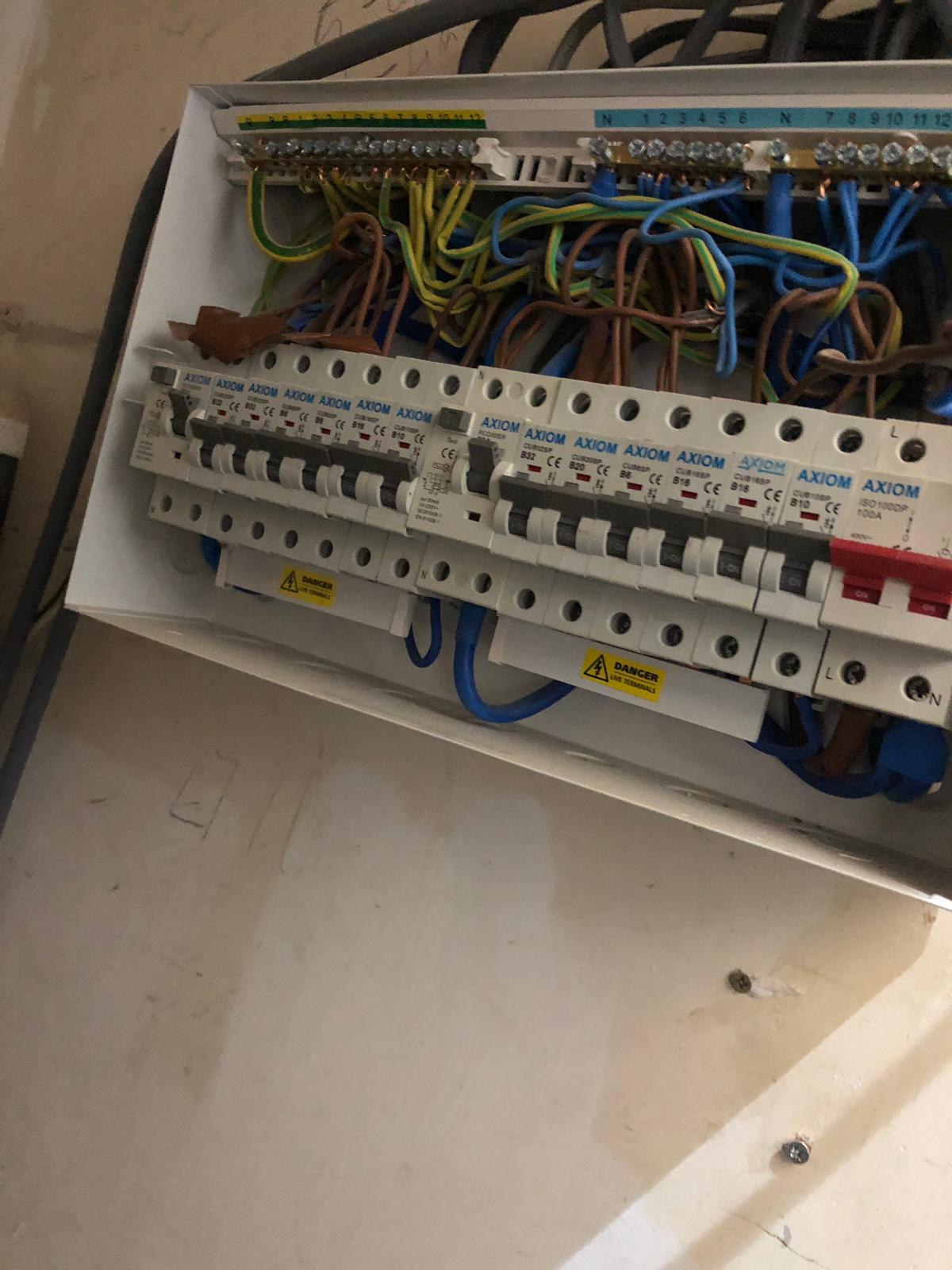
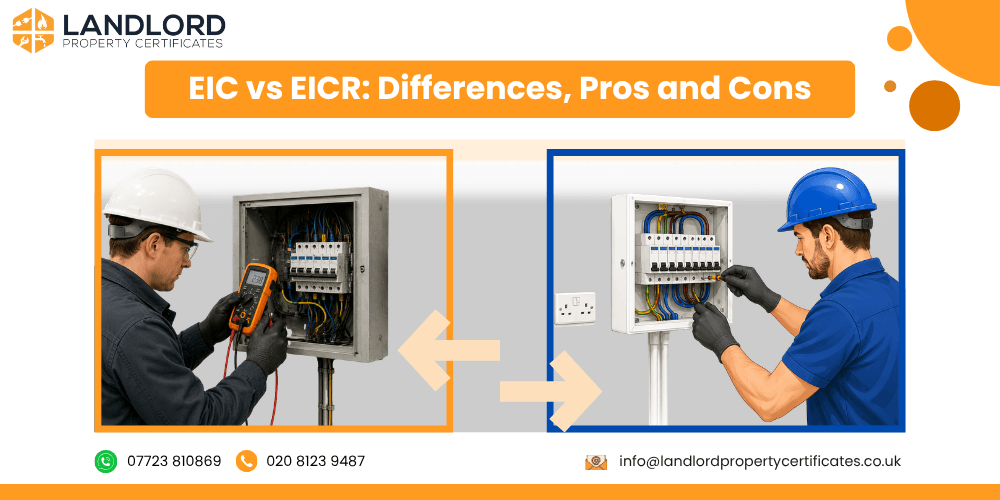
EIC and EICR are electrical safety records that confirm electrical installations comply with the UK wiring regulations (IET Wiring Regulations (BS 7671)). Landlord certificates in London provide professional EIC and EICR that comply with UK electrical regulations.
An Electrical Installation Certificate (EIC) demonstrates that a new electrical installation, major alteration, or complete rewiring project has been completed. EIC verifies that the electrical work is designed, installed, inspected, and tested in compliance with the latest safety standards.
An Electrical Installation Condition Report (EICR) is a periodic inspection report that evaluates the condition and safety of an electrical installation over time (every 5 years, according to the previous report).
The main differences between EIC and EICR are their purpose, their timing, and their scope. The EICR detects deterioration, defects, overloading risks, and non-compliance in older electrical installations.
The EIC confirms that newly completed electrical work complies with UK regulations. An EIC provides details of electrical design and construction certification, but an EICR does not. EICR includes electrical condition codes like C1, C2, and FI to point out electrical safety risks and instructions that are not included in the EIC.
EIC provides evidence that the electrical work is safe and legal, but it does not consider future wear or ageing of the installation. EICR ensures that landlords and homeowners have electrical safety and legal compliance in the long run, according to the Institution of Engineering and Technology (IET), “BS 7671:2018+A2:2022 Requirements for Electrical Installations”, published in 2022.
What is an EIC?
EIC stands for Electrical Installation Certificate, and is a document that proves new electrical installation work or electrical alterations meet the safety standards and wiring regulations in the UK.
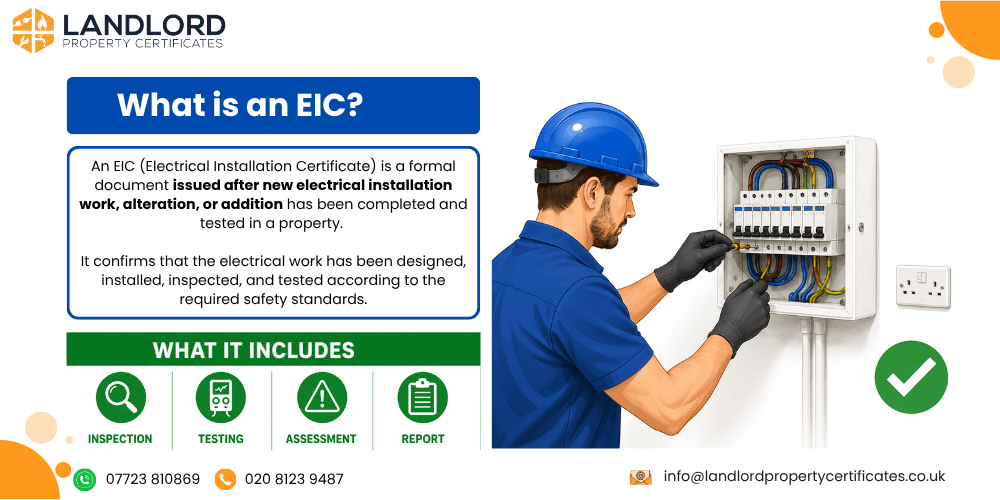
EIC is issued when the electrical system is properly designed, installed, inspected, and tested. The purpose of an EIC is to certify that electrical work is safe for use and complies with the latest version of the BS 7671 Wiring Regulations. The homeowner, landlord, commercial property owner, electrician, or contractor required EIC after rewiring, fitting a new circuit, or upgrading a consumer unit.
EIC involves electrical inspection and certification, verification of circuit design, and visual inspection of the electrical installation. An EIC is required for landlords and businesses to keep electrical safety records and to comply with the UK Building Regulations Part P and BS 7671 standards.
What is the importance of an EIC?
An EIC assures landlords and tenants that the newly installed or modified electrical systems are safe and meet UK electrical regulations. An EIC benefits the landlords by proving that their buildings are legally compliant and minimizes the risk of electrical accidents. EIC provides evidence that a qualified electrician has properly performed the electrical work. The landlord uses EIC for insurance and property management records.
An EIC provides surety to tenants that the electrical installation of a property is safe and has been tested and certified according to UK electrical safety standards.
EIC minimises the risk of electrical faults (shock and electrical fires) that occur due to improper wiring or installation. An EIC helps to build a relationship of trust between landlords and tenants, and a commitment to the safety and maintenance of the property.
What is an EICR?
An EICR stands for electrical installation condition report and is a document that ascertains the safety and condition of an existing electrical installation. EICR is used to detect damage, deterioration, defects, and potential electrical hazards present in an existing property.
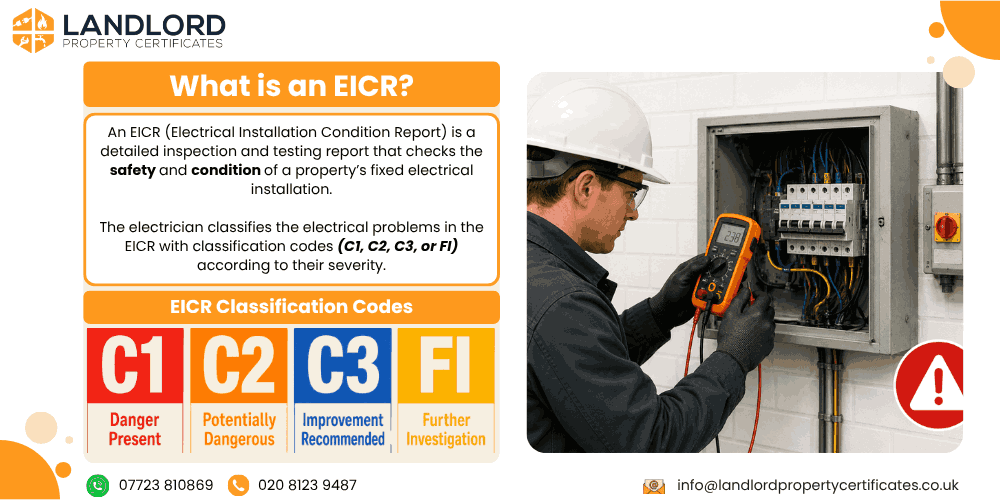
An EICR involves visual inspection, electrical testing, circuit testing, consumer unit and wiring system testing, earthing, and testing of protective devices. The electrician classifies the electrical problems in the EICR with classification codes (C1, C2, C3, or FI) according to their severity.
The purpose of an EICR is to confirm that an electrical installation is safe to use and meets the UK safety standards. EICR helps to prevent electrical fires, electric shocks, and system failures due to defective or ageing electrical components. Landlords, homeowners, businesses, commercial property owners, and letting agents need an EICR to comply with UK electrical safety standards.
EICR is especially needed for rented or commercial (workplace) premises where regular electrical safety testing is mandatory. The Electrical Safety Standards in the UK for Private Rented Sector Regulations 2020 require landlords to have a valid Electrical Installation Condition Report for rental properties, according to the Institution of Engineering and Technology (IET), “Guidance Note 3: Inspection and Testing”, published in 2022.
What is the importance of an EICR?
The EICR ensures the electrical safety and reliability of a property for landlords and tenants according to UK electrical safety standards. An EICR helps landlords fulfil their legal obligations and ensures that their tenants are safe from potential electrical hazards, including electric shock, overheating, and fire.
EICR assists landlords in determining electrical issues, lowering repair expenses, holding insurance plans, and steering clear of legal charges concerning unsafe electrical systems.
An EICR reassures tenants that the electrical installation in the property they are renting has been professionally assessed. EICR increases electrical safety by identifying electrical issues that are not apparent during a visual electrical inspection.
A valid EICR also demonstrates that the landlord is taking responsibility for maintaining the electrical system of the property and taking the necessary action to ensure that the house is safe to live in.
What are the differences between EIC and EICR?
The differences between EIC and EICR are described in the table below.
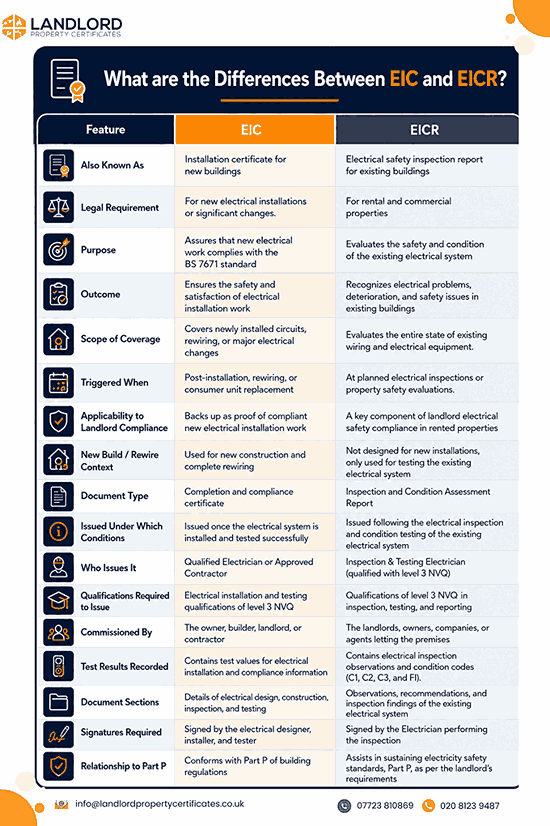
| Feature | EIC | EICR |
| Also Known As | Installation certificate for new buildings | Electrical safety inspection report for existing buildings |
| Legal Requirement | For new electrical installations or significant changes. | For rental and commercial properties |
| Purpose | Assures that new electrical work complies with the BS 7671 standard | Evaluates the safety and condition of the existing electrical system |
| Outcome | Ensures the safety and satisfaction of electrical installation work | Recognizes electrical problems, deterioration, and safety issues in existing buildings |
| Scope of Coverage | Covers newly installed circuits, rewiring, or major electrical changes | Evaluates the entire state of existing wiring and electrical equipment. |
| Triggered When | Post-installation, rewiring, or consumer unit replacement | At planned electrical inspections or property safety evaluations. |
| Applicability to Landlord Compliance | Backs up as proof of compliant new electrical installation work | A key component of landlord electrical safety compliance in rented properties |
| New Build / Rewire Context | Used for new construction and complete rewiring | Not designed for new installations, only used for testing the existing electrical system |
| Document Type | Completion and compliance certificate | Inspection and Condition Assessment Report |
| Issued Under Which Conditions | Issued once the electrical system is installed and tested successfully | Issued following the electrical inspection and condition testing of the existing electrical system |
| Who Issues It | Qualified Electrician or Approved Contractor | Inspection & Testing Electrician (qualified with level 3 NVQ) |
| Qualifications Required to Issue | Electrical installation and testing qualifications of level 3 NVQ | Qualifications of level 3 NVQ in inspection, testing, and reporting |
| Commissioned By | The owner, builder, landlord, or contractor | The landlords, owners, companies, or agents letting the premises |
| Test Results Recorded | Contains test values for electrical installation and compliance information | Contains electrical inspection observations and condition codes (C1, C2, C3, and F1). |
| Document Sections | Details of electrical design, construction, inspection, and testing | Observations, recommendations, and inspection findings of the existing electrical system |
| Signatures Required | Signed by the electrical designer, installer, and tester | Signed by the Electrician performing the inspection |
| Relationship to Part P | Conforms with Part P of building regulations | Assists in sustaining electricity safety standards, Part P, as per the landlord’s requirements |
EIC vs EICR: Validity or Expiry
An EIC has no expiry date because it is a record of the electrical work performed during the installation. EICR is valid for 5 years (60 months) according to the previous report, but its validity can be shorter or longer depending on the Electrician’s recommendation. The EICR validity is short for buildings with poor electrical installation. An EIC is a historical record of electrical compliance, and an EICR verifies the safety of the electric system at the time of inspection.
EIC vs EICR: Cost
The EIC cost is 1.5 times less than the EICR cost because the EIC is provided when a new electrical installation or rewiring is carried out. The EIC cost ranges from £80 to £100 for smaller electrical projects and £500 for larger, complex electrical installations. The EICR certificate costs £100 to £350, depending on the number of circuits, the testing required, and the size of the property. EICR is 1.5 times more costly than EIC because it includes detailed electrical inspection, testing, fault identification, and condition assessment.
EIC vs EICR: Can Substitute the Other?
EIC and EICR can’t substitute for each other. An EIC only certifies electrical work that has recently been completed. EIC is not an evaluation of the condition of the entire electrical installation. An EICR is not for certifying new electrical work but for checking existing electrical installations. An EICR certifies that the existing electrical installation remains safe after years of use.
EIC vs EICR: Frequency of Issue
An EIC is only issued following a new electrical installation, major alteration, or rewire project, and after the electrical installation has been tested. EICRs are carried out at regular intervals (1-10 years) during the electrical installation’s life. EICR frequency for hospitals and emergency buildings is every 1-3 years, for residential rental property every 5 years, and for modern and well-maintained electrical installations is every 10 years. EIC is a document of electrical certification that is only issued once at the time of a new electrical installation. The EICR is a periodic electrical safety assessment document to keep the electrical system safe.
EIC vs EICR: Fault/Observation Codes
EIC has no observation codes because EIC is used to ensure that new electrical work is done according to electrical regulations. The EICR codes C1, C2, C3, and FI indicate defects and safety concerns in the existing electrical system. These codes indicate the level of electrical hazards and the need for action. EIC is about verifying compliance with safety standards for new electrical work, and EICR is about identifying faults and safety issues in the installation.
What are the advantages of EIC when compared to EICR?
The advantages of EIC when compared to EICR are listed below.
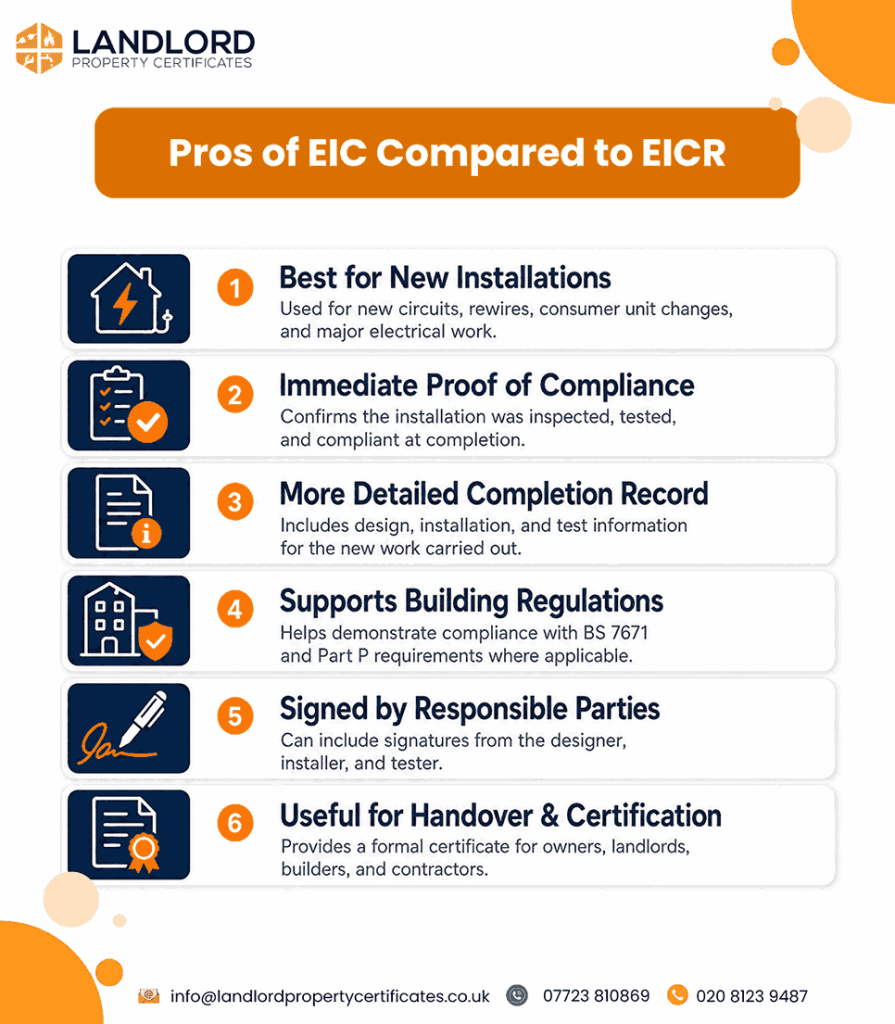
- Installation Compliance Certification: EIC confirms that the newly completed electrical work complies with the current BS 7671 wiring regulations, but the EICR only certifies existing electrical installations.
- Detailed Installation Information: The EIC has detailed information on the electrical design, construction, inspection, and testing of the new electrical installation, but the EICR only certifies existing electrical installations, such as wiring and switchboards.
- Part P Building Regulation Support: An EIC directly meets the requirements of Part P of the UK Building Regulations following major electrical works. An EICR meets the regulations of the Electrical Safety Standards in the Private Rented Sector (England) Regulations 2020.
- New Build Suitability: An EIC is for new electrical installations, rewiring projects, and significant electrical changes, but an EICR is only for the assessment of existing electrical installations.
- Multiple Professional Signatures: An EIC includes signatures from the designer, installer, and inspector, thereby increasing accountability for the work completed. The EICR has only the signature of the inspected electrician and electrical engineer.
- Project Completion Documentation: An EIC is the official documentation that electrical installation work has been completed and certified, but an EICR only inspects the existing electrical work throughout its life.
What are the advantages of EICR when compared to EIC?
The advantages of EICR when compared to EIC are listed below.
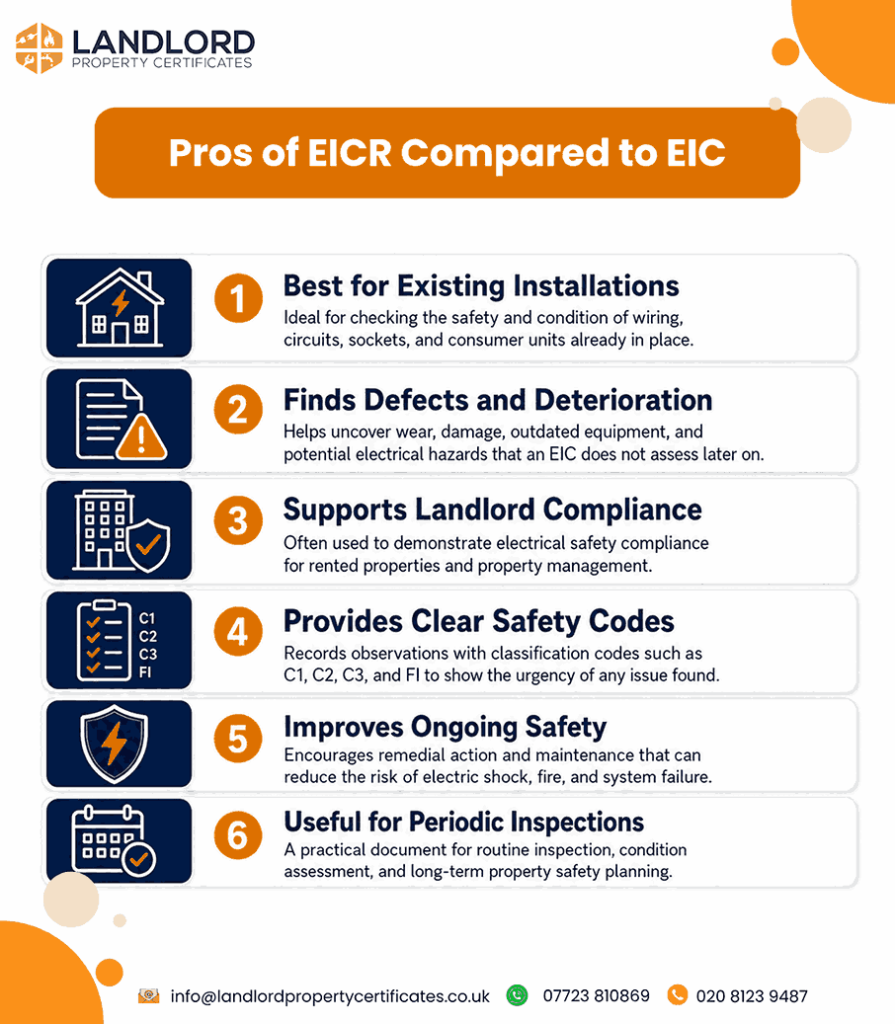
- Assessment of existing electrical installations: An EICR assesses the safety and condition of existing electrical systems, whereas an EIC is only for new electrical installations.
- Fault and Risk Classification Codes: EICR includes observation codes such as C1, C2, C3, and FI to indicate various types of electrical hazards and the recommended actions to resolve them. EIC rates the electrical work in the form of satisfactory or unsatisfactory remarks.
- Periodic Safety Inspection: An EICR test checks electrical safety throughout the life of a property or installation, but an EIC test only checks newly installed electrical systems once.
- Landlord Legal Compliance Support: EICRs are relevant to UK landlords’ compliance with electrical regulations, but EICs comply with BS 7671 wiring regulations.
- Identify Hidden Electrical Hazards: An EICR identifies hidden electrical issues in a property that is being used, such as unsafe wiring or overloaded circuits. An EIC only certifies the new electrical work, not hidden faults.
- Recommendations for remedial work: The EICR provides recommendations for remedial electrical work to keep a building safe, but the EIC only gives remarks on a pass or for new electrical installations.
- Assure Tenant Security: An EICR enables landlords to ensure their tenants remain in a safe electrical environment. EIC certifies that a new building is safe to live in for homeowners or tenants.