
An investor has to check the local real estate market and secure a specialized buy-to-let mortgage to become a landlord in the UK. This process involves buying housing and preparing it to meet strict housing standards. A prospective homeowner cannot handle all types of rental arrangements. Local authorities require separate licenses and planning authorizations to operate a House in Multiple Occupation (HMO) or short-term let. A real estate investment comes with high upfront costs.
The new landlord must pay the minimum mortgage of 25%, 3% duty, real estate and conveyancing fees, and professional tax. UK law requires landlords to fully comply with tenant safety legislation (Renters (Reform) Act 2025). Landlords must obtain a Gas Safety Certificate annually and install working smoke alarms and carbon monoxide alarms.
The property must also have a valid Energy Performance Certificate (EPC) before being marketed. Landlords must protect a tenant’s funds and check a tenant’s right to lease under the approved Government Lease Deposit System.
1. Decide on the property you want to let
Decide which property you want to let, and choose the right real estate asset for the rental market. The landlord must start by analyzing the investment trip across different districts to find the most profitable location.

A landlord examines local rental demand, assesses average real estate costs, and chooses an accommodation type, such as a large single-family home or a small apartment. Careful selection of a suitable property is crucial because the building type and location dictate the target tenant population and ultimately determine the investment’s long-term financial success.
2. Ensure you have the right to let your property
Ensure you have the right to let your property. The landlord must confirm this legal right before finding a tenant.
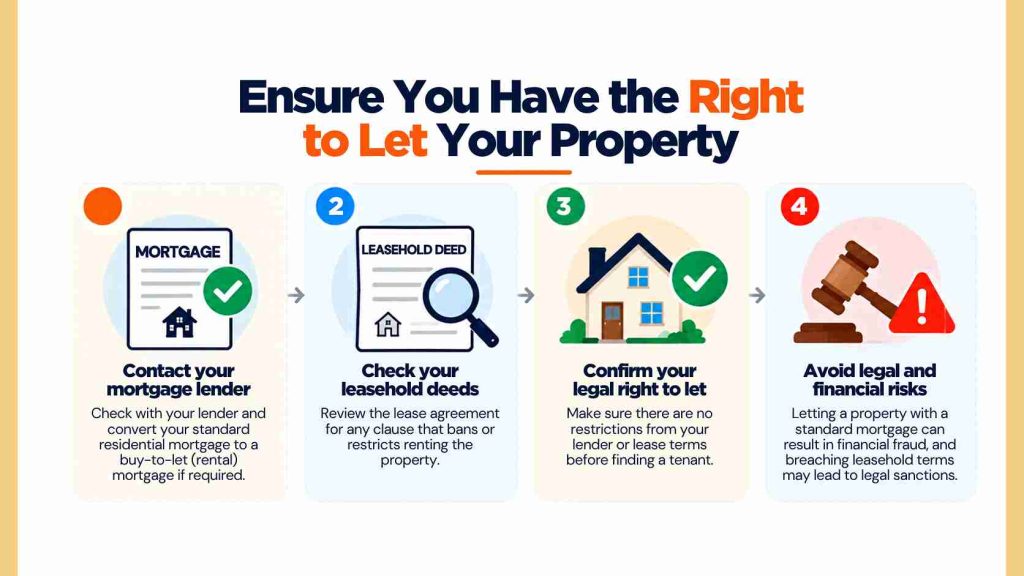
A landlord must contact the mortgage lender to convert a standard housing mortgage into a specialized lease mortgage. Landlords must check the home leasehold deeds for a clause that bans renting to meet legal property requirements. Renting a property with a standard mortgage results in financial fraud, and breaching leasehold terms can lead to legal sanctions.
3. Get required safety certificates (Gas, Electrical, EPC)
Get required safety certificates (Gas, Electrical, EPC) to ensure that the property is structurally safe and energy efficient. A landlord must obtain these certificates before a property becomes commercially available.

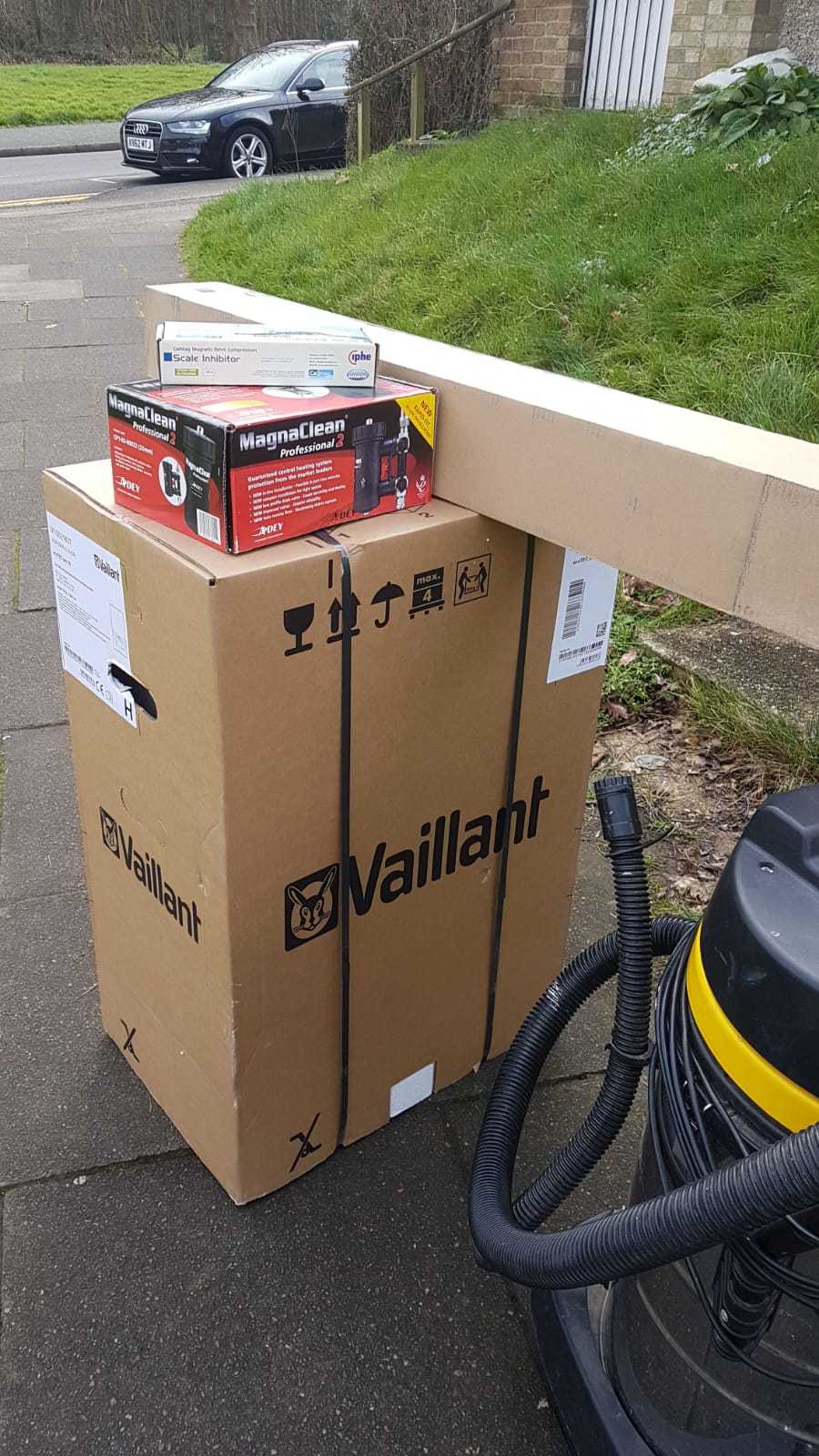
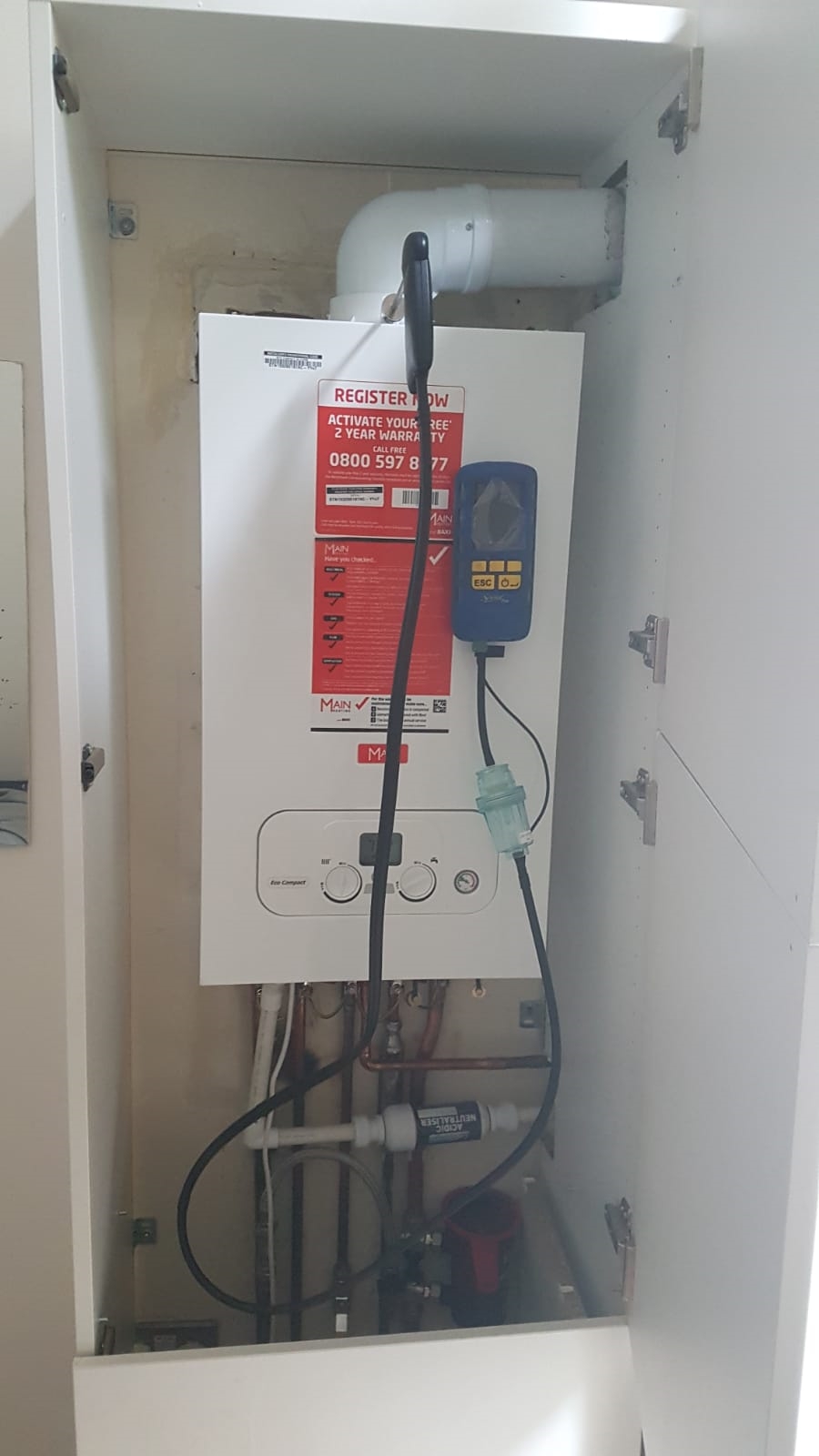
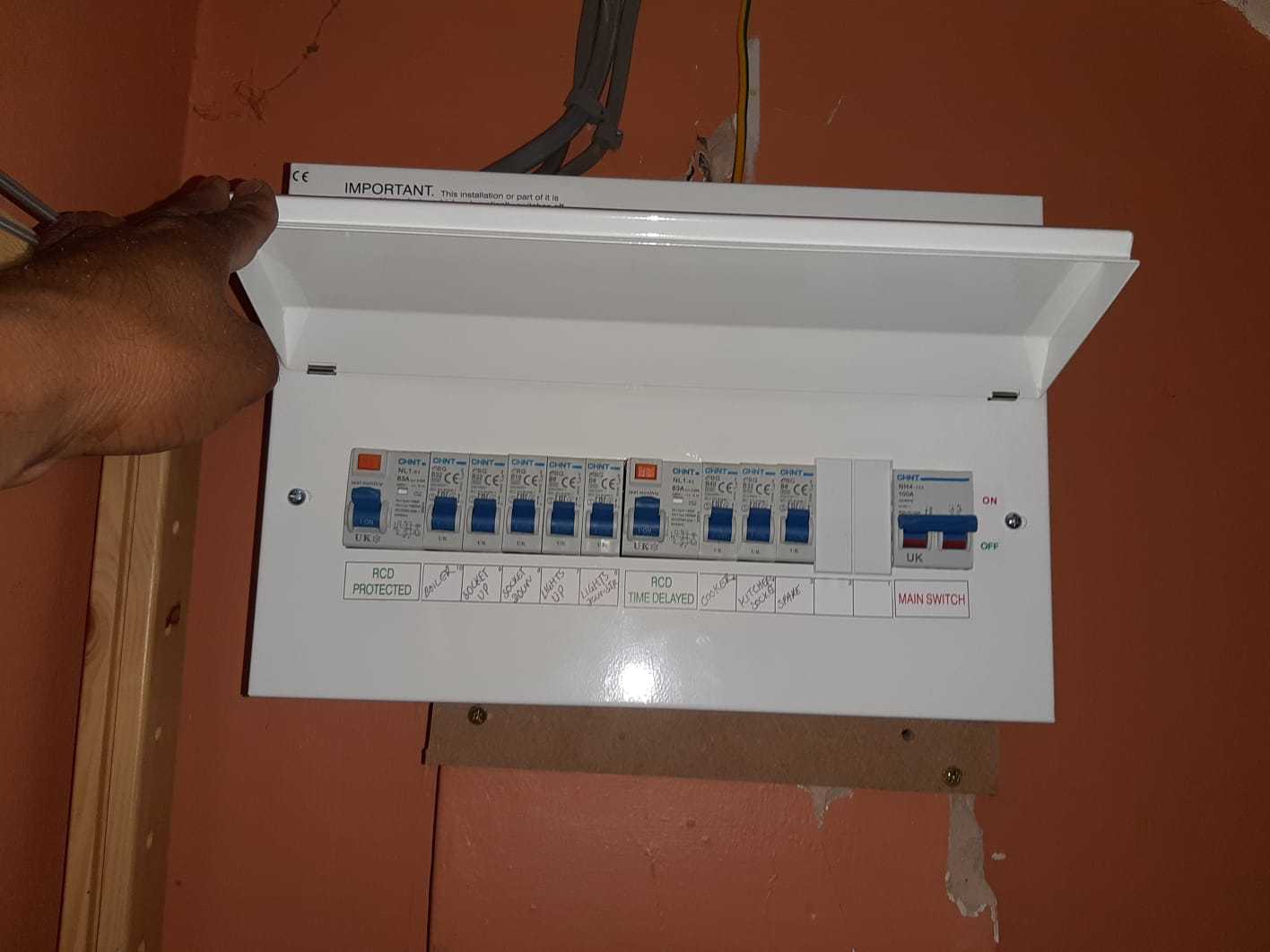
A landlord hires a registered professional to conduct an annual gas safety test, complete an Electrical Installation Condition Report (EICR) every five years, and complete an Energy Performance Certificate (EPC) assessment. These landlord certificates prevent dangerous accidents and are legally required before the landlord hands over the keys to a tenant.
4. Understand your legal responsibilities as a landlord
Understand your legal responsibilities as a landlord for providing a safe living environment. A landlord must take time to fully understand their legal responsibilities to avoid accidental violations of the law.
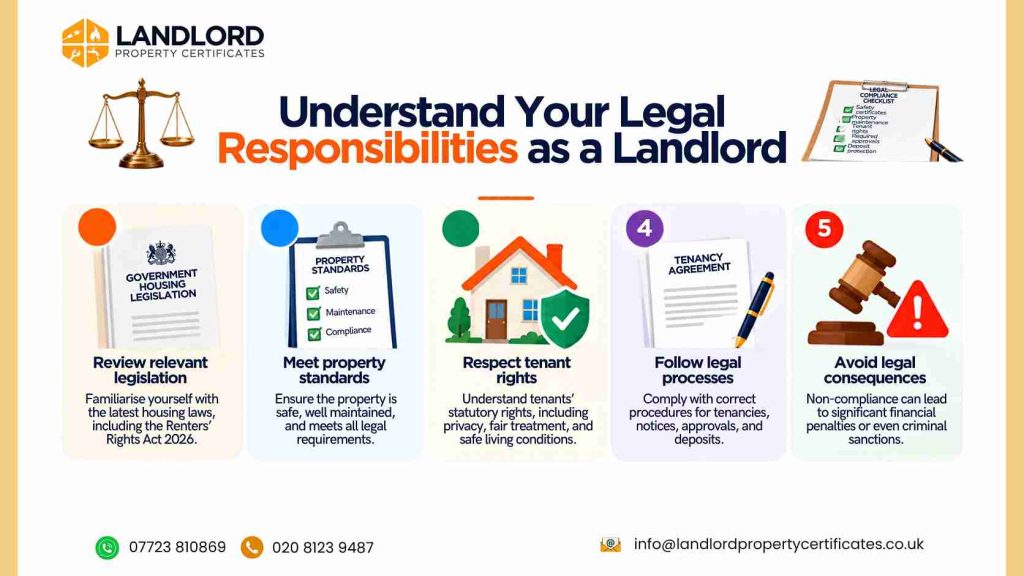
A landlord must review government housing legislation, including the Renters’ Rights Act 2026, to understand rules on property maintenance, approval requirements, and tenants’ statutory rights. Landlord responsibilities matter because ignorance of the law is never a legitimate defense in court, and failing to comply with statutory duties leads to significant financial or criminal sanctions.
5. Get landlord insurance
Get landlord insurance, which involves purchasing a financial insurance policy tailored to the risks of the rental. The landlord must secure insurance to protect physical assets and rental income streams. The owner works with a specialist insurer to buy a policy covering malicious damage to the building, loss of rent, and public liability. This type of insurance policy is justifiable because standard home insurance becomes worthless once a tenant moves in, leaving an uninsured owner financially exposed to unexpected catastrophes.
6. Join a deposit protection scheme
Join a deposit protection scheme (TDP), which means guaranteeing the initial damage to a tenant in a government-backed third-party account.

The landlord must do this to receive the deposits. The landlord must deposit the funds with an approved scheme (TDP) within 30 days of receipt and provide the lessee with the required official information documents under this provision. This step protects the tenant’s money from embezzlement and provides neutral dispute resolution if property damage occurs at the end of the lease.
7. Decide whether to let furnished or unfurnished
Decide whether to rent the property furnished or unfurnished to determine the exact height of furniture and equipment inside the unit.
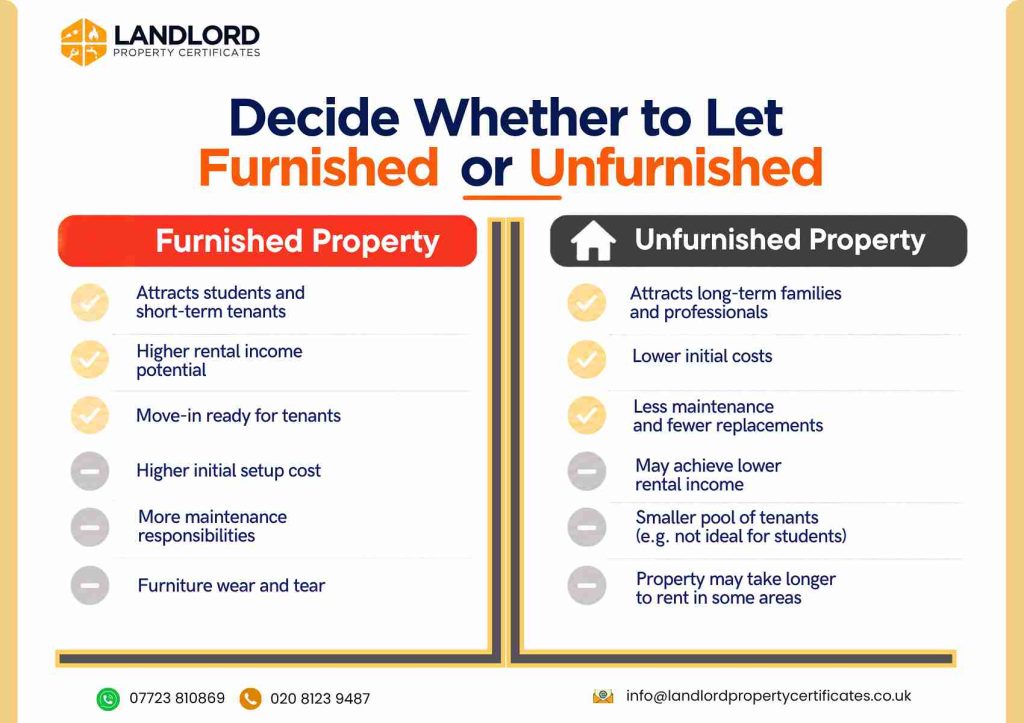
A landlord must make this choice before taking pictures for advertising. The landlord evaluates the market to make that choice. Landlords target college student agencies or leave spaces empty for long-term families. This strategic decision matters because the amount of furniture directly affects initial setup costs, shapes ongoing maintenance responsibilities, and influences the type of tenant the property attracts.
8. Apply for landlord licenses (if required)
Apply for a landlord (local council owner’s) license (if required), which is a permit to operate a rental company.

Landlords must actively verify and enforce these licenses under local UK legislation. An owner visits the local council website to see whether the neighborhood enforces selective licensing or whether a House in Multiple Occupation (HMO) rating requires a mandatory license, then completes verification. Owners of rented properties without the required license and without following the landlord registration process face financial penalties and are legally prohibited from owning them.
9. Find and screen tenants
Find and screen tenants for marketing your home and checking potential users’ financial credibility.

A landlord must do this with the utmost care to protect the home’s condition. An owner lists the property, conducts in-person viewings, runs thorough credit checks, verifies employment income, and completes mandatory immigration status checks. A thorough examination of the applicant is well justified and remains the best strategy to ensure landlords choose reliable tenants who pay rent on time and respect the property.
10. Create tenancy agreements
Create tenancy agreements by drafting a legally binding agreement to regulate all leasing arrangements.
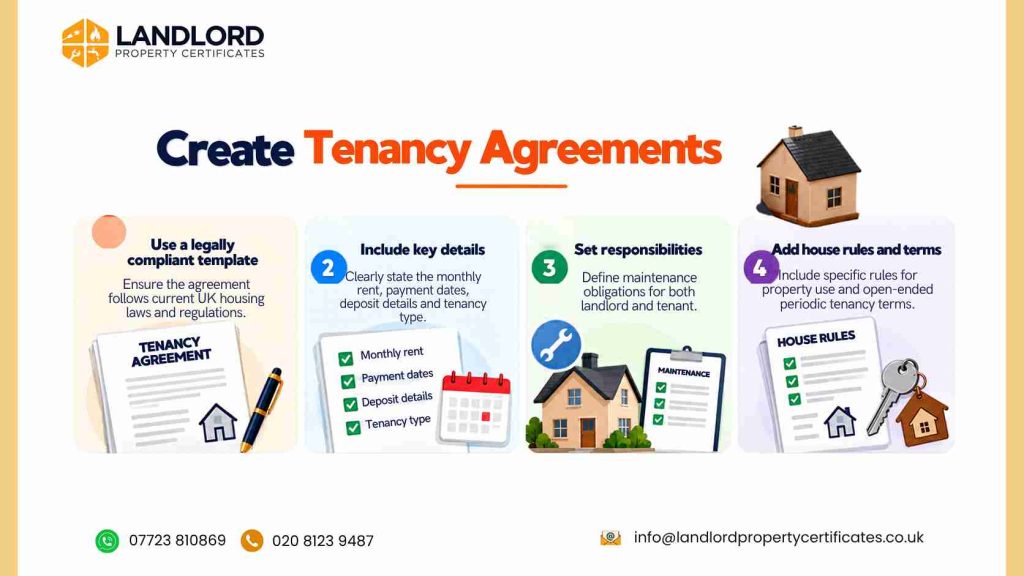
A landlord must provide precise tenancy agreements to formalize the legal housing system. A landlord uses a legally compliant contract template that clearly states the monthly rent, payment dates, maintenance obligations, and the specific rules for open-ended periodic rent. A well-written contract is justified because it clearly outlines expectations for the landlord and tenant, which is the main legal defense in a housing dispute.
11. Understand your tax obligations
Understand your tax obligations legally, which means accurately recording and paying rental income taxes.
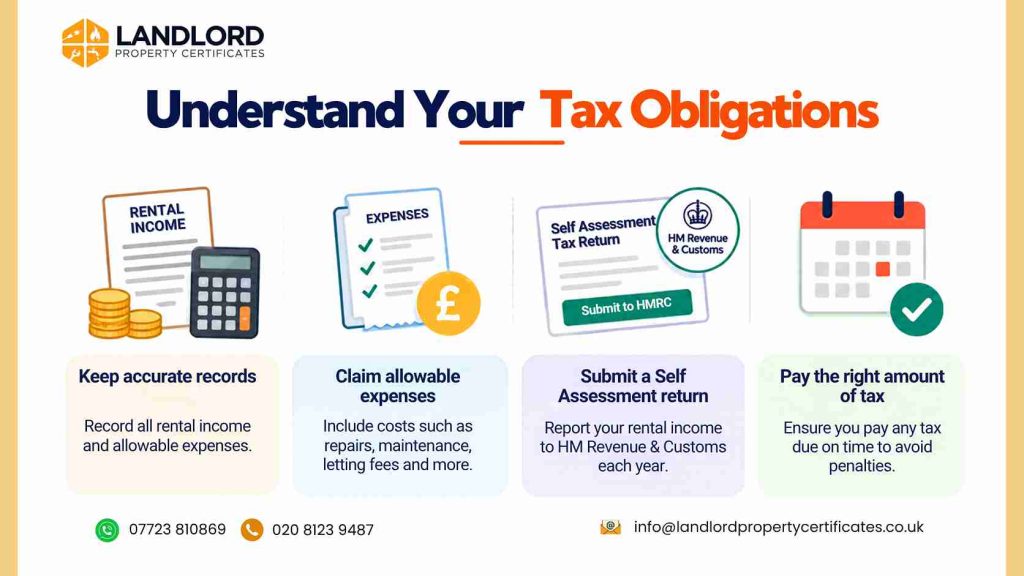
Landlords must comply fully to operate legally. A landlord must record the exact financial data for all rental income and allowable expenses and submit accurate annual Self Assessment tax returns to HM Revenue and Customs to manage tax. Accurate tax information prevents heavy taxation and helps the owner estimate the investment’s real profitability by applying for allowable property deductions.
12. Consider property management options
Consider property management options means choosing between self-management for daily leasing or renting through a professional landlord.
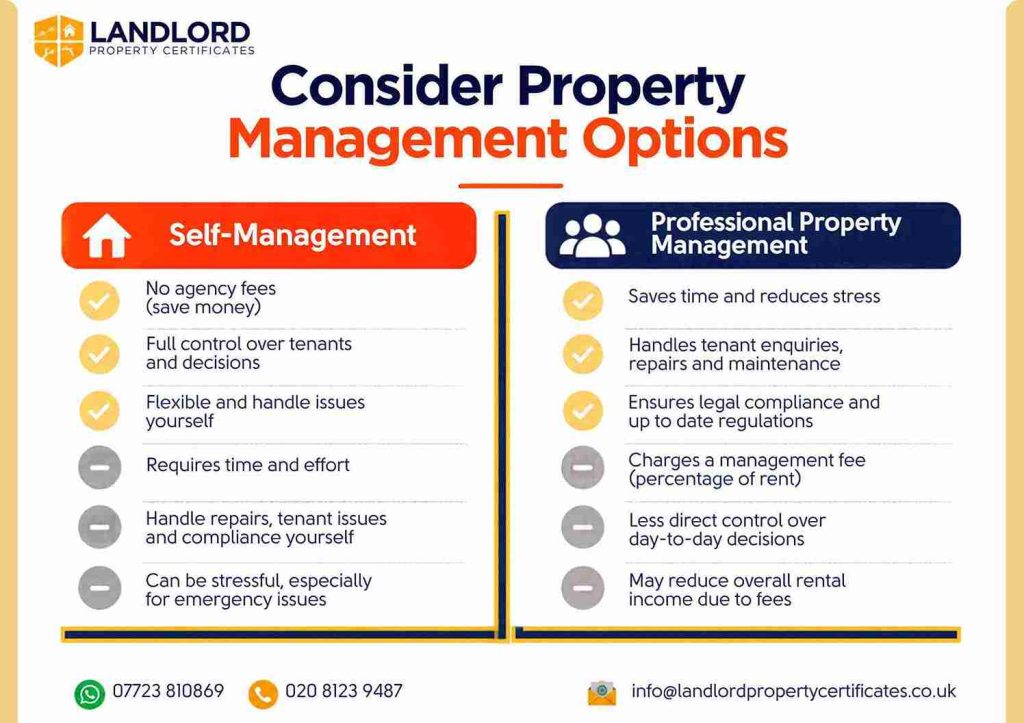
A landlord must assess these options to determine how the company will operate day to day. A landlord weighs personal time availability against agency fees to decide whether to handle late-evening repair calls directly or pay a monthly percentage to an agent to manage all tenants’ issues. Evaluate these options because delegating to a professional saves the landlord time and reduces stress, and it ensures complex legal compliance and maintenance tasks are handled properly.
Is it worth being a landlord?
Yes, it is worth being a landlord because ownership of rental property is a highly efficient financial investment that builds long-term wealth, increases the property’s value, and creates a stable monthly income stream. The current housing shortage drives high demand for tenants, and by adapting to the new legislation to offer safe, well-maintained housing, a landlord can attract a reliable tenant who stays long-term, reducing the costs of an empty residence. The landlord retains a clear legal right to regain possession for justified reasons, such as deciding to sell the home or evicting a lessee who stops paying rent, even with an explicit ban on fault evictions. Landlords enjoy significant benefits, including reliable monthly income that covers mortgage expenses, long-term capital growth of physical assets, and full control over strategic property upgrades by treating properties as a professional business. Landlord investing is more stable than stock market investing and provides a long-term income stream for retirement, while also offering tax advantages through allowable business expenses such as maintenance and professional rental agent fees.
How much does it cost to become a landlord?
Yes, there is a cost to become a landlord in the UK. Substantial pre-financing capital is required from a legal point of view and in practice to become a traditional real estate investor in the UK. A future landlord needs between £40,000 and £85,000 in cash to cover at least a 25% mortgage deposit, the Stamp Duty Land Tax surcharge, and key administrative costs such as legal conveyancing fees, mortgage agreement costs, and mandatory public security certificates.
The inbound investor fully manages daily lease and maintenance operations, a limited option for emerging investors. Zero-capital landlords use alternative real estate strategies, such as a legally compatible rent-to-rent model, by renting out rented housing for higher overall income. These landlords set up a joint venture partnership that allows a wealthy lender to provide a cash deposit.
The total upfront and ongoing financial cost fluctuates wildly based on the exact geographic location of the real estate assets and the building’s physical condition, which may require immediate, expensive renovations before a tenant moves in.
What is a landlord?
A landlord is a natural, commercial, or legal person who owns real estate and rents it to a tenant in exchange for regular monthly rent. The landlord retains legal ownership of the property and transfers temporary occupancy rights under a strict lease contract.
The concept of landlord originates in Europe’s medieval feudal system after the Norman Conquest of England, taking a prominent form by granting large tracts of arable land to rulers or noble masters and allowing a farmer to live there in return for a percentage of his crop or forced labor.
As private property rights evolved, tenants enjoyed the right to reside by paying cash rents. This historical development shifted from agricultural labor to modern commercial housing. This was a concept of sex, with a man called a property owner and a woman a landlord.
The word landlord is now commonly used as a gender-neutral term for any property owner in today’s legal and corporate contexts. Official government legislation and formal leasing agreements now use the word landlord regardless of the individual’s gender.
What are the other names for a landlord?
Landlords are known by various official, informal, and street names, depending on the legal context and everyday relationships with tenants. In government legal instruments and housing contracts, a homeowner is called a land lessor, property owner, freeholder, or housing provider.
Tenants use informal terms for landlords, such as households, tenants, hosts, or owners. An owner who actively neglects the physical property and ignores the basic rights of the legal tenant is hard to label as a sled, rental shark, or missing landlord in street-level and casual urban. The local community unofficially calls analk. An owner-landlord, or rental collector, who controls a massive portfolio of rental housing across cities.
What type of landlord can you become in the UK?
The types of landlord you can become in the UK are listed below.
- “Private Landlords
A private landlord is a single property owner who rents a residential building directly to tenants, rather than working through a large business or government organization. A person becomes a private landlord by acquiring a dwelling and signing a lease with a private tenant. This concept helped distinguish individual owners from social housing managers under the UK Housing Acts of the 1980s. The unique characteristic of the private landlord is that it operates entirely in the open residential market, directly absorbing all personal financial risks and legal compliance requirements without any corporate armor.
- Portfolio Landlords
A portfolio landlord is an investor who owns and actively manages four or more residential properties with active mortgages. The owner becomes a portfolio landlord by purchasing additional properties over time until the portfolio reaches a strict banking threshold of four or more active mortgages. The UK banking sector officially defined this term in September 2017, when the Prudential Regulation Authority introduced stringent new loan stress tests for investors with multiple mortgaged properties. A portfolio landlord faces much more severe mortgage and financial stress tests than an owner with one or two properties.
- Commercial Landlords
A commercial landlord is an owner who leases physical buildings exclusively to retail, industrial, or office entities, not residential property. An investor becomes a commercial landlord by buying a commercially zoned building such as a warehouse or commercial property, and signing a commercial rental contract with a business tenant. This concept evolved during the Industrial Revolution in the 18th and 19th centuries as purpose-built factories and retail arcades separated living spaces from working spaces. A unique feature of a commercial landlord is the use of long-term leases, where the business tenant assumes almost all maintenance and structural insurance costs under strict repair and rent security.
- Accidental Landlords
An accidental landlord is a property owner who didn’t initially want to enter the rental market but was forced to rent out a house because of unexpected circumstances. A homeowner becomes an accidental landlord when their primary apartment is rented after trouble selling the property, suddenly moving for work, or moving into a new home with a partner. This term was used extensively in the UK during the financial crisis in 2008, when falling property prices trapped owners in negative equity and forced them to rent instead of sell. A unique feature of accidental landlords is the lack of a strategic business plan, often temporary, until the larger housing market advances enough to sell an asset.
- Institutional Landlords
An institutional landlord is a major corporation, pension fund, or life insurance company that builds, manages, and operates thousands of large-scale leased units. A corporate foundation becomes an institutional landlord by pooling billions of pounds of global shareholder money to fund a purpose-built apartment block. This term gained considerable importance in the UK housing market during the 2010s, as the government pushed corporate investment in large-scale Build-to-Rent development to address the nation’s housing shortage. Institutional landlords often operate mega purpose-built complexes with embedded installations, 24/7 Corporate Concierge services, and rigorously standardized corporate governance policies.
- Buy-to-Let Landlords
A buy-to-let landlord is an investor who specializes in purchasing residential properties with a specialized mortgage product designed for rental income, not for private residential use. The investor becomes a buy-to-let landlord by requesting a specific buy-to-let mortgage loan, with at least 25% of the funds from deposits, and buying a home designed to accommodate a tenant. The UK officially defined this term in 1996, when the Association of Residential Letting Agents worked with mortgage lenders to create the first buy-to-let mortgage products. A buy-to-let landlord’s unique feature is the ability to use mortgages only at interest rates where the monthly rent covers the loan interest, maximizing monthly cash flow.
- First-Time Landlords
A first-time landlord is someone who acquires and leases assets and has no real estate administration expertise at first. A person becomes a first-time landlord by accumulating sufficient deposit capital, securing key security, and signing the first lease contract. This classification has existed for centuries, but by the end of the 1990s, it also became a special, rigid category of mortgage loans to assess the high risk of inexperienced investors. First-time landlords face higher initial mortgage interest rates and stricter loan criteria because banks view inexperience as a major financial risk.
- Professional Landlords
A professional landlord is an investor whose main occupation is full-time, and whose main living income comes entirely from managing a large-scale property portfolio. An investor becomes a professional landlord by scaling a rental portfolio large enough for the combined monthly rental profits to completely replace standard employment wages, so that the investor stops using traditional jobs. The tax authorities had to distinguish between hobbyist investors and those who use real estate to complement their income; this distinction became apparent in the 2000s. A professional landlord operates the property through an integrated company with limited liability to optimize taxes and treat real estate management as a full-time job.
- Parental Landlords
A parental landlord is a parent or father who directly buys a lease for an adult child while the child is in university. A parent becomes a parental landlord by using personal savings or the house’s net worth to buy an apartment in a university town, renting rooms to the adult child and to the child’s friends. Wealthy parents have bought student residences as dual-purpose investments, and this niche trend has grown in the UK because of high university housing costs in the 2010s and enormous student debt. A parental landlord’s unique feature is that it blends family support with business, charging rent to cover the mortgage while circumventing the intense competitive selection process typically applied to foreigners.
- Real Estate Investment Trusts
A Real Estate Investment Trust is a publicly traded corporate entity that funds, owns, and operates real estate and generates substantial income nationally. The corporate council becomes a Real Estate Investment Trust by registering the company on the stock exchange and allowing citizens to purchase shares in the company’s large real estate portfolio. The United States established this structure in the 1960s. The UK formally introduced this term in January 2007 to foster widespread public investment in real estate. A unique feature of a Real Estate Investment Trust is that it lets regular individuals benefit from rental income by buying shares, without ever physically touching a property or dealing directly with a tenant.
- Inherited Landlords
An inherited landlord is someone who involuntarily takes ownership of a property after receiving a rental or vacant house through a deceased family member’s will. A person becomes an inherited landlord by being named a legal beneficiary of the family, legalizing or her ownership after the relative’s death, and then placing a tenant in the family. This type of land ownership is similar to ancient Medieval laws of succession, but modern tax definitions are more firmly established as inheritance tax laws developed in the 20th century. An inherited landlord’s unique feature is that it skips the massive initial cash and mortgage application phase, as well as navigating complex probate laws and tough estate tax obligations, right out of the box.
- HMO Landlord
An HMO landlord rents one large house to three or more unrelated tenants who share basic facilities like a kitchen and bathroom. A landlord becomes an HMO landlord by buying a large property, applying for specific municipal planning permits, installing rigorous commercial fire safety equipment, and signing individual room contracts with several unrelated tenants. This system is based on Victorian homes, but the rigorous modern legal definition and licensing requirements were codified under the UK Housing Act in 2004 to help stop severe overcrowding and fatal fire risk. Follow the legal requirement to obtain a specific license from the Board of Directors and pay supply invoices directly, rather than handing over invoices to the tenant.
- Social Landlord”
A social landlord is a city council or non-profit housing association that provides highly subsidized and affordable housing for vulnerable tenants who cannot pay private market rents. A public organization or registered non-profit charity becomes a social landlord by receiving large public funding to construct or purchase residential buildings intended solely for low-income citizens. The Housing and Town Planning Act 1919 created this modern social landlord immediately after World War I and required city council members to build large council buildings for returning soldiers. A unique feature of a social landlord is that it charges rent well below market rates, assigns flats based solely on a renter’s critical medical or financial needs, and does not work for financial gain.
Are there any requirements to become a landlord?
Yes, there are legal, financial, and safety requirements to become a landlord in the UK. Landlords must use a dedicated mortgage because buying a property with a standard mortgage is considered financial fraud. The rental company must ensure that, before a tenant moves in, the property meets strict physical safety standards through an annual Gas Safety Certificate and an Electrical Installation Condition Report (EICR) every five years.
Rental companies must also ensure a valid Energy Performance Certificate (EPC) is available, and that smoke and carbon monoxide alarms are installed throughout the building. A landlord must comply with stringent administrative obligations, including mandatory
Right to Rent immigration checks on all adult occupants. These obligations also include securing the tenant’s deposit in a government-approved protection scheme within 30 days and reporting rental income to HM Revenue and Customs for annual tax purposes. The landlord must also register the property in the Private Rented Sector Database and join the Landlord Ombudsman compulsory scheme before offering it for lease under the newest Rental Act, 2026.
What education is required to become a landlord?
No formal academic degree or qualification is legally required to be a landlord. The UK does not award specific degrees, certificates, or diplomas for purchasing and renting properties. Formal education is not obligatory, but an owner must independently study and understand all mandatory housing laws, such as the Renters’ Rights Act 2026, to ensure the rental business operates safely and within the regulatory framework.
What is the minimum age to become a landlord?
The minimum age to become a landlord is 18. A person must be at least 18 years old to maintain legal property ownership and sign a legally binding business contract, such as a rental contract under UK property law. A person can legally become a landlord at a young age (18). It is extremely difficult to secure the necessary financial support, as most UK mortgage lenders require applicants to be at least 21 to ensure they have a solid credit history and stable employment income.
Can a non-UK national become a landlord?
Yes, a non-UK national can legally become a landlord. UK property laws do not restrict citizenship or residence for ownership, so foreign investors can buy, own, and lease housing to tenants. The main legal condition is that a non-UK national who lives outside the country for more than six months in the course of the year must register under the Non-Resident Landlord Scheme with HM Revenue and Customs. This step ensures the proper taxes are formally deducted from monthly rental income.
Do you need to live locally to rent out a property?
No, you do not need to live locally to rent out a property. A landlord can legally own and operate a leased property while living in a completely different city, or even overseas. An absent landlord can delegate day-to-day physical management to a local property manager who provides maintenance and immediate assistance to the tenant, while the landlord remains legally responsible for property maintenance and emergency repairs regardless of distance.